
The "Safety Bicycle"
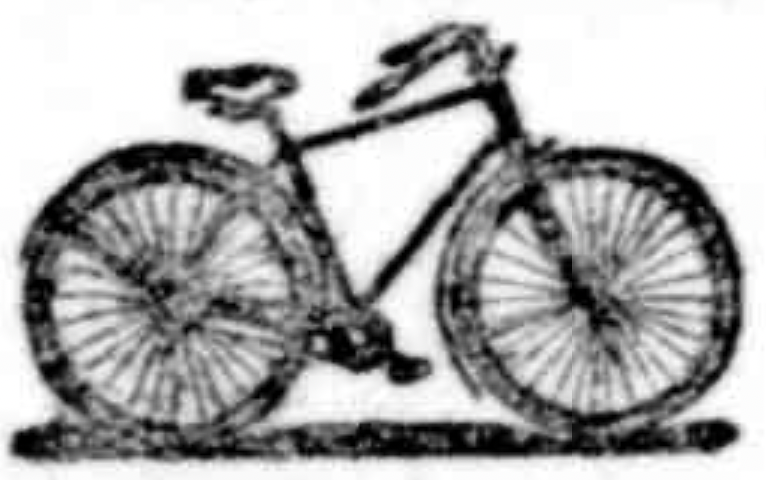
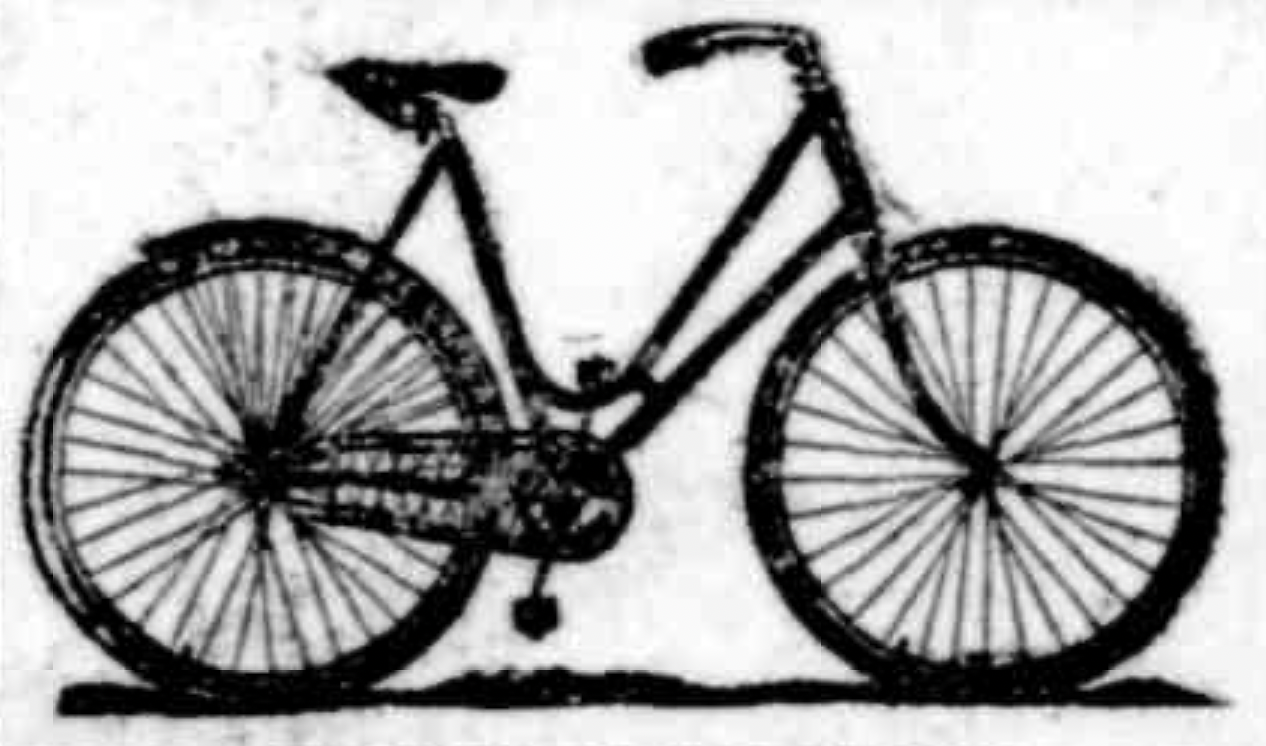
"In 1885 came the relatively affordable safety bicycle, so named because with its two equal-sized wheels and low seating position it was much easier and safer to ride. It was a technological marvel." Jim Fitzpatrick (2015, p.26) The major technological innovations that contributed over time to the 'modern' safety bicycle included the tubular steel 'diamond' frame (or 'dropped' frame for women), similar sized front and back wheels, pneumatic rubber tyres, ball-bearing stems and hubs, sprung and adjustable saddles and so on. Perhaps more revolutionary were the various devices and later 'bloomers' that allowed women to ride with the same ease and safety as men.
Women and Cycling
The history of women and cycling has yet to be written. It is arguable that womens' cycling was as personally 'liberating' for at least young middle-class women as the typewriter, access to tertiary education or even the vote.
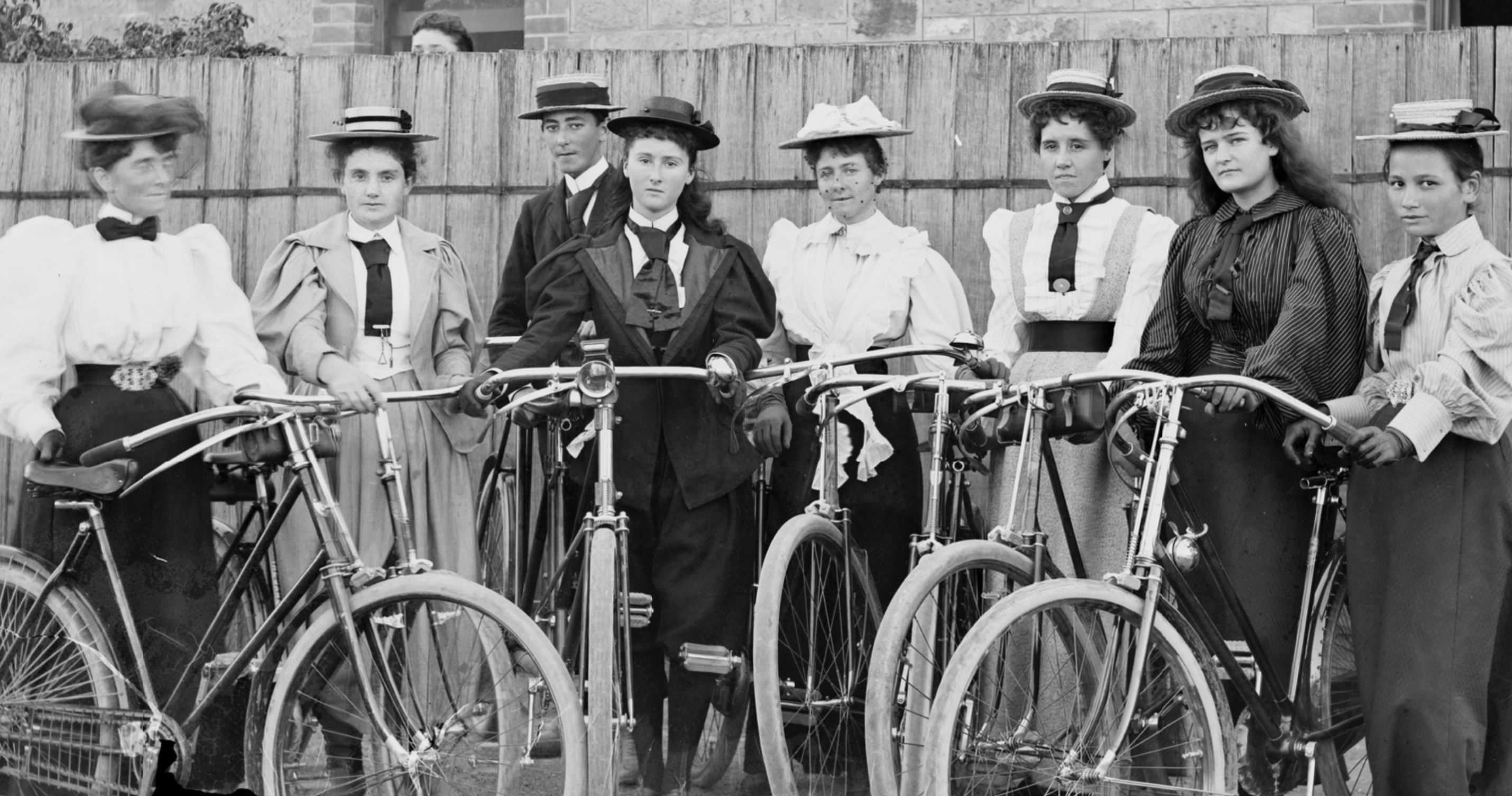
Above: A group of young women cyclists, c1909. The young woman in the centre is wearing the controversial 'bloomers'; note also the chain guard on the left-hand bike to protect the women's dresses. Click to enlarge [SLSA B-9187]
'Class' and cycling in 1897
Although cycling was "relatively affordable" in the late 1890s, this was in comparison to the total cost of ownership of a horse. Recreational cycling was expensive, the pastime of those with discretionary incomes and the leisure to dispose of some of it. For at least the next few decades and possibly excepting itinerant workers such as shearers and miners, cycling tourism was certainly out of reach of the majority of South Australians.
Judging by South Australian newspaper advertisements, the average price of a new "safety bicycle" was about £15 in 1897, which, according to the South Australian Statistical Register for that year, was about one tenth of the annual wage of a skilled tradesman.
Another possible indicator of the 'class' nature of cycling is the socio-geographic distributions of cycling clubs: of the 36 bicycle and touring clubs listed in the December 1898 issue of the S.A.Cyclist, 12 were "suburban" and of these as many as 10 were based in what were then as now the affluent eastern and southern suburbs of Adelaide and 2 in what might have been considered "working-class" areas (Port Adelaide, Semaphore).
In the aftermath of the 1890s depression until at least the First World War, it seems that cycling tourism in South Australia was a predominantly middle-class activity and, as such, was suffused with the liberal, individualistic and self-improvement values of that class. This has implications for the way-side pubs that cycling tourists were likely to have favoured for rest, refreshment, accommodation and, possibly, a moustache trim.
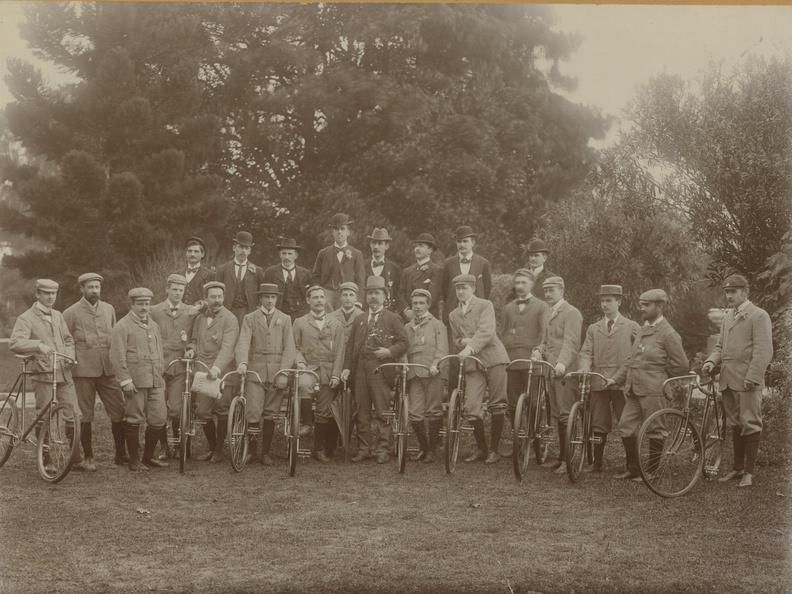
Above: Gentlemen of the Adelaide Cycling Club, 1896-97. Click to enlarge
[SLSA B-47465]

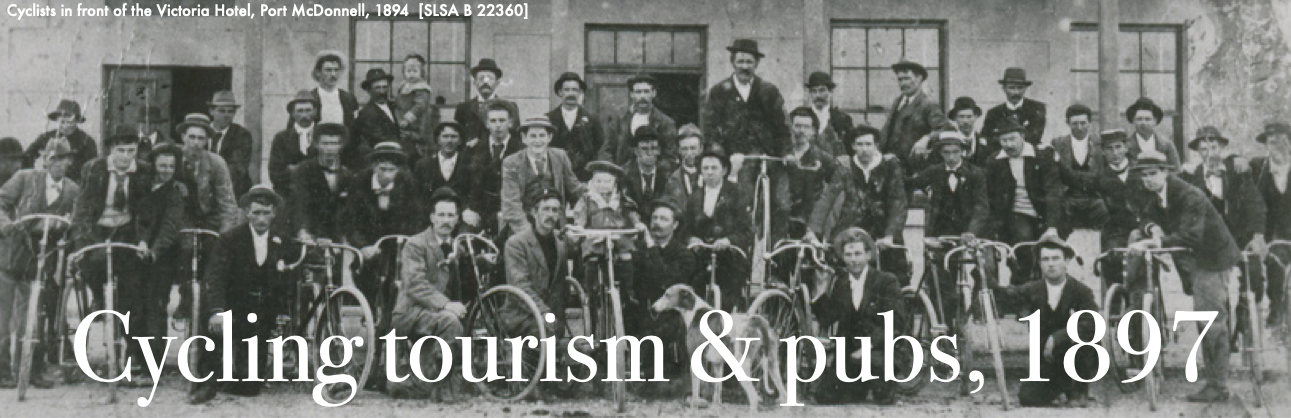
According to Jim Fitzpatrick (2013, p.11), "during the 1890s a cycling craze swept Australia [South Australia included] and the country found itself in the mainstream of the world bicycle boom". The advent of the relatively affordable, more or less effortlessly ridden and easily repairable "safety bicycle" and the return of relative prosperity for some and increasing leisure time for most meant that, by the end of the 1890s, cycling ceased to be an eccentric pastime or a purely utilitarian replacement for horse and saddle and became increasingly accessible and recreational, a major element of which was cycling tourism.
From the 1890s until the early 1920s, cycling tourism - non-competitive road cycling for pleasure, generally in small groups - was supported by most of the growing number of cycling clubs, especially the Cycling Tourists' Club of South Australia, founded on 27 March 1889 but superseded by the Cycling Tourists' Association in the following November. As Fitzpatrick (2013, p.35) wrote, as well as organising day-trips or longer tours for their members, such organisations
| contracted for local representatives in country towns to assist tourists passing through, negotiated discounts at hotels for club members, provides maps and guides, offered tips on touring and advised on the care of bicycles... |
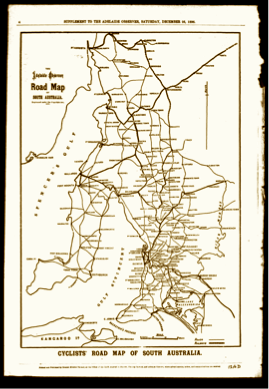 The Adelaide Observer's Cyclists' Road Map of South Australia; click to enlarge
 |
|
The 'mass' appeal of cycling tourism was reflected inevitably in mass circulation newspapers. From about August 1882 the weekly Adelaide Observer published regular cycling columns which, along with other cycling-related news, advertised and reported on club outings. On 26 December 1896, "during the holidays, when touring is so much in vogue", the Observer published a "cyclists' road map", "a capital map of convenience showing the roads, railways, and towns from Meningle and Cape Jervis on the south to Port Augusta on the north, and Corney Point on the west to Morgan on the east - a great radius".
|
| ...there are hundreds of riders who have but a remote idea ot the splendid outings that can be indulged in during an afternoon within easy reach of tho city; and, stranger still, many are frightened to negotiate the Hills. Supplied with a proper brake there is nothing to fear, for on the whole the roads are in good order. With a view of assisting new riders aud cyclists generally, I am under instructions to go over what should prove popular routes and report. These reports will be accompanied by sketches showing tho best roads, tho hotels, and points of interest en route. |
Of most relevance here, in both the newspaper articles and the books, Handlebar refers to over 40 mostly rural or peri-urban pubs, either as local landmarks or as destinations, the latter as places for refreshment, possibly for accommodation and no doubt for relief. Similarly, from 1898 until about 1905, the South Australian Bicycle Club's journal, The S.A.Cyclist periodically listed "hotels for cyclists". What would now be called "lycra-friendly" pubs, it seems, were an integral and valued part of early cycling tourism in South Australia.
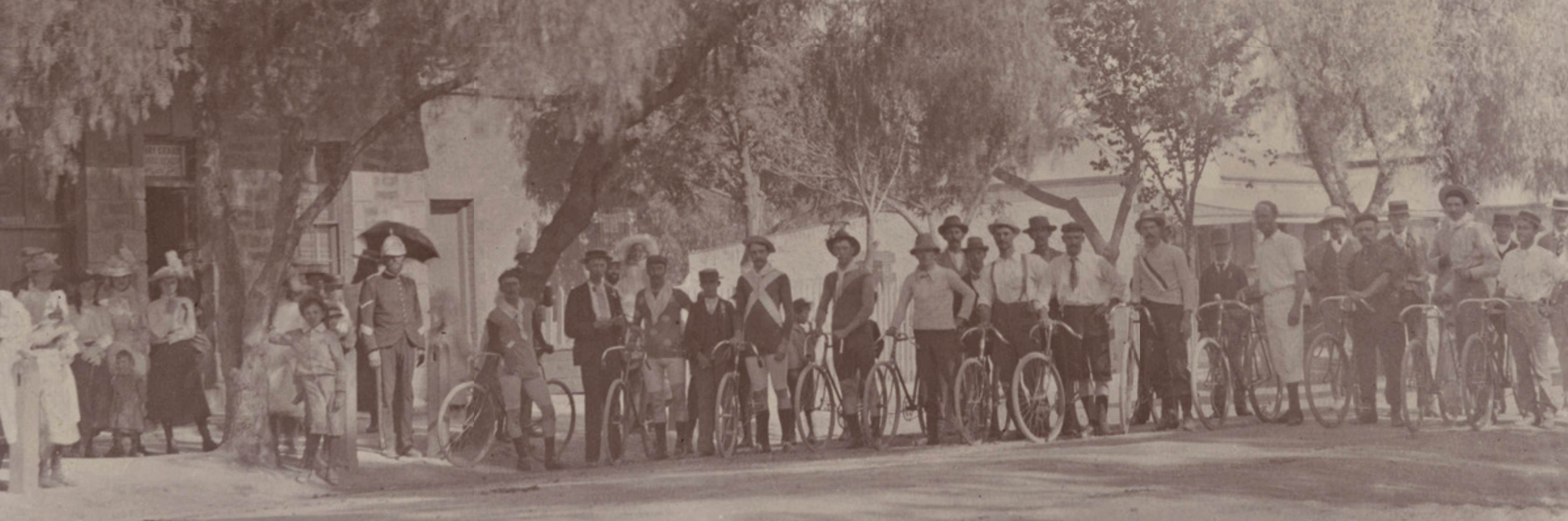
Above: Group of long-distance cyclists (possibly road-racers, possibly from the Gladstone Cycling Club) in front of the Booyoolie Hotel, Gladstone, c.1900. Note the nineteenth-centry version of lycra shorts adorning the four riders on the left. [SLSA B 47079; click image to enlarge in new window]
More on the history of (South) Australian cycling:
• Jim Fitzpatrick, Wheeling Matilda : the story of Australian cycling
Kilcoy, Qld, Star Hill Studio, 2013
• Jim Fitzpatrick, "A glimpse at Australia's cycling history" in Cycling Futures, Jennifer Bonham and Marilyn Johnson (eds)
Adelaide, University of Adelaide Press, 2015 [Available through JSTOR]
• Dieuwke Jessop/Ian Radbone, "Cycling" in Wilf Prest (ed), The Wakefield Companion to South Australian History
Wakefield Press, ebook edition 2024
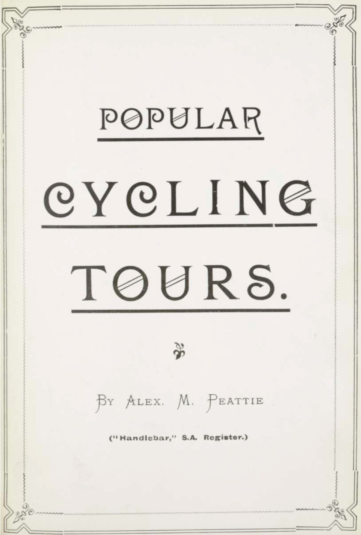
Alex M Peattie's Popular Cycling Tours, 1897
Peattie's 'sketches' proved so popular that in December 1897 and again in 1900 the newspaper republished the most popular of the tours as a book, Popular Cycling Tours; the 1900 edition can be read and/or freely downloaded, courtesy of the National Library of Australia (click on the image below; opens in new window).
|
|
The 1900 edition comprises the following tours:
• City to Aidgate by various Routes • Aidgate to Noarlunga • Aidgate to Strathalbyn • Port Victor Tour • Waterfall Gully • Fifth Creek and Marble Hill • Mannum Tour • A Circular Run Around the Hills • The Gorge Tour • Clarendon via Belair and Happy Valley • Yorke's Peninsula • Port Wakefield Tour • Burra Tour • Around the Town • Gawler to Gumeracha • South-east Tour • Up North |
Peattie (1867-1910) was, at various times, an active member and office-holder of the Norwood Cycling Club, the South Australian League of Wheelmen and the Cyclists' Association pf South Australia; in August 1903 he left the Register office, where he worked as journalist, cycling correspondent and typesetter, to work for Hugo Wertheim Pty Ltd, importer and assembler/manufacturer of sewing machines, pianos and "Electra" bicycles in Melbourne.
|
|
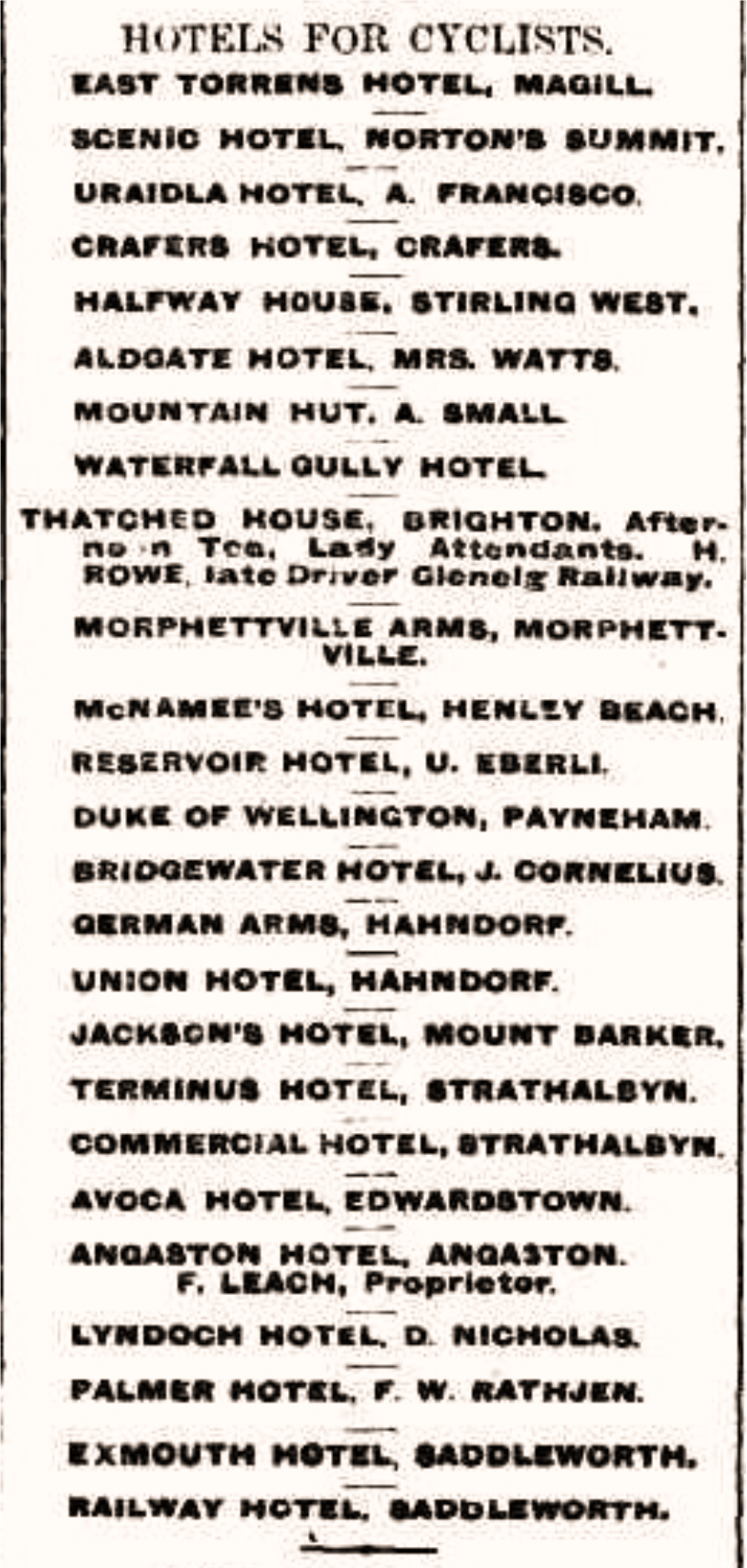
Hotels for cyclists, 1897
Supplementing Handlebars' "Cycling Tours" in the newspapers, both the South Australian Register and the Evening Journal published a list of "Hotels for Cyclists". The first, comprising 8 hotels, appeared in the South Australian Register, [2 October 1897, p.6] to accompany the first of Handlebars' "Popular Cycling Tour 1, Mount Lofty Station to Aldgate...". The list or its variants was reprinted throughout the cycling "season" from October 1897 until April 1898. Left: Hotels for cyclists, 1897 [Evening Journal, 20 November 1897, p.7; click image to see the complete list, in separate window]. |
|
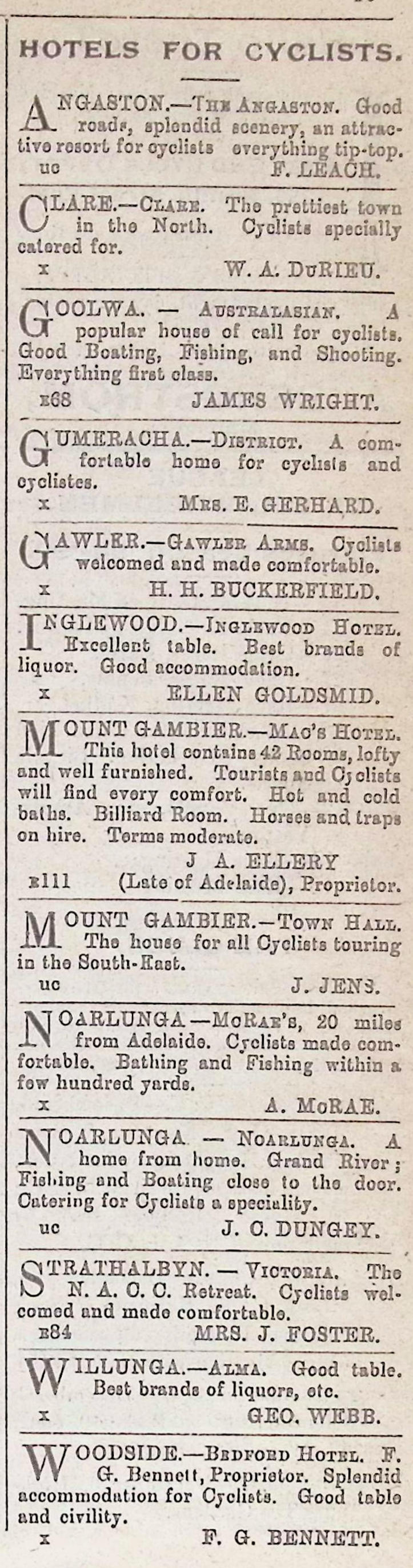
Hotels for cyclists, 1898
In December of 1898 the The SA Cyclist, official organ of the League of South Australian Wheelmen, published a list of 13 hotels that offered "splendid accommodation" and in which cyclists were especially "welcomes and made comfortable". Over half of the hotels were over 50km from Adelaide, challenging for the casual day-tripping cyclist. Right: Hotels for cyclists, 1898 [The SA Cyclist, 2 December 1898, p.13; click image to see the complete list, in separate window] | |
|
|
|
Hotels for cyclists...and motor cyclists and motorists, 1906
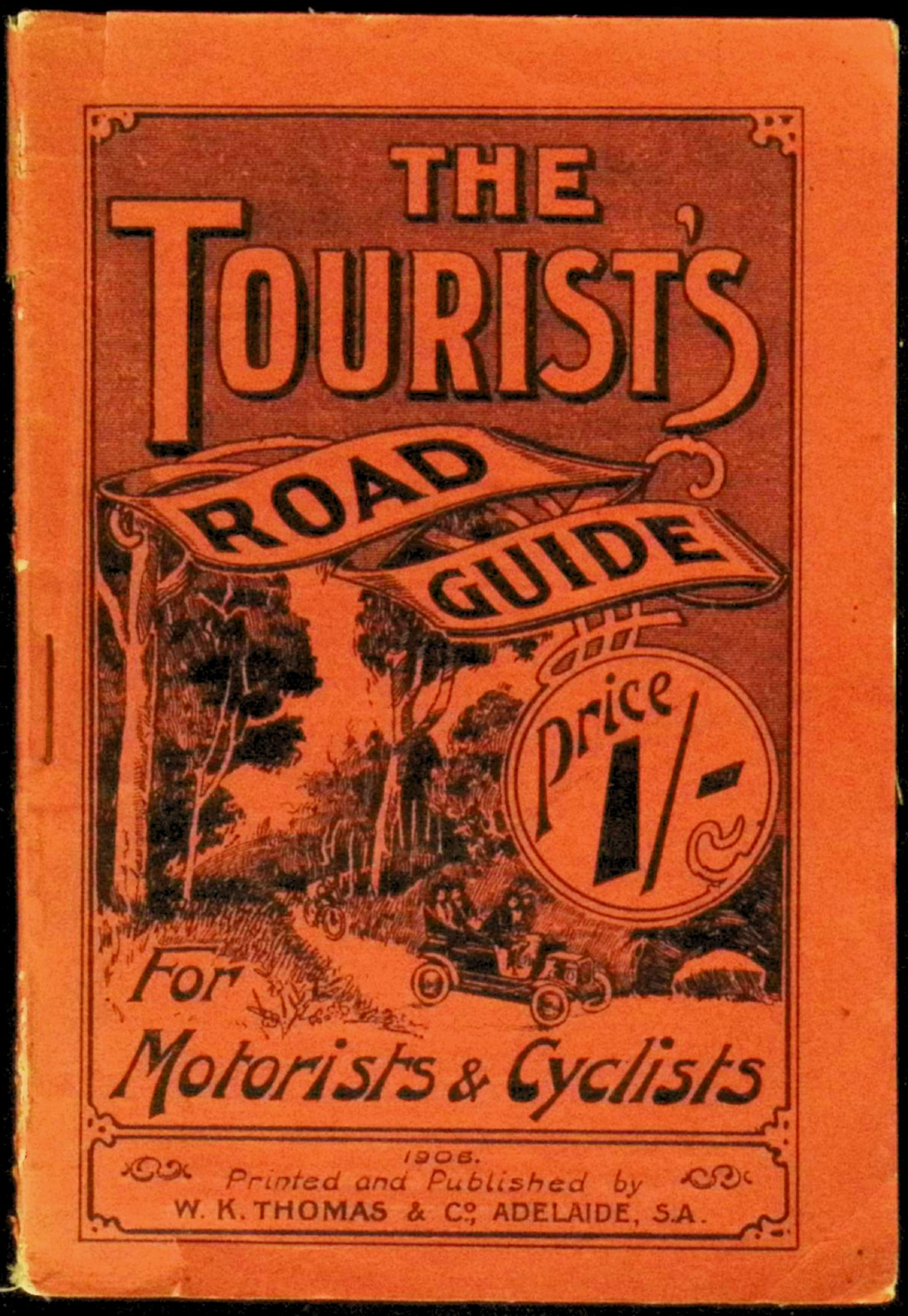
W K Thomas' Tourists' Guide for Motorists and Cyclists was, I believe, first published in several editions in 1906, less than a decade after Popular Cycling Tours. Although the Guide seems to have been based on Peattie's tours, the focus was on motoring not cycling. It did provide a list but "of Hotels and Stores in South Australia where Petrol can be procured [my emphasis]" - in 1906 petrol stations were rare in even peri-urban towns. |
The list of hotels in Thomas' Tourists' Guide for Motorists and Cyclists seems to have been the last dedicated to cycling tourism. By about 1910 the Guide ceased to serve cyclists and by 1927 it had been "officially appointed by the Automobile Association of South Australia", the forerunner of the RAA. Above, left: Cover of The Tourists' Road Guide for Motorists and Cyclists, 1906; click to enlarge in new window.
The pubs of 1897-98
Corresponding to the areas covered by Handlebar's cycling tours, of the 27 "Hotels for Cyclists" listed in 1897-98, about a third were suburban, about a third were periurban or close rural and about a third were over 60km from Adelaide. A similar pattern emerges for the 56 cyclists' hotels listed or mentioned in the sources above for 1897 to 1906 but with approximately 50% of the pubs in the metropolitan area and, especially, in the Adelaide Hills and representing one-day and weekend cycling tours.
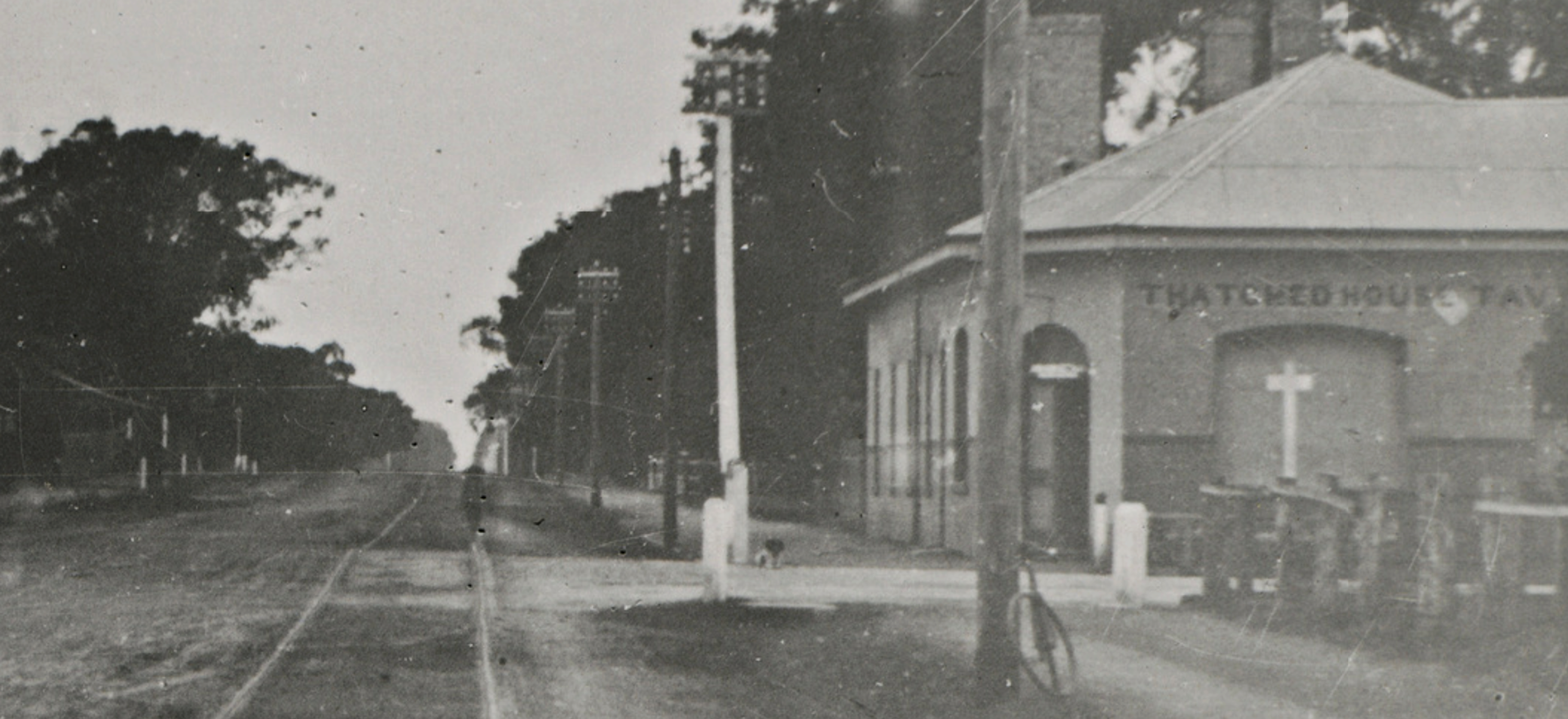
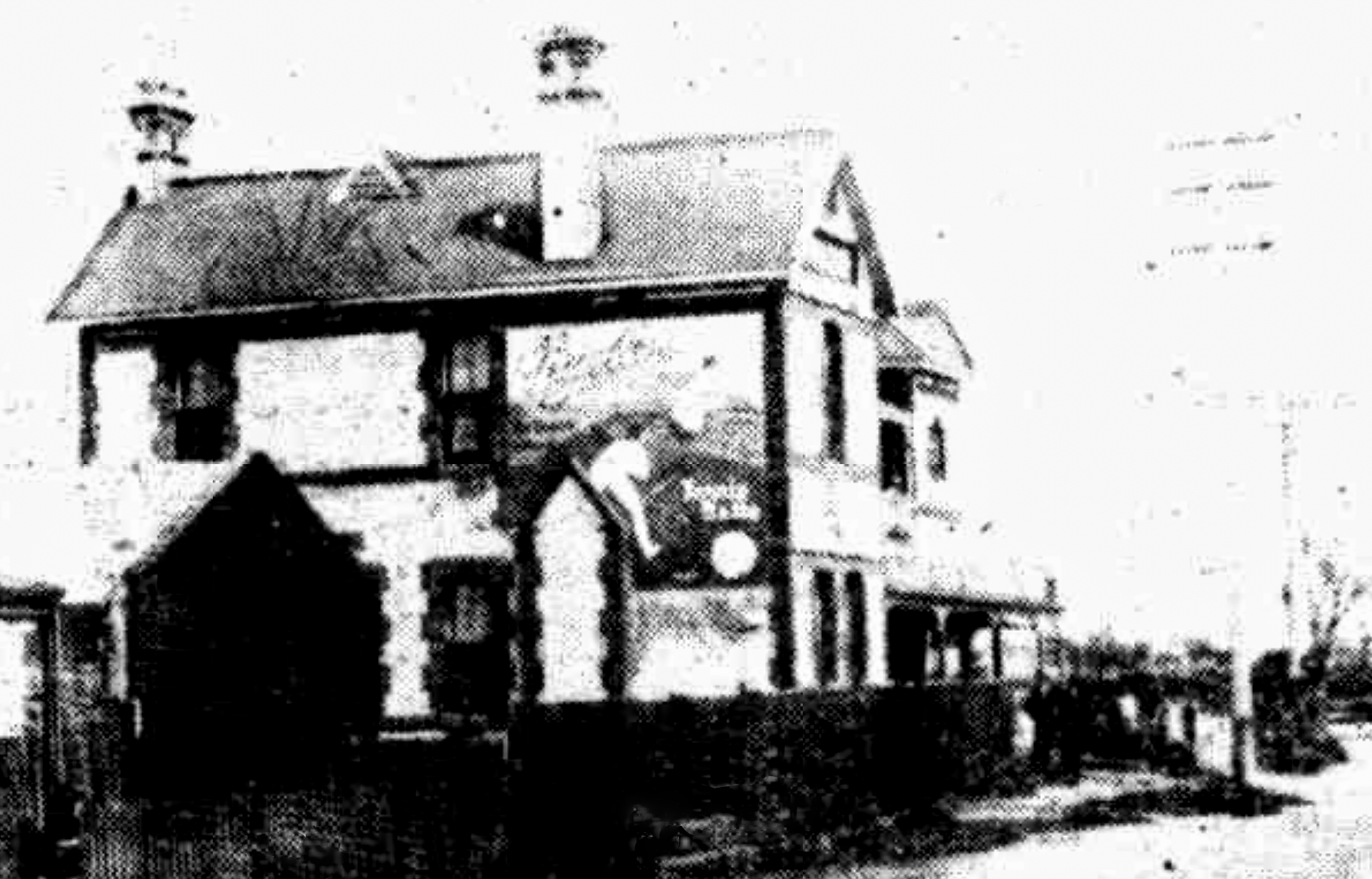
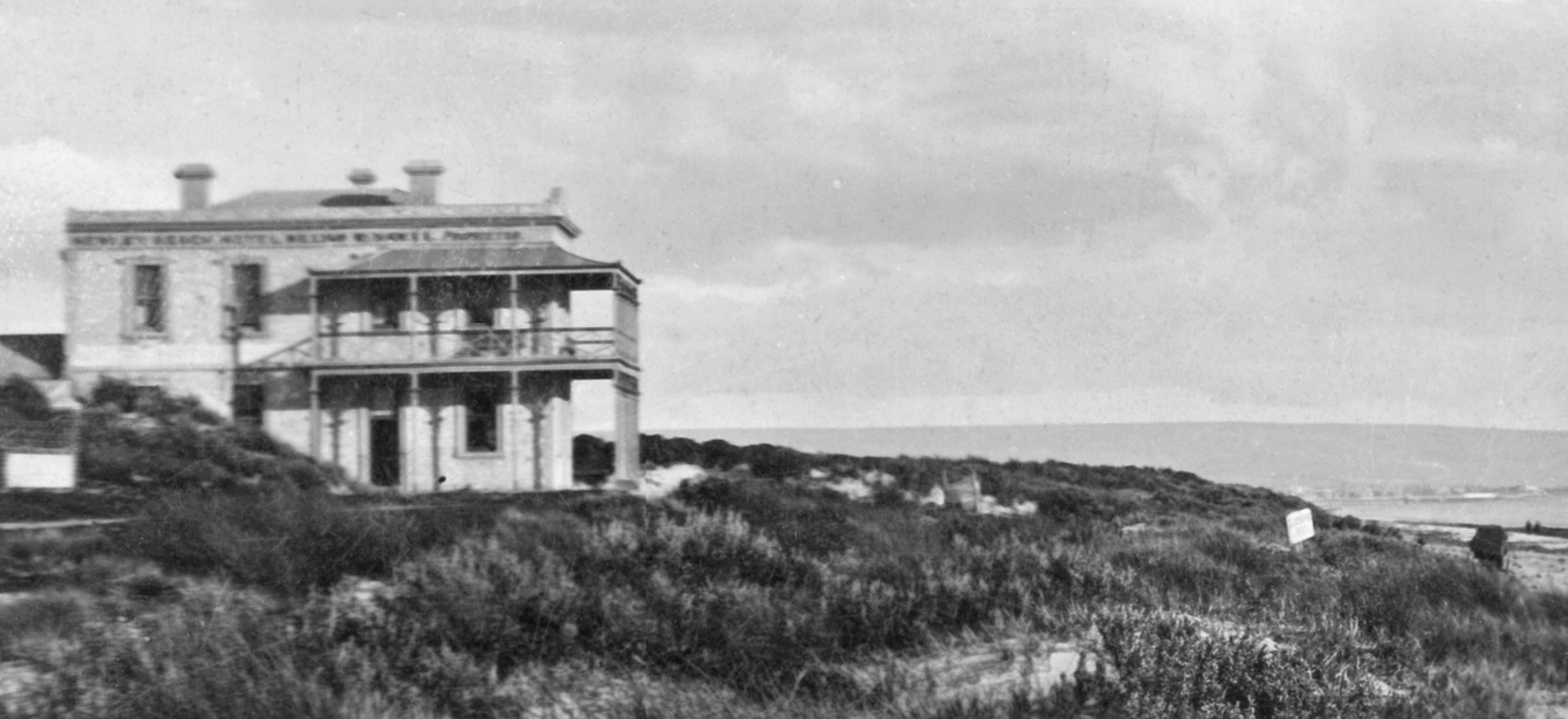
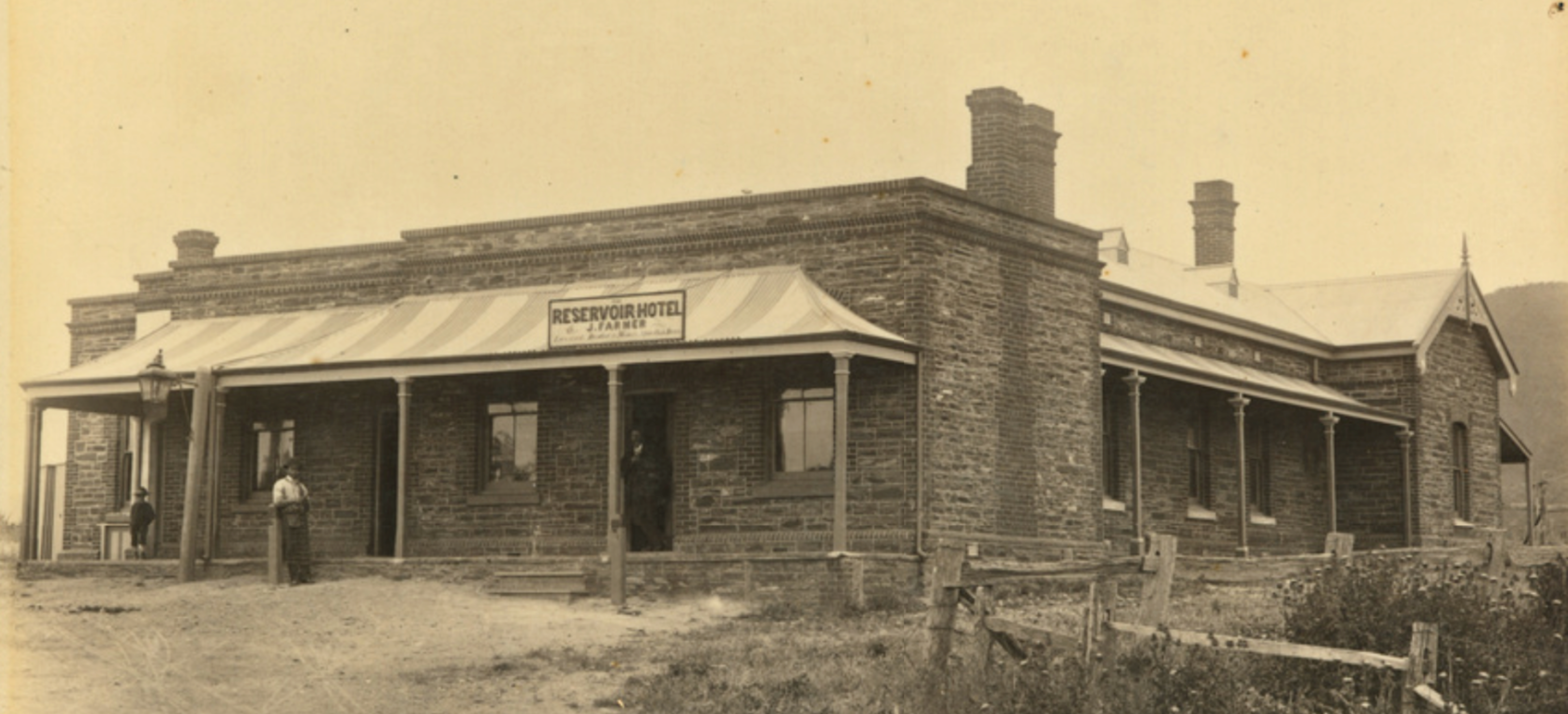
What characterised these hotels for cyclists and, conversely, why did the newspapers single out these particular pubs as "Hotels for Cyclists" when others nearby were excluded? Such questions will be addressed in a future post. In the meantime, below are photographs of the cyclists' hotels in 1897-98; click the images to enlarge in a new window.
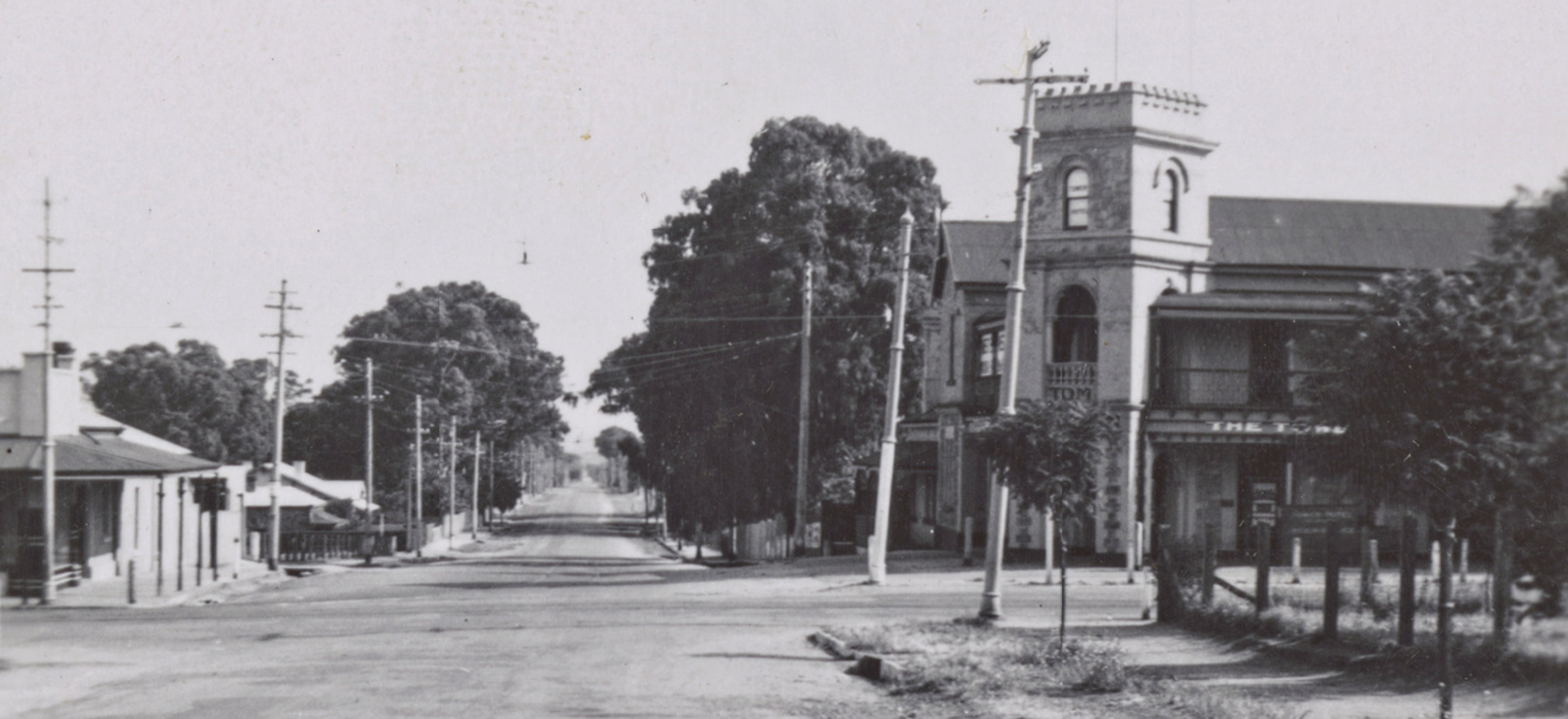
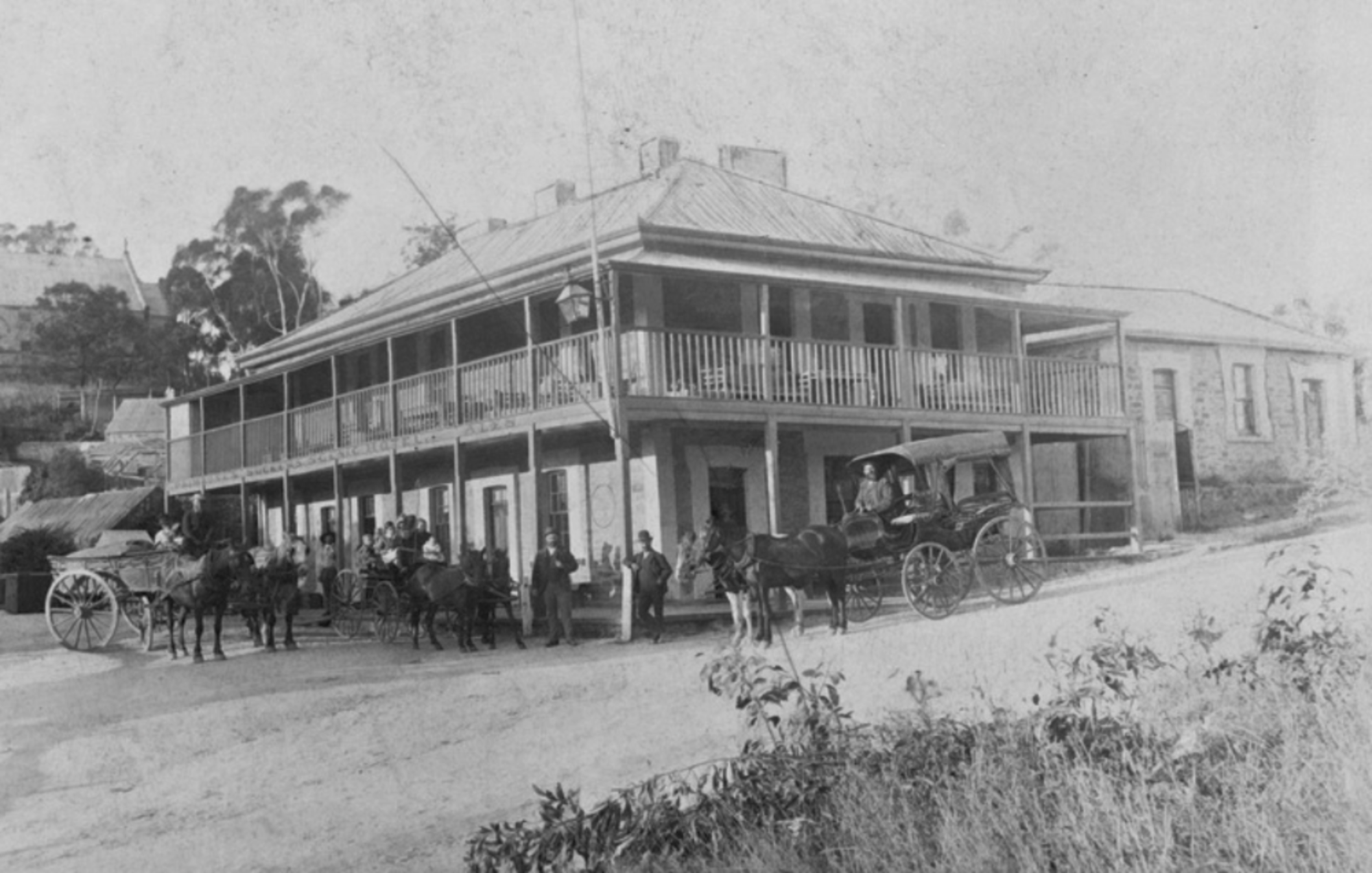
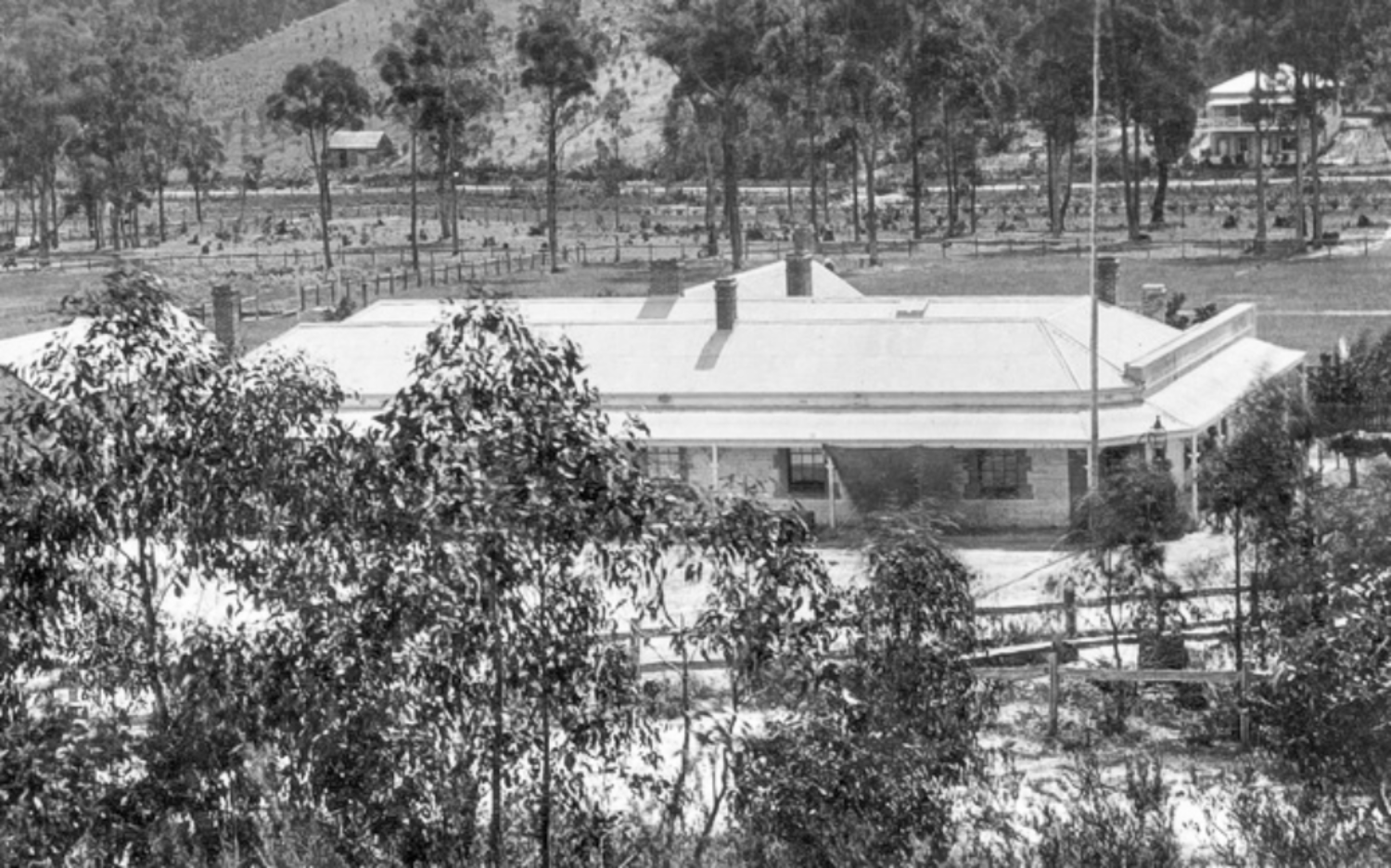
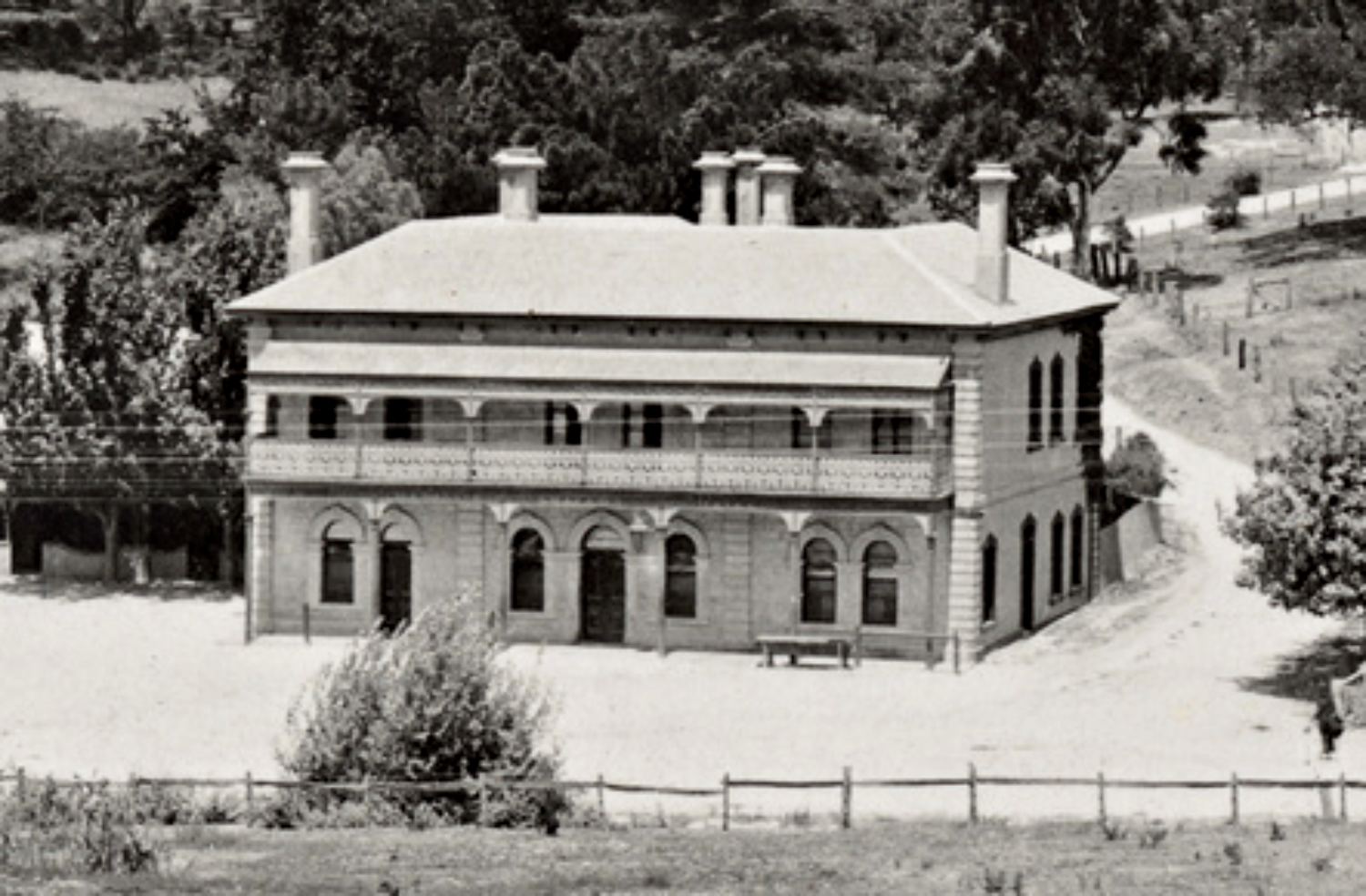
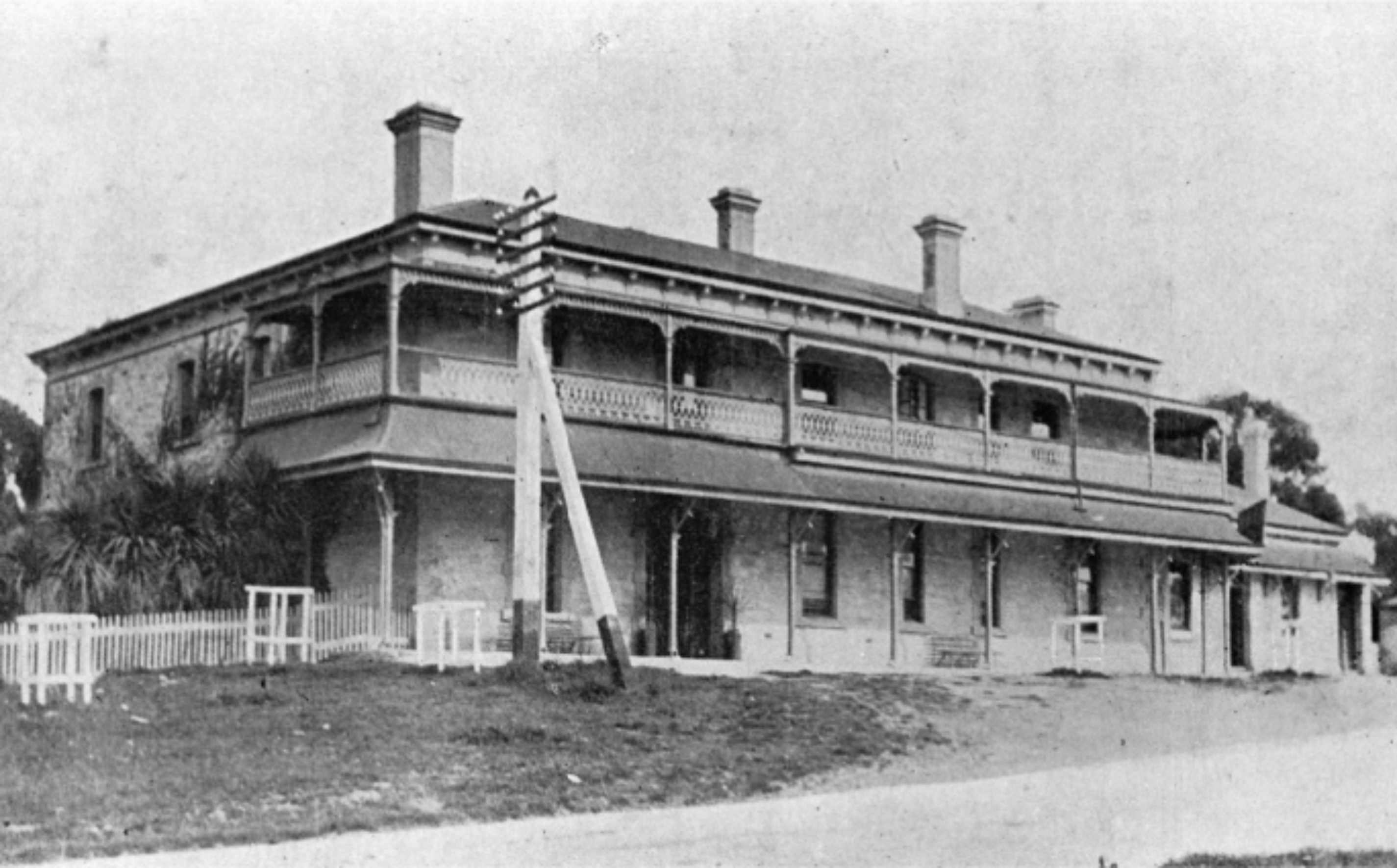
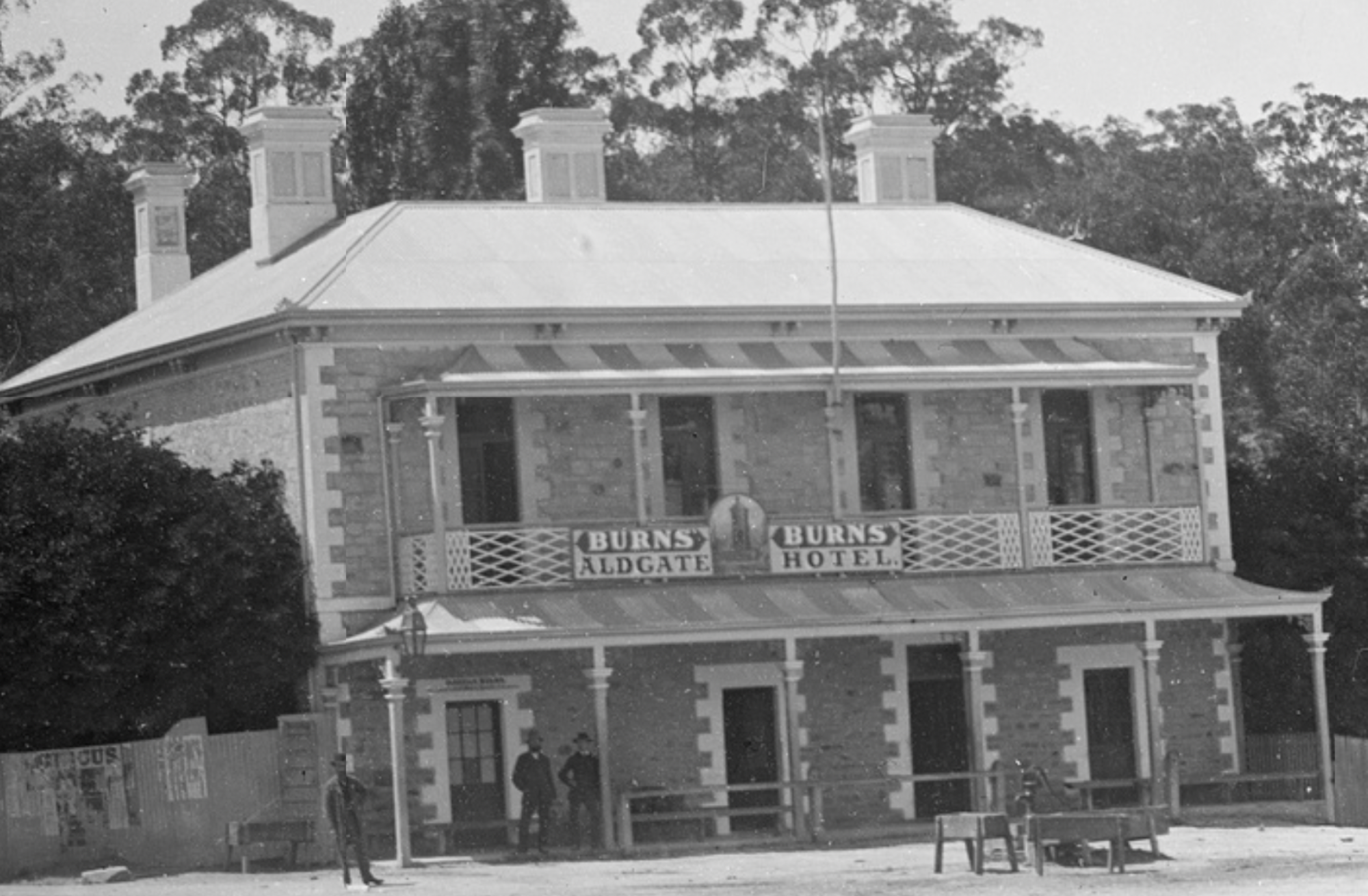
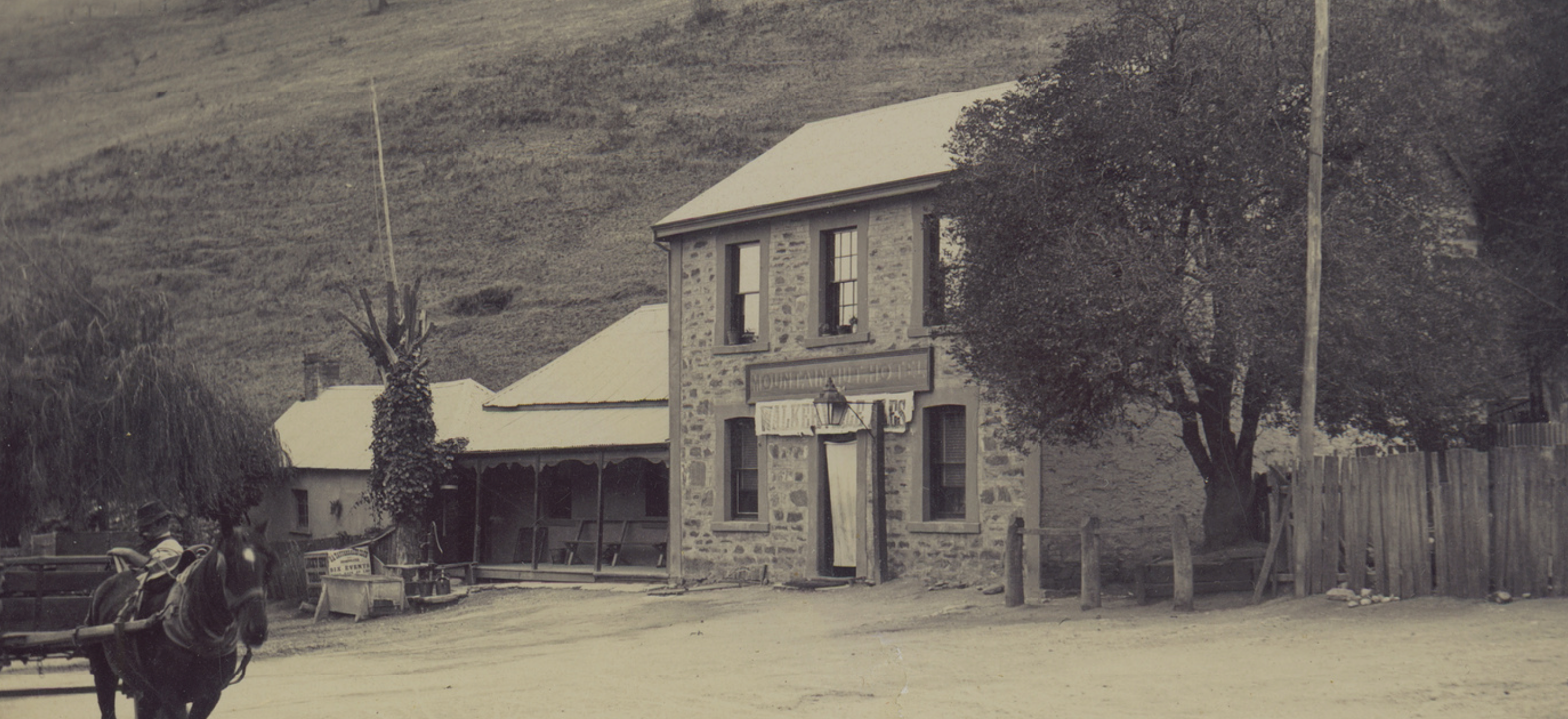
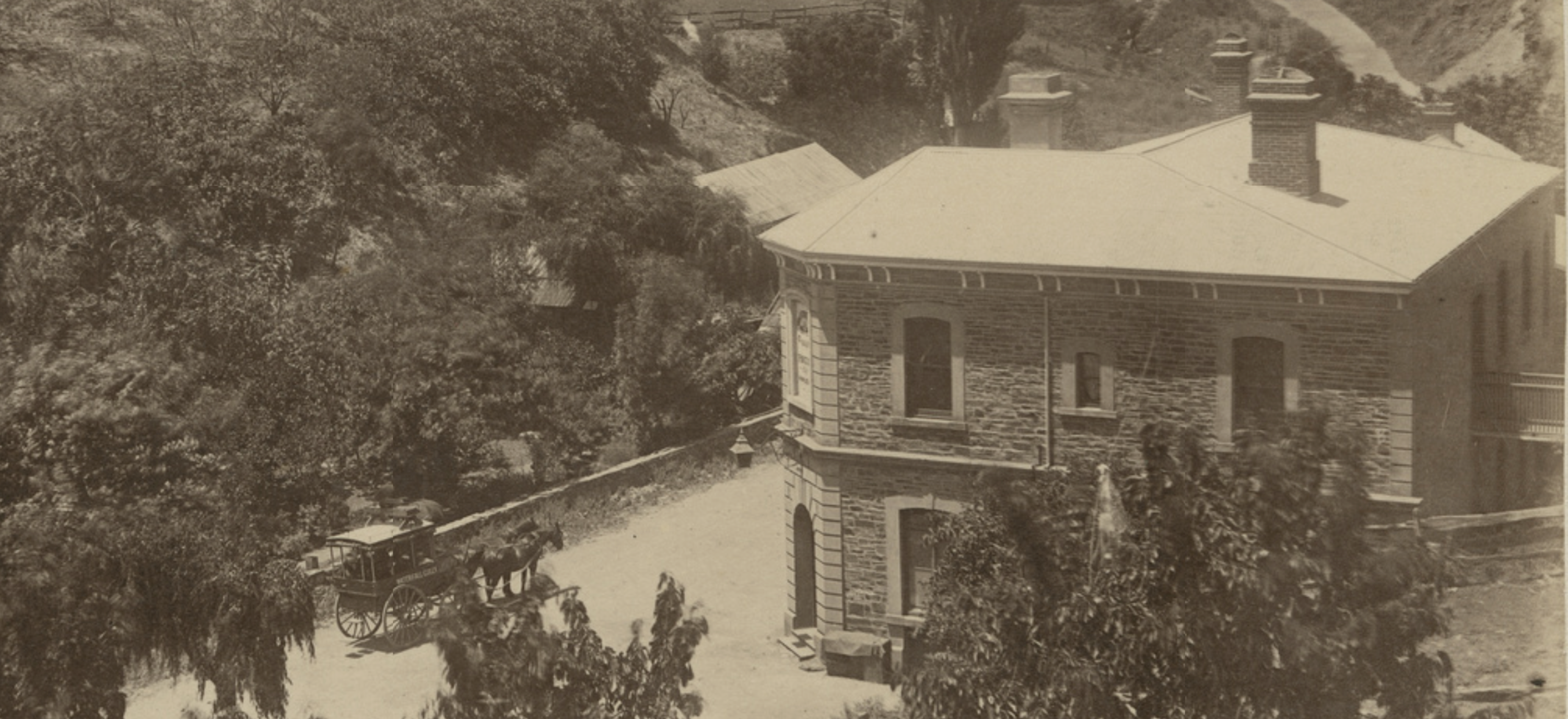
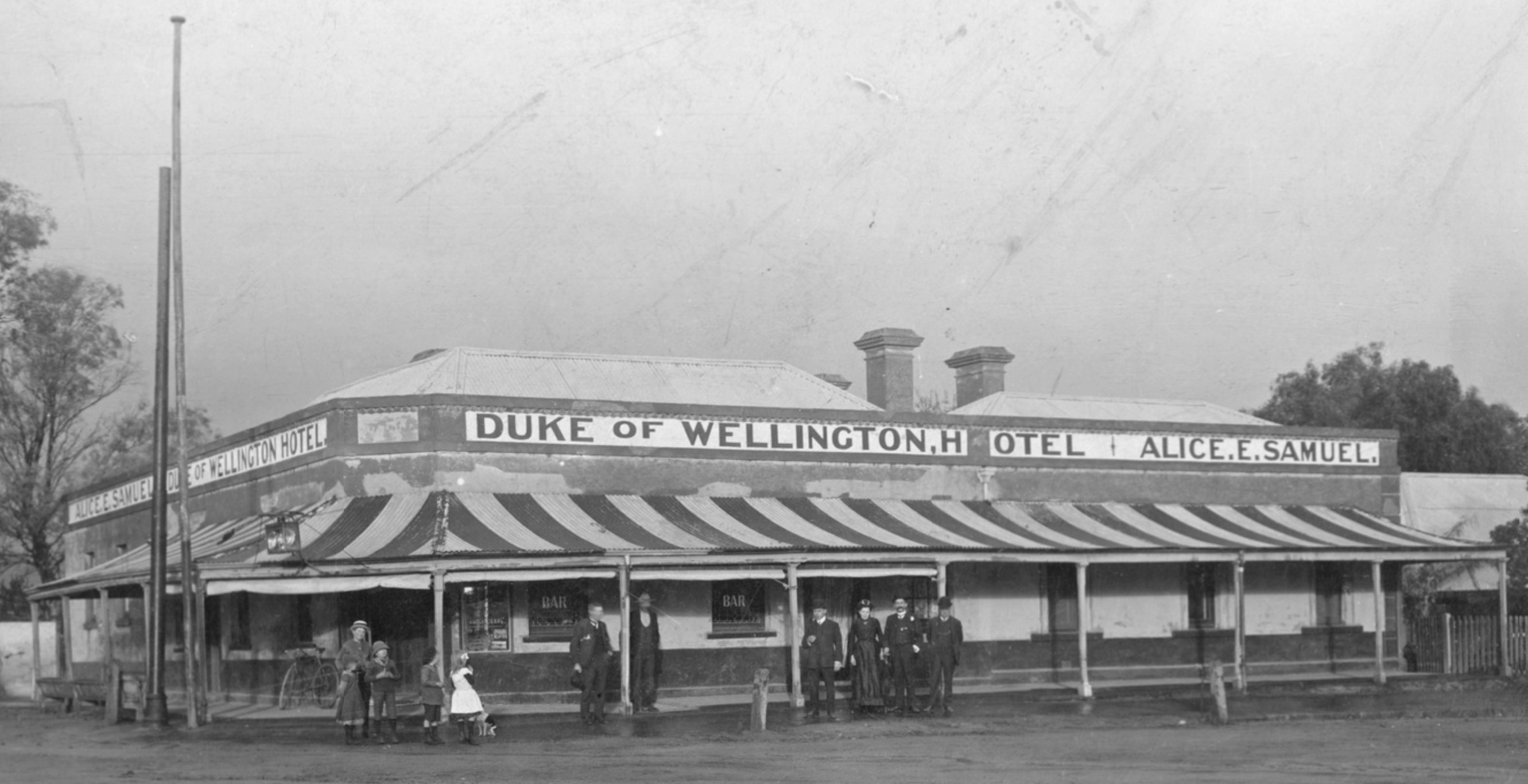
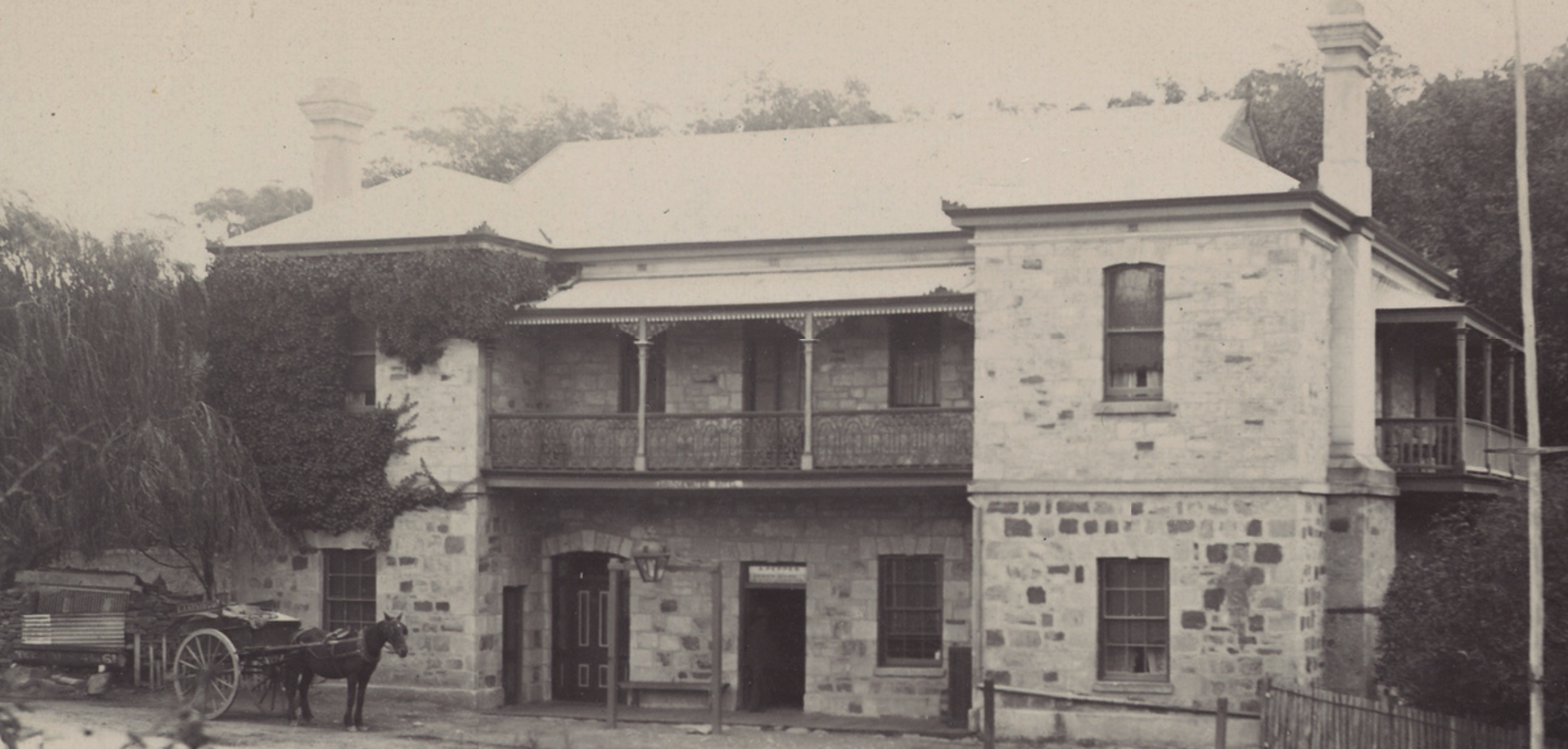
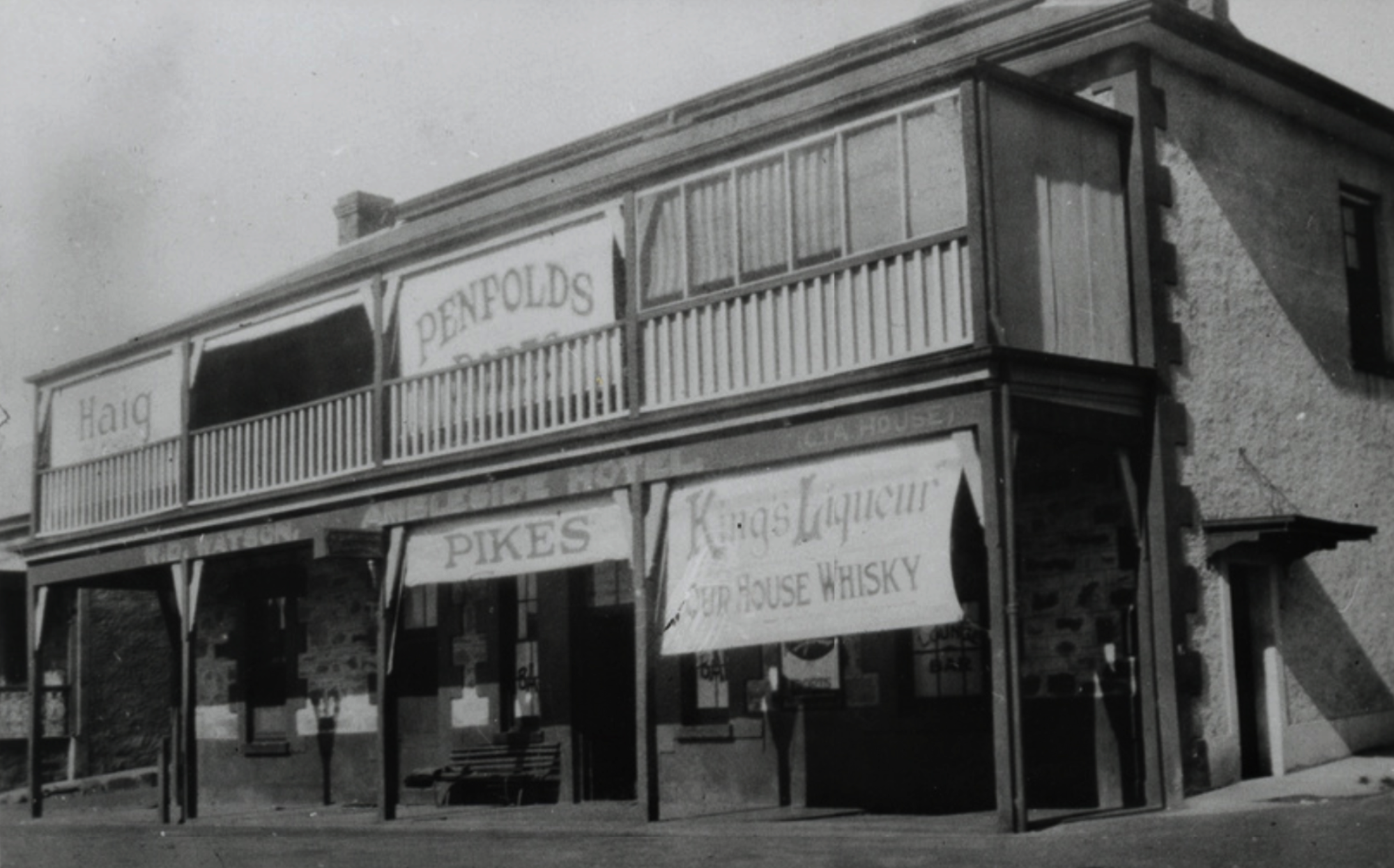

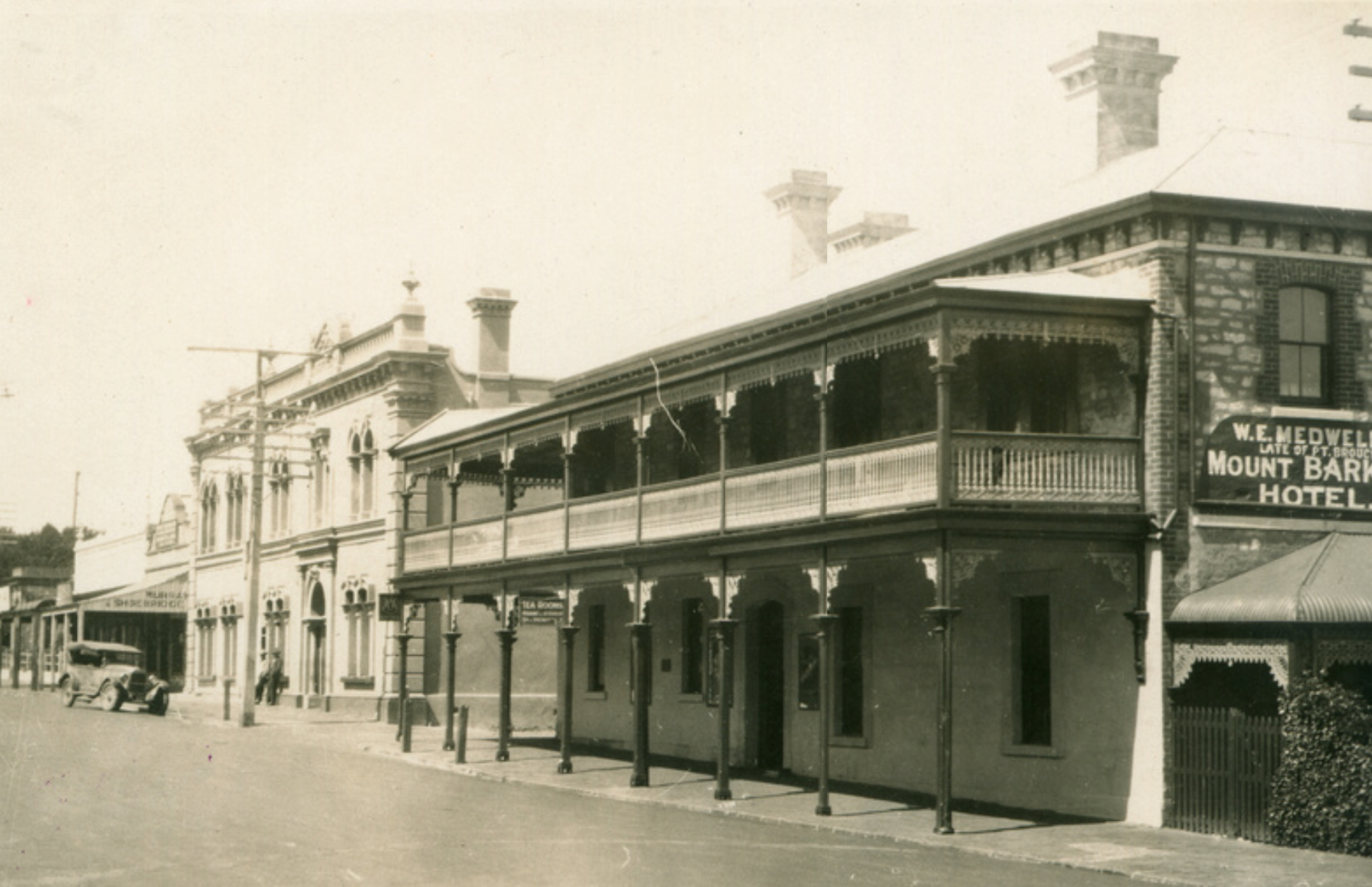
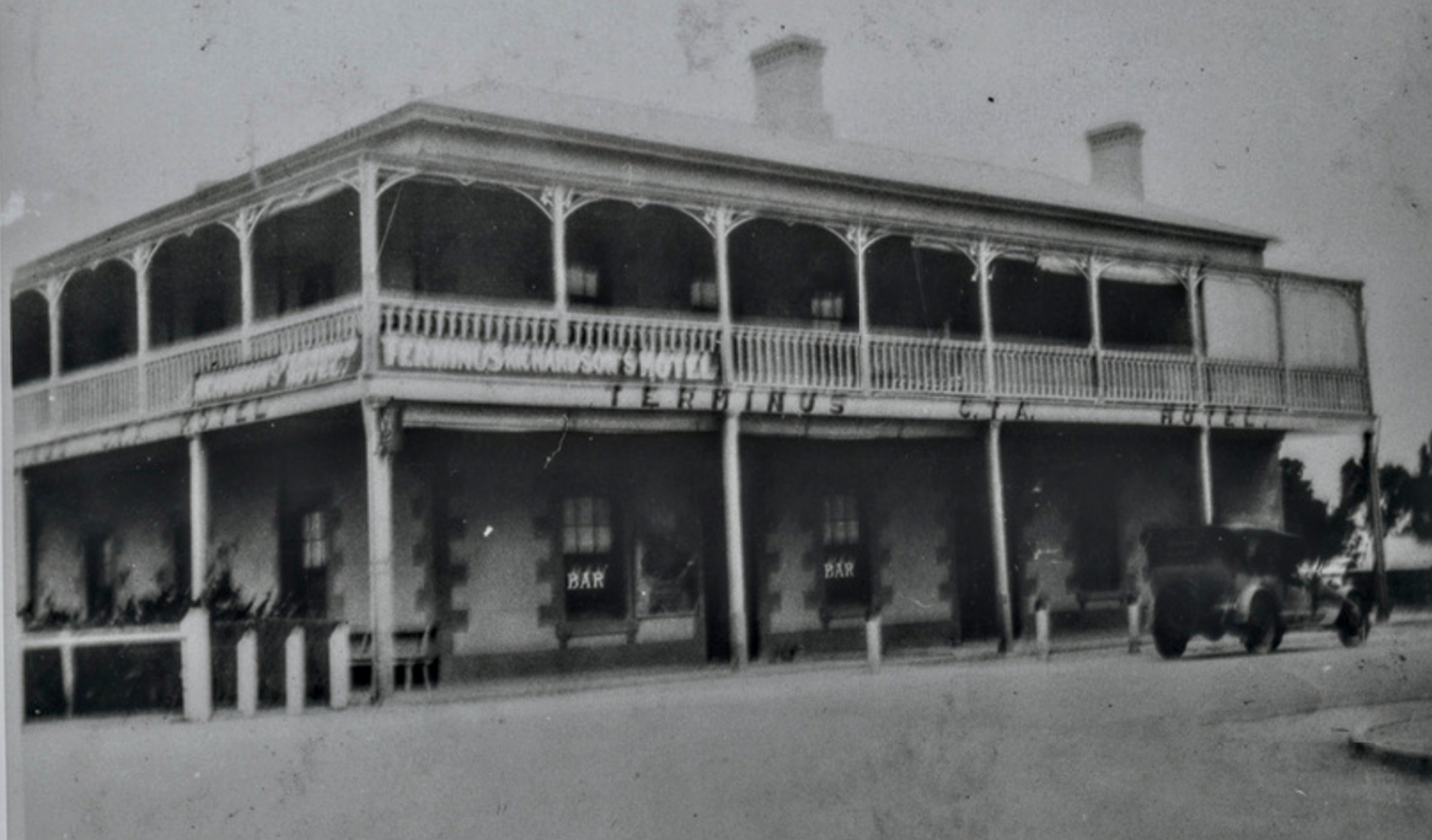
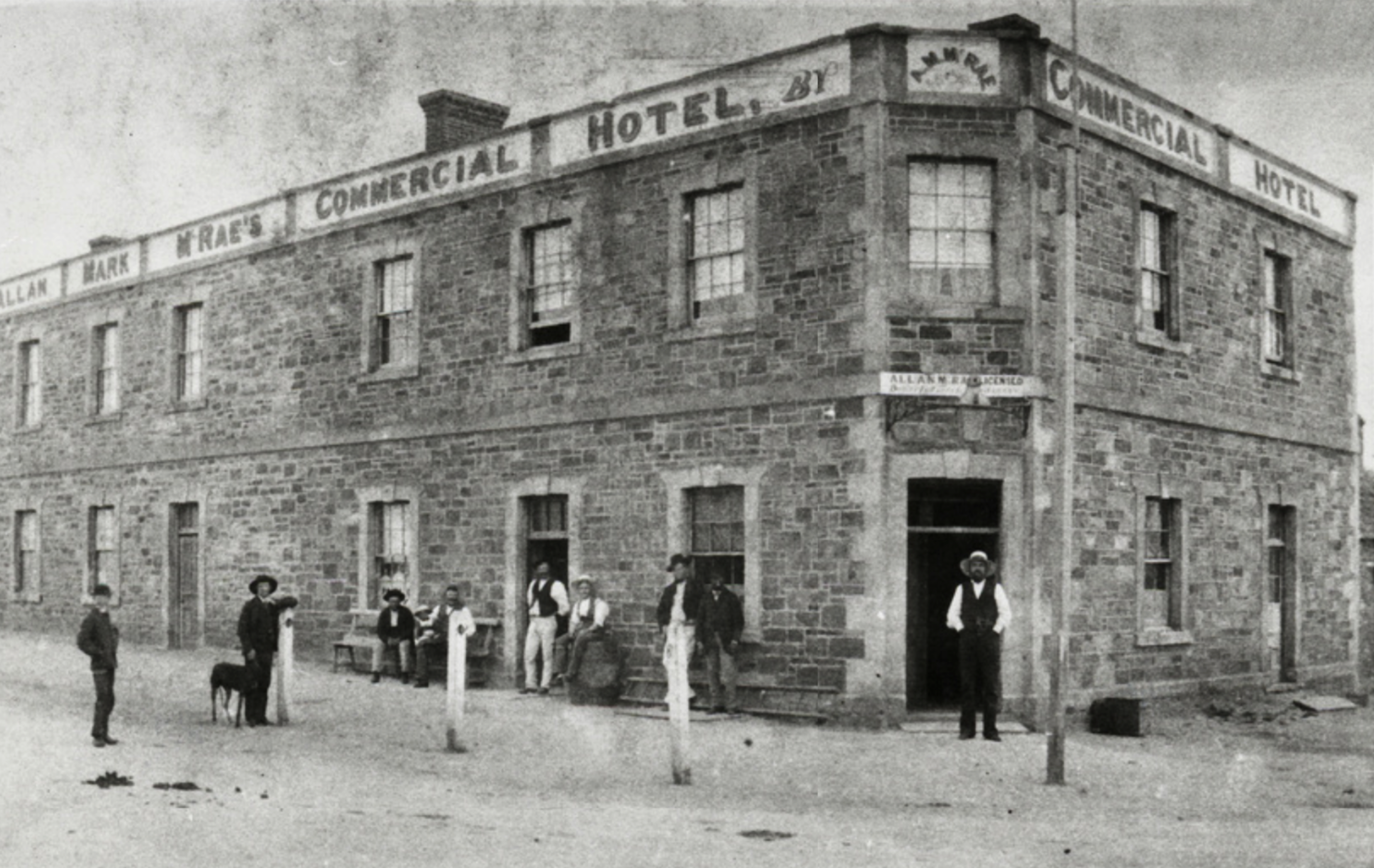
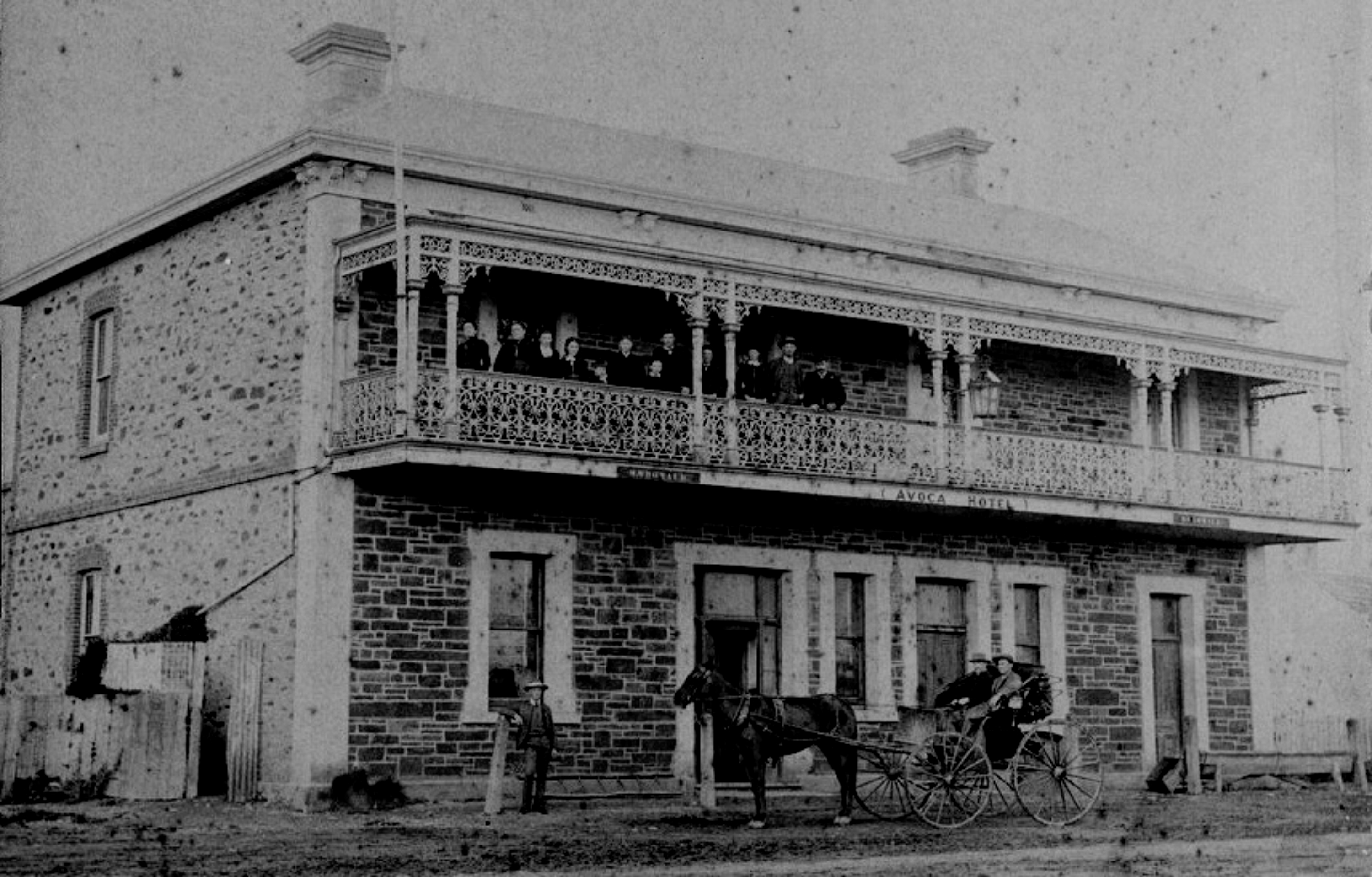
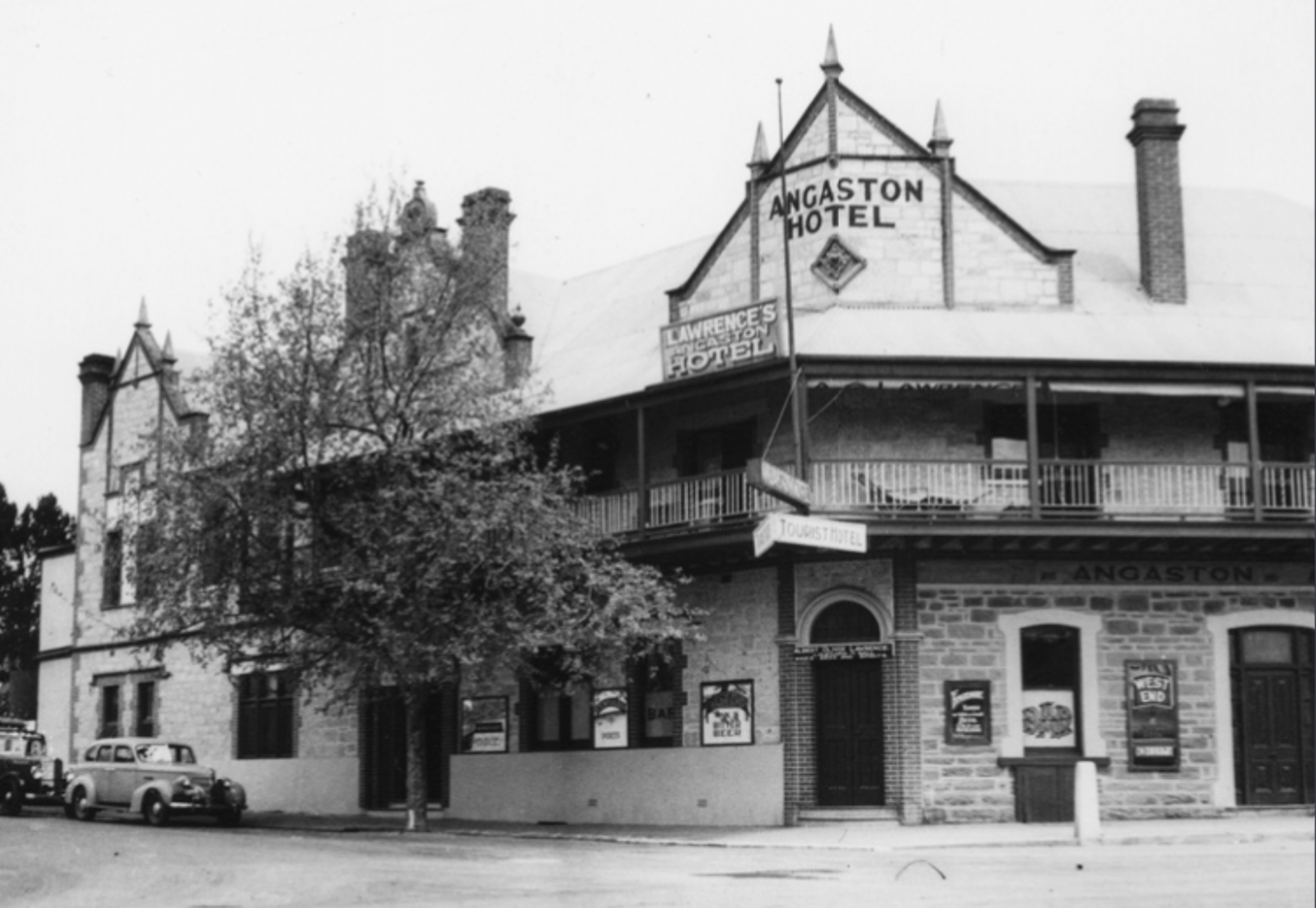
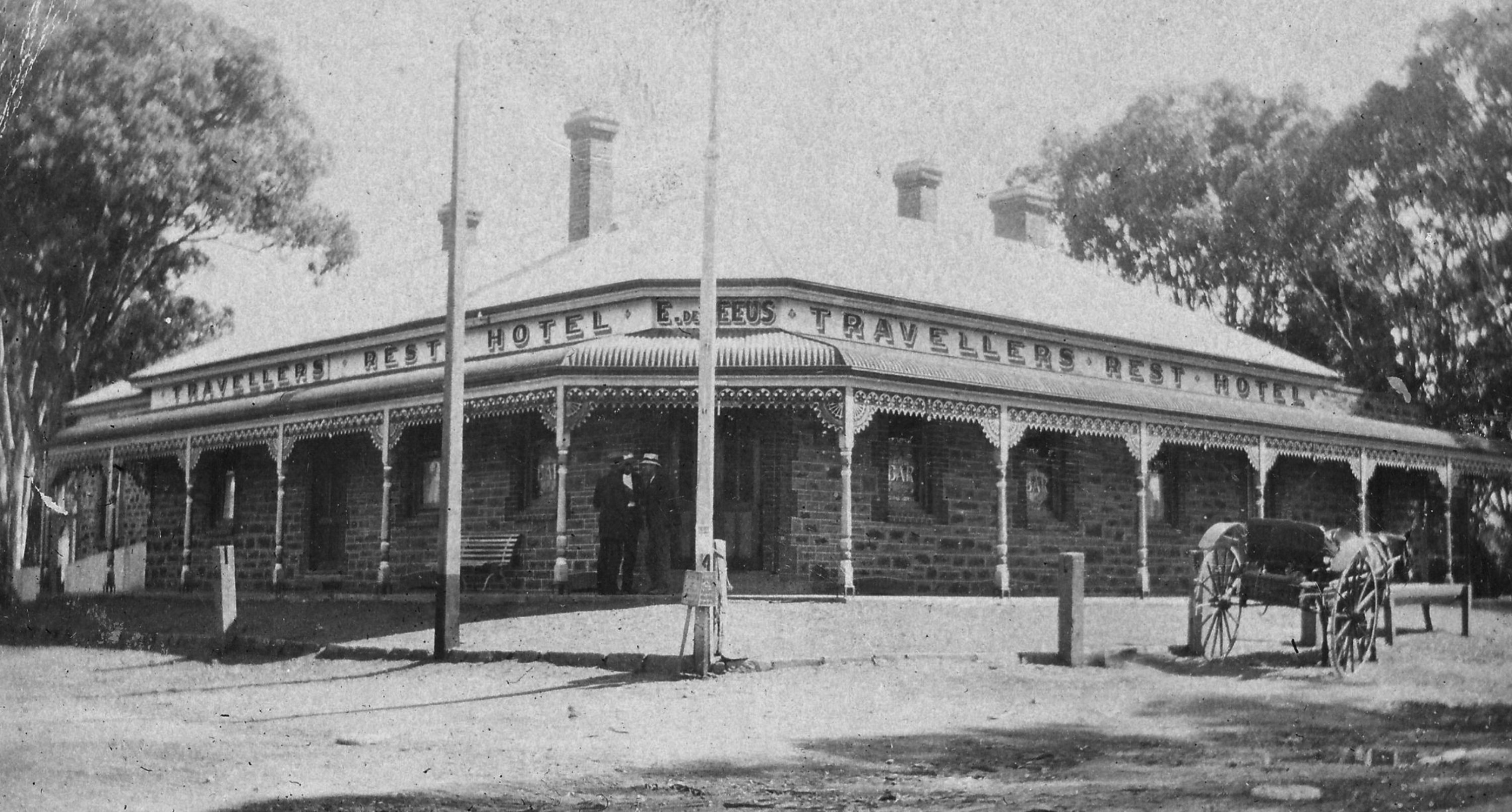
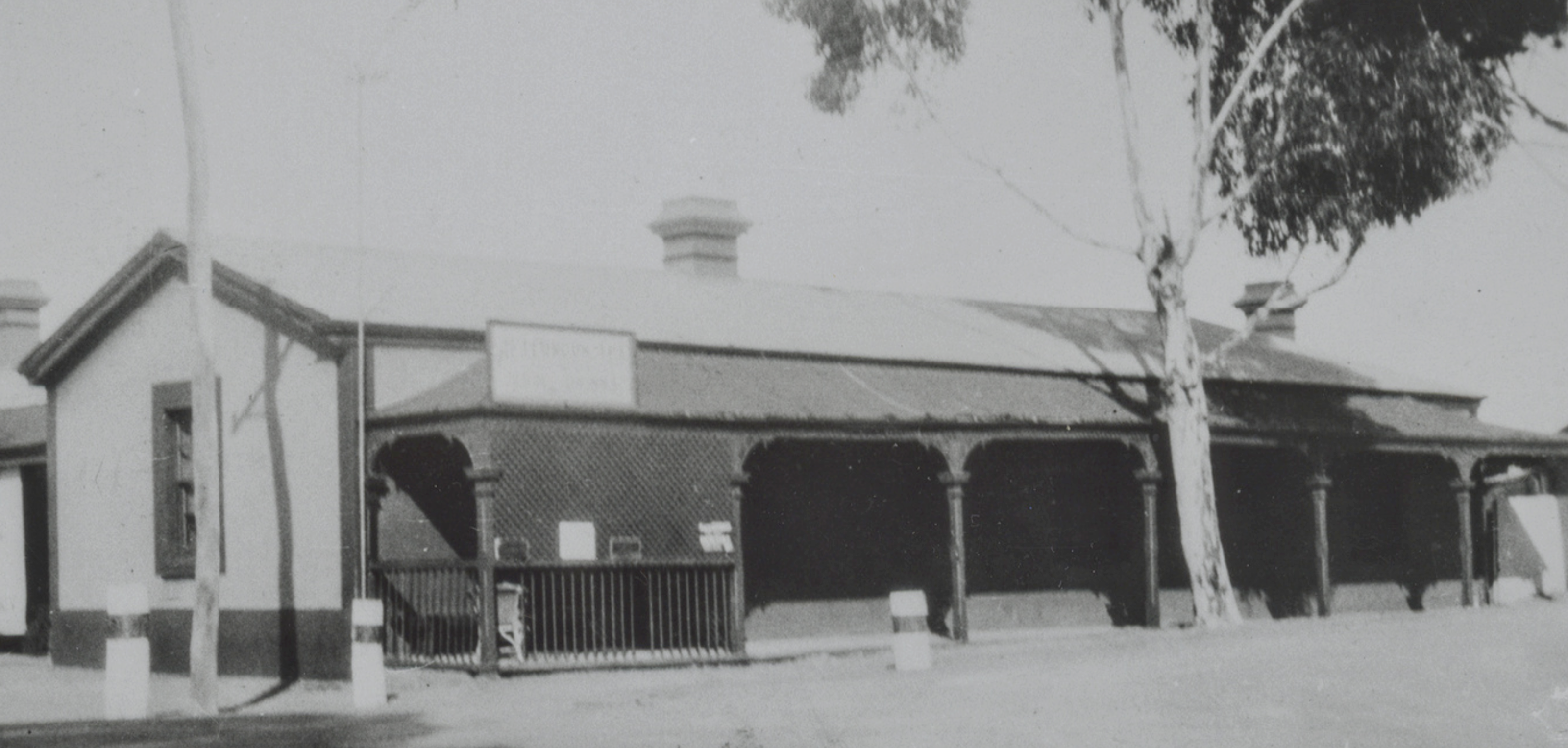
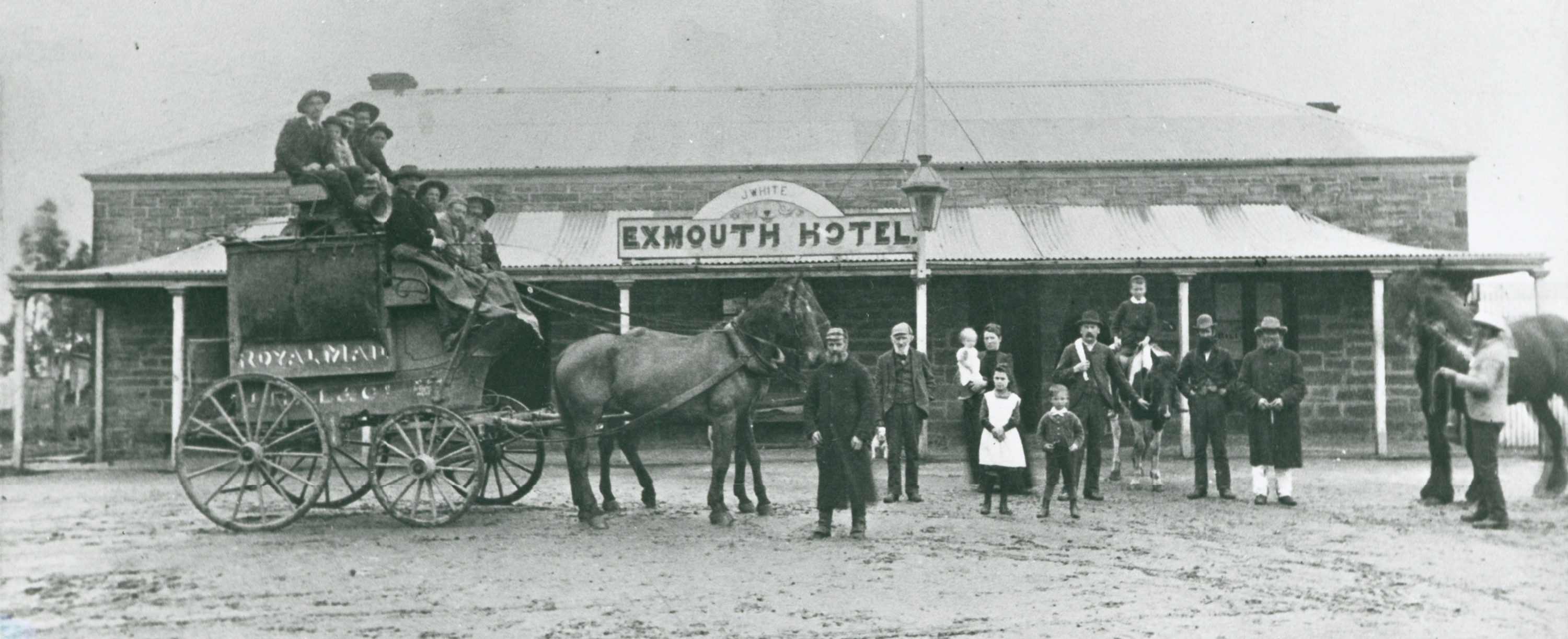

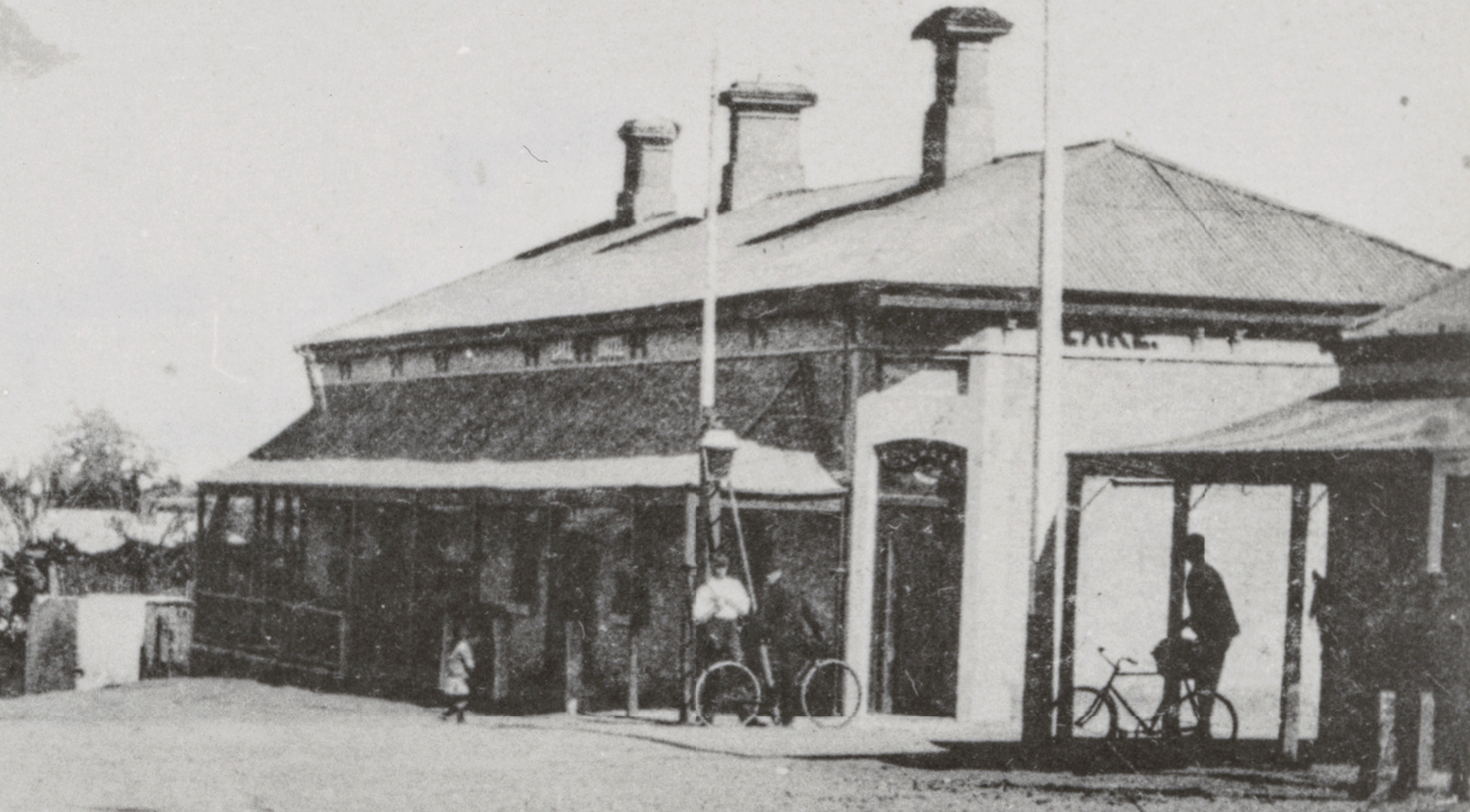
The popularity of cycling tourism seems to have waned from about 1910 - supplanted on the one hand by recreational motoring and rail excursions and on the other by utilitarian cycling. Organised cycling tourism was also superseded between the wars by competitive road racing as both a participant and spectator sport... and, possibly, an opportunity for gambling. Pubs often featured as starting and finishing lines.
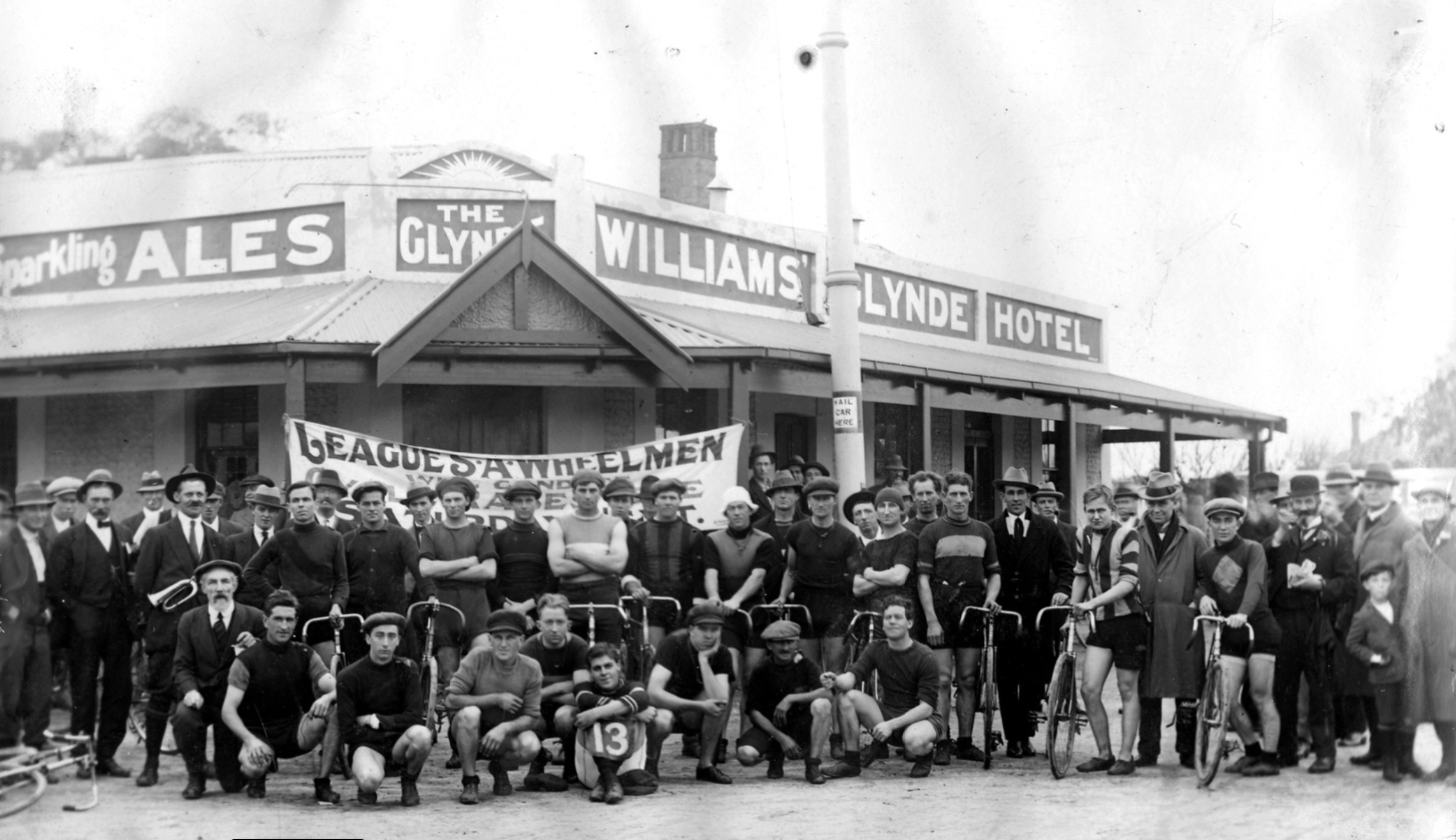
Above: Cyclists competing in the Bullock Road Race in front of the Glynde Hotel, 22 July 1922; the 16-mile (approx. 26km) race started and finished at the hotel.
[SLSA PRG 280/1/34/64]
Posted 12 January 2026
Original content © Craig Hill 2026