|
|
 |
Although barmaids were the most controversial category of hotel-workers in South Australia from about 1870 to 1920, there seems to have been little attempt to 'characterise' them as a group, most basically to even guestimate their number historically. According to the only contemporary estimate that I have been able to find, cited in the debate on the Licensed Victuallers' Bill in October 1896 [Chronicle, 3 October 1896, p.2], there were 66 barmaids in Adelaide. However, by mandating the registration of barmaids, the Licensing Act of 1908 generated reasonably reliable data by which we can determine the number of barmaids working in March 1909, where they worked etc and to gain valuable insights into barmaids and the industry in late Edwardian South Australia.
According to their applications for registration as barmaids, the registry itself and the South Australian Government Gazette, by the end of March 1909 some 391 women applied for certificates of registration as barmaids in South Australia; an updated list of these applicants is downloadable here. Of these, 62.0% were working in pubs in Adelaide in 1908-1909, 18.0% in suburban pubs, 11.8% in country pubs and 8.2% were either not currently employed, no pub was recorded or they had applied from interstate. Given the number of licensed premises in South Australia and Adelaide at the time, this means that there was an average of about 0.6 barmaids per hotel or club or railway refreshment rooms across South Australia, an average of 1.0 in the City of Adelaide and 0.3 for country premises.
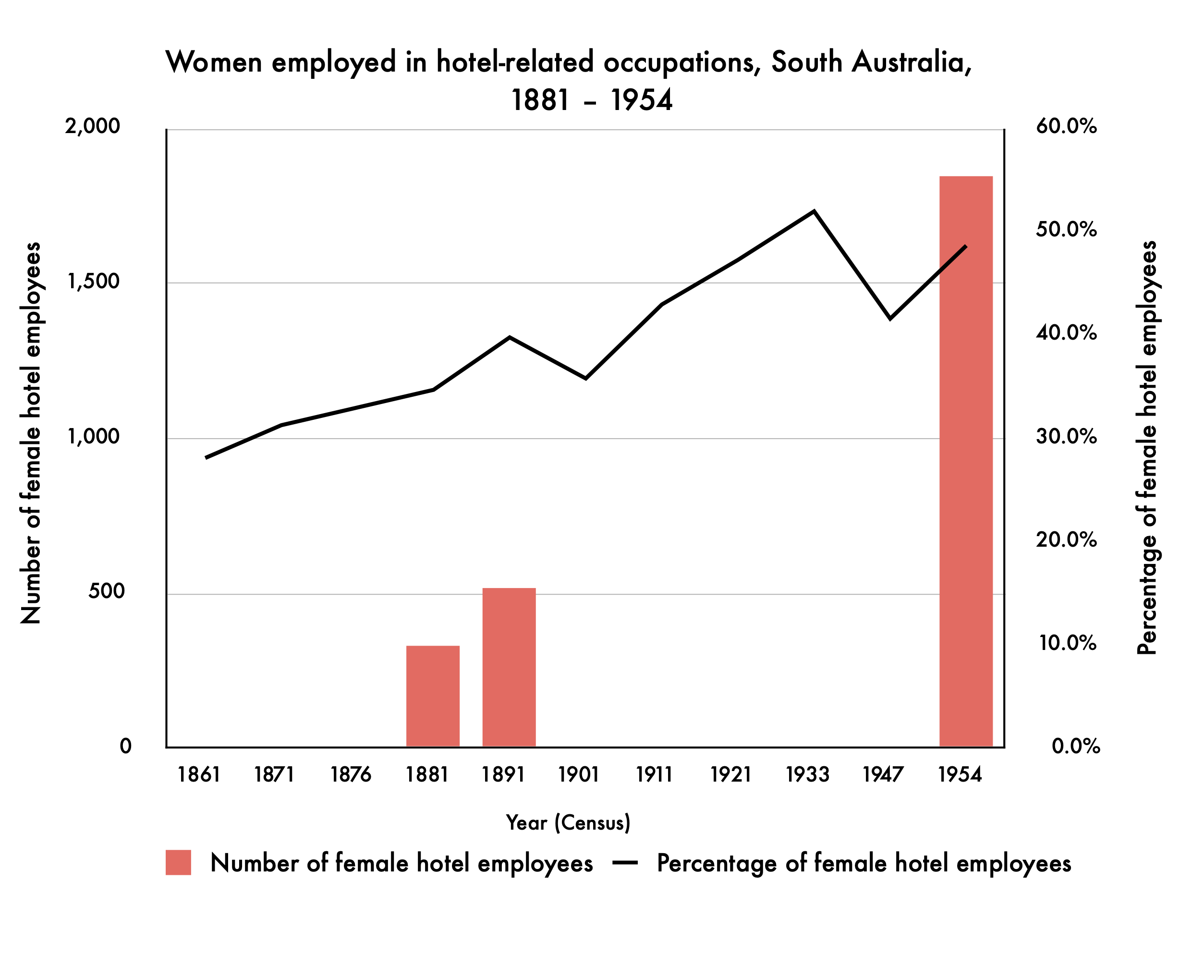
While it is tempting to extrapolate these figures back in time based on the earlier numbers of pubs, it is likely that the number of barmaids were very unevenly distributed not only geographically but also over time. Following Katherine Mullin's proposition that barmaids were an "essentially modern institution", it is arguable that 'barmaid' as an identifiable profession (and 'barman' for that matter) were the product of the 'industrialisation' of pubs: the shift from hotels principally as places of accommodation and public service up to the 1850s to places focussed on drinking and entertainment after the 1870s. So it is likely that the number of barmaids increased at a greater rate than the (female/working) population, especially from the 1870s. This is borne out by a cursory 'Trove' survey which shows a dramatic increase in the number of advertisements for publicans seeking barmaids and barmaids seeking employment from the mid 1870s.
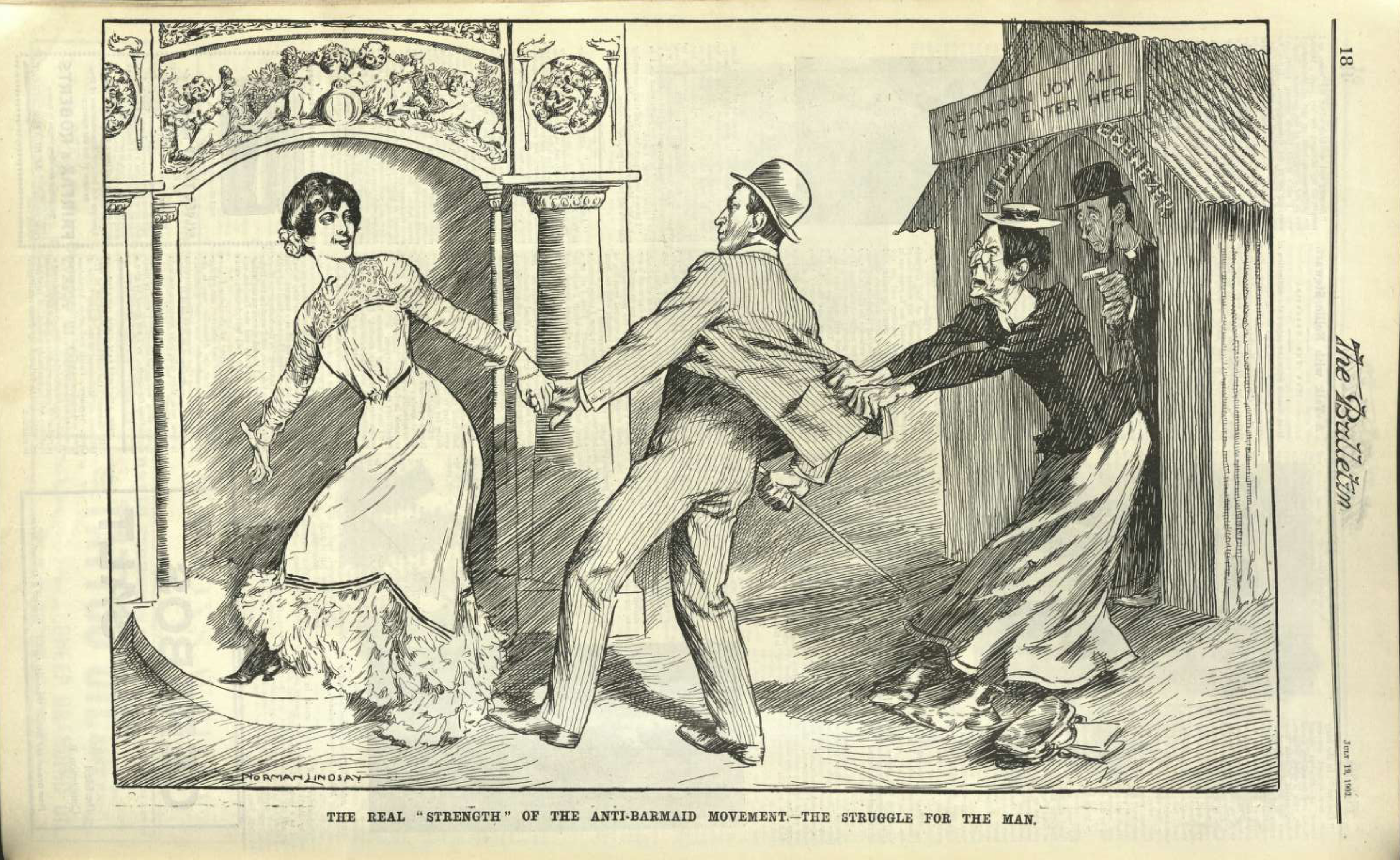
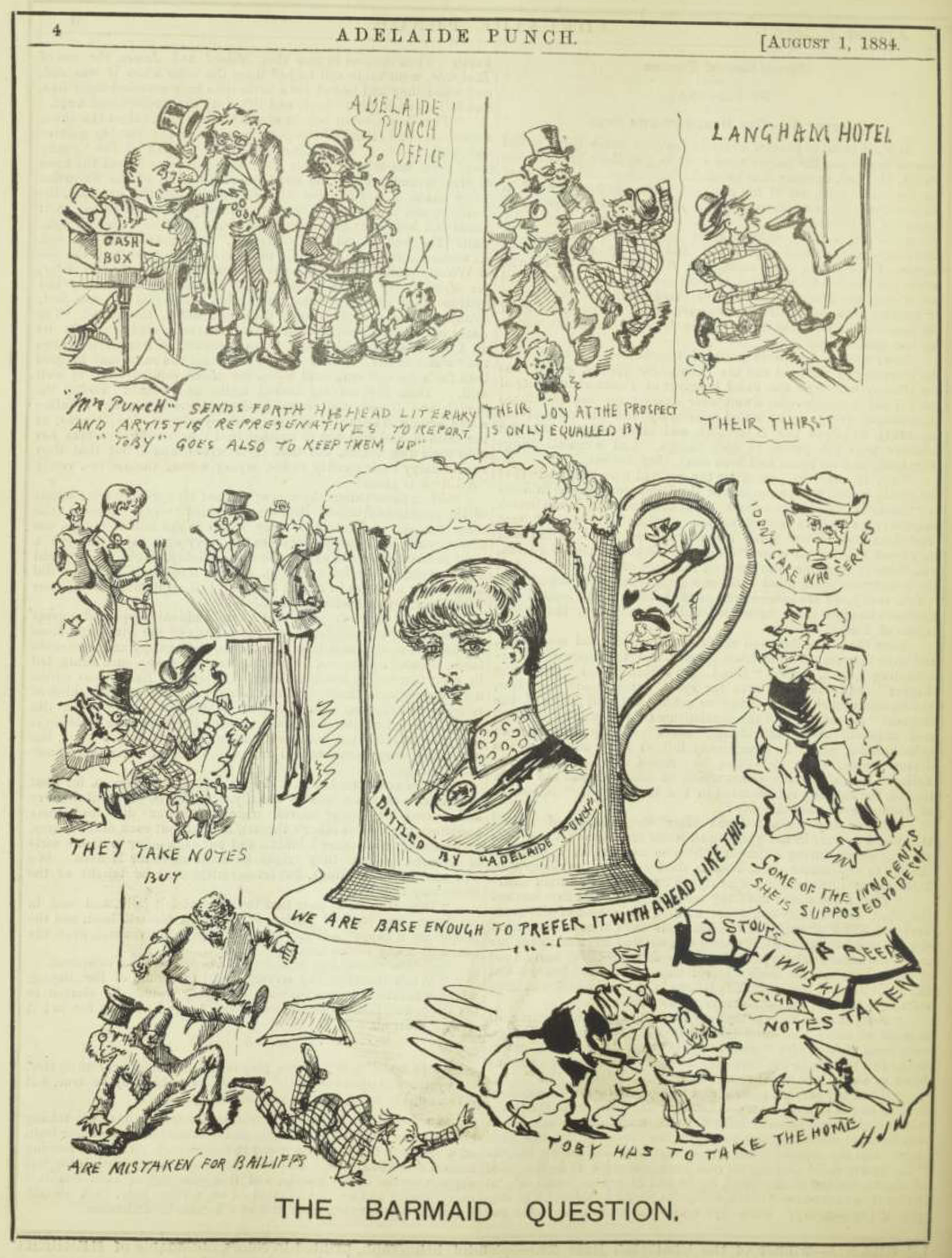
The first reference to a South Australian barmaid that I have been able to find is to an anonymous "barmaid of Mr [Edwin] Bird", "an Irish girl", at the Baker's Arms in Waymouth Street in November 1841 [Adelaide Independent and Cabinet of Amusement, 4 November 1841, p.2]. The first South Australian barmaid named in the public record appears to have been Elizabeth Cooper, "barmaid at [Bassingthwaite's] New Bush Inn" in Gawler in March 1849 [Adelaide Times, 12 March 1849, p.3]. Not much more is known of either of these two women; from the context of references above, it is likely that they were employed casually or temporarily rather than regularly to serve in bar-rooms. By the end of the 1850s, however, "barmaid" had become a full-time occupation for women in the hotel industry, separate from "housemaid" or "[female] hotel servant" and typically earning significantly more; "barmaid" was listed in the occasional "labour market reports" published by the likes of Hunt's Labour Office, an early private labour hire company [for example, Advertiser, 2 August 1858, p.2]. The apparent increase in the number of barmaids, their concentration in urban pubs and their "objectification" as a group coincided with the beginning in South Australia of the debate on the "barmaid question" in the pulpit and the press and in Parliament and which culminated in the regulation of barmaids in 1908.
• • •
Attached is an updated list of the three hundred and ninety or so women who applied and/or were registered, under the Licensing Act of 1908, as barmaids. The list now includes:
• the 'Liquid History' number (alphabetical list by surname)
• the barmaid's surname
• the barmaid's given names
• the 'Reference' or 'Registration' number as recorded on their applications or in the Register, if approved
• the licensed premise in which the applicant was reported as working in 1908 or early 1909, if known
• the town or suburb of the licensed premise
• the source of the information
• the outcome of the application if known
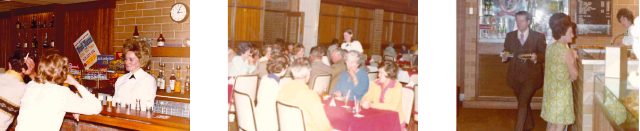
Barmaids/waitresses at the rebuilt Walkers Arms Tavern, Walkerville, c1974
Young, uniformed barmaids epitomised modernity in the new, fashionable suburban hotels from the 1970 as much as drive-in bottle departments, self-service food counters and mini-dresses.
[SLSA South Australian Brewing Company Archives Acc3949]
|