
|
 |
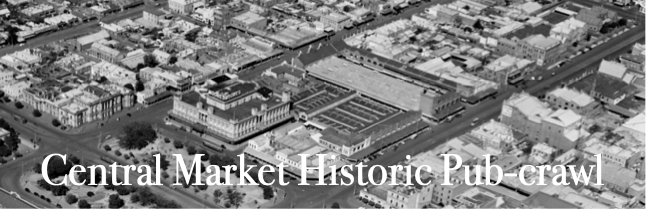
Adelaide Central Market Historic Pub-crawl Adelaide's Central City Market was was opened officially on the morning of 22 January 1870 by the Adelaide Corporation (aka Council), principally as a retail fruit-and-veg and general produce market to service the western side of the city. At first comprising just two open sheds on Gouger Street (see the photographs below), the market was progressively extended to Grote Street in 1889; shops and decorative brick facades were built on Grote Street in 1900 and Gouger Street in 1906, and the original Market Arcade added in 1916. The market was upgraded and its name changed to the "Central Market" in August 1965. In December 2019 the Adelaide City Council announced a major redevelopment of the Market precinct, planned to be completed sometime soon-ish.
For more on the history of the Central Market, see: Peter Bell, "Central Market"", SA History Hub, History Trust of South Australia (2010) [Patricia Sumerling?], "The Central Market, City of Adelaide Heritage Study, Volume 1, October 1990 Catherine Murphy and Rossa Matto, The Market: Stories, History and Recipes from the Adelaide Central Market, Wakefield Press, 2003
The Central Market and nearby pubs: 1865, 1870, 1885, 1900, 1936 An aerial photographic survey 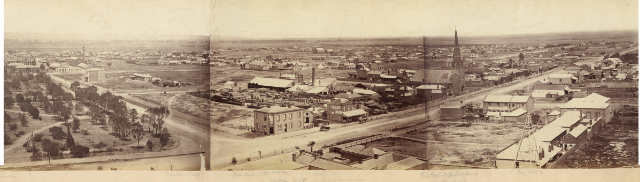
Part of Duryea's composite panorama of Adelaide photographed from the GPO tower, 1865 [State Library of South Australia B-5099; click to enlarge] 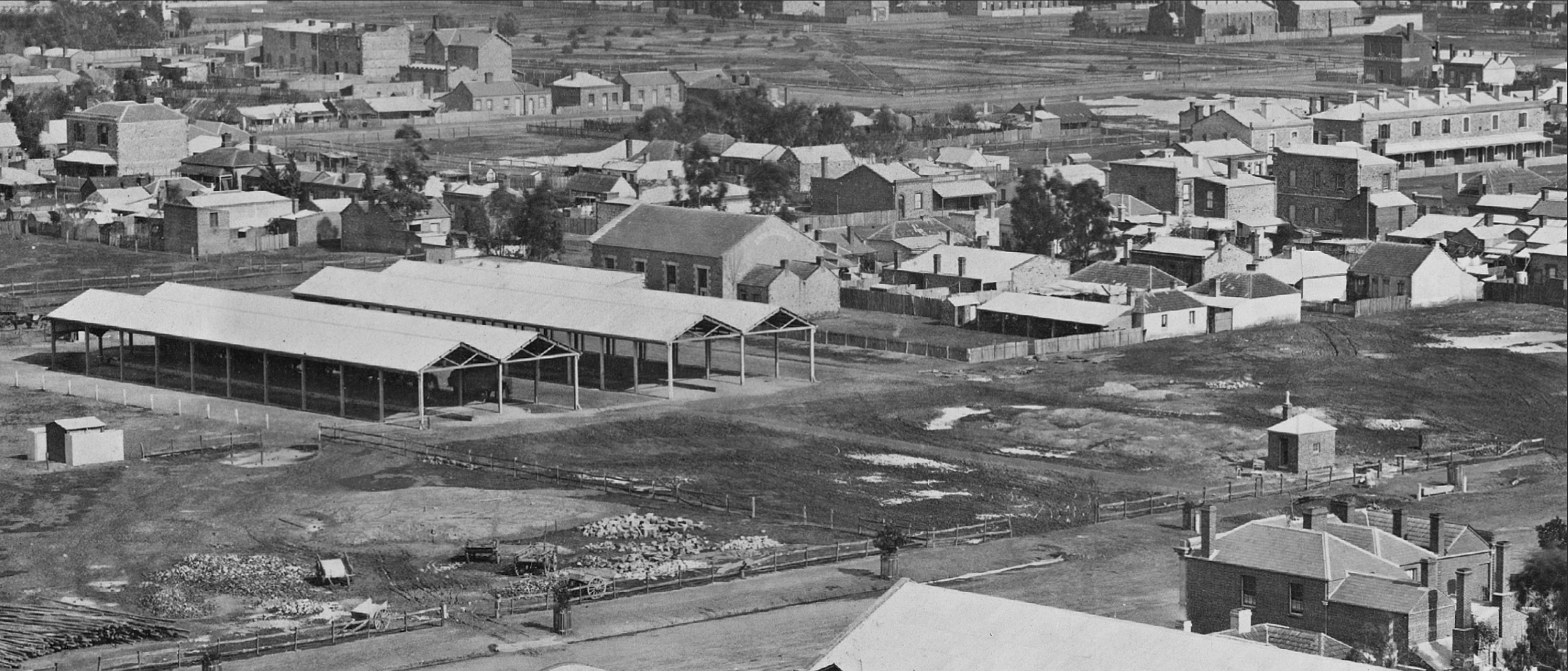
Part of Duryea's panorama of Adelaide, 1870 [State Library of South Australia B-16004-7; click to enlarge] 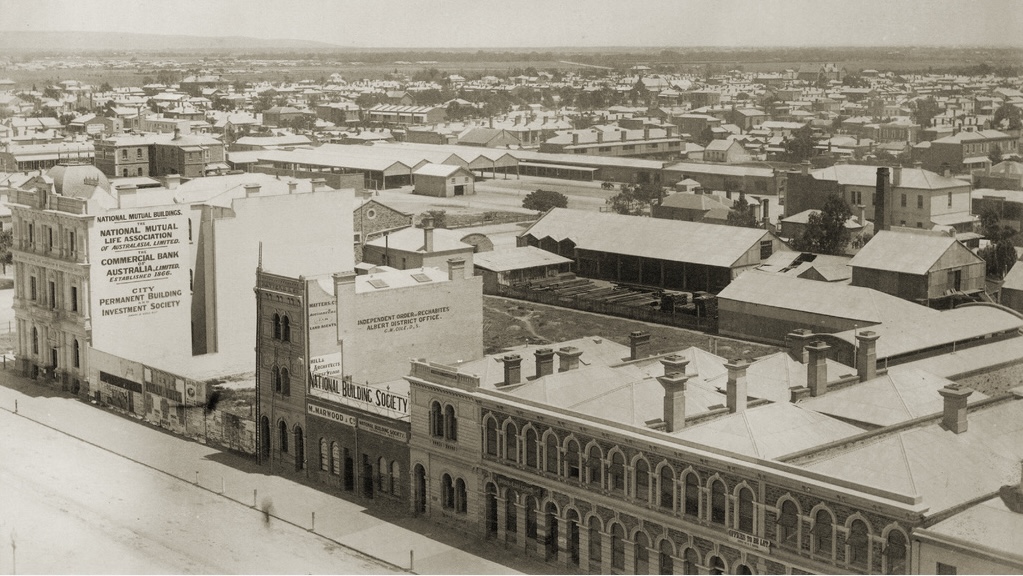
Unattributed panoramic view of south-west Adelaide from the GPO tower, c1885 [State Library of South Australia B-9130] 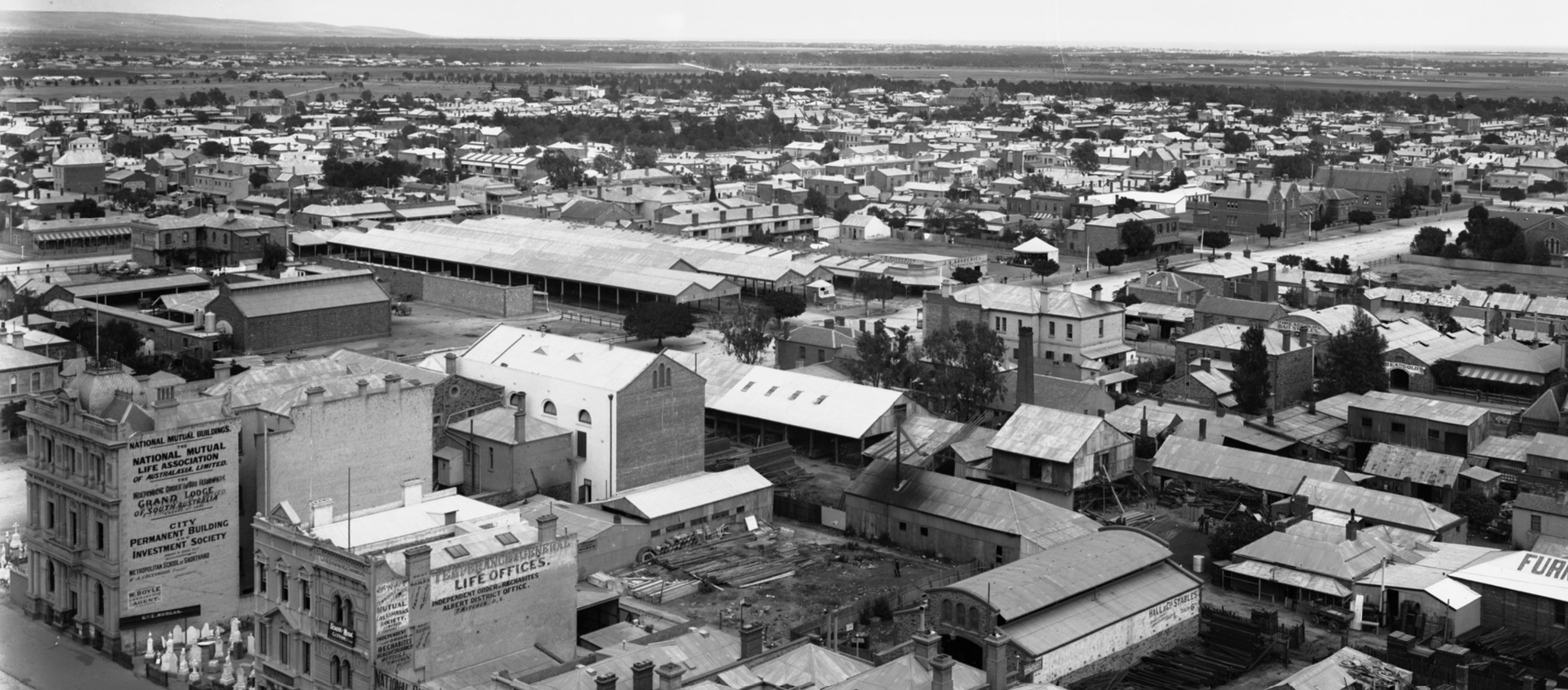
Part of Ernest Gall's panorama of Adelaide, c.1900 [State Library of South Australia PRG 631/2/201; click to enlarge] 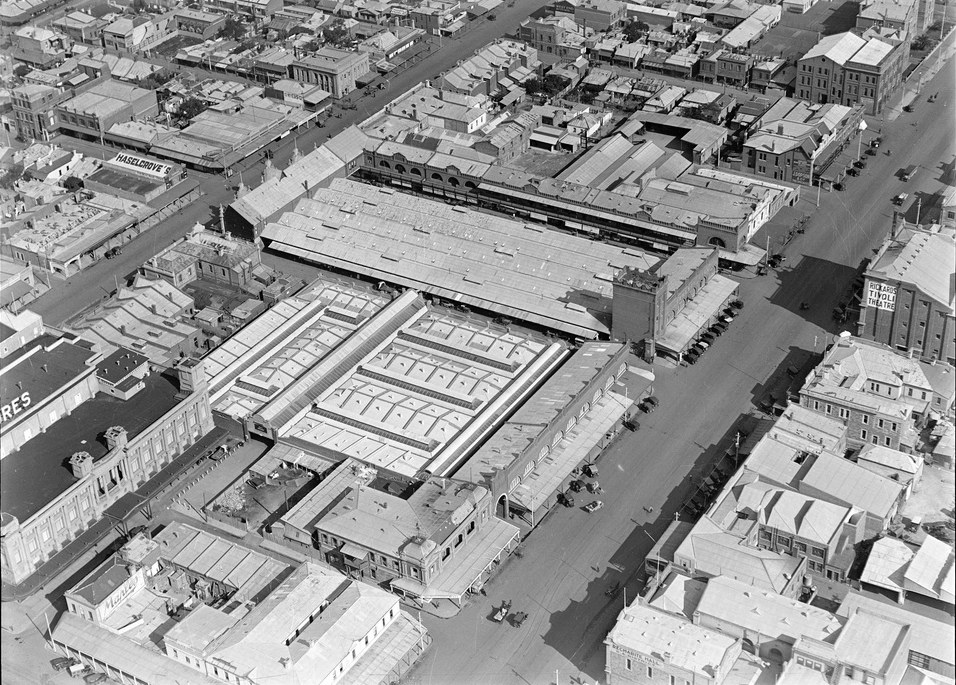
D Darian Smith's aerial photograph of the Central Market, c.1935 [State Library of South Australia BRG-397-2-199A-9; click to enlarge] The Metropolitan Hotel, 1858- |
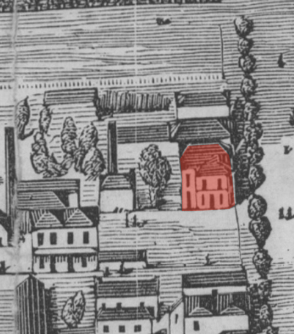 Detail of an aerial view of Adelaide showing the western side the original Metropolitant Hotel (highlighted) in 1875
[SLSA B 1452; click to enlarge]
Detail of an aerial view of Adelaide showing the western side the original Metropolitant Hotel (highlighted) in 1875
[SLSA B 1452; click to enlarge] |
|
The original Metropolitan Hotel and John Penaluna (1822-1882) Founder, landlord of the Metro...and ex-'convict exile' John Penaluna was the founder of the original Metropolitan Hotel, then on the eastern corner of Grote Street with what became Penaluna Place. There are multiple possible "John Penaluna"s; however the following is, I believe, the most likely story of John Penaluna and the founding of the Metropolitan Hotel...but I could easily be wrong.
The John Penaluna of the Metro pub was born to Richard and Jane (neé Martine) on 7 July 1822, in Wendron, Cornwall, UK. The 1841 UK census lists Richard Penaluna and two of his sons, John and Henry both "15" [+/- 5 years], as masons or stone-cutters, living in "Menorlue" near Wendron in Cornwall. In/by March 1847 John Penaluna married Ann Dunstan (1822-1913), also from Wendron. Depression in the Cornish tin and copper mining industries during the 1840s resulted in widespread poverty, social unrest and emigration, both voluntary and otherwise, to Australia. On 19 October 1847, the magistrates of the Bodmin Quarter Sessions in Cornwall convicted Penaluna of stealing two pigs valued at £4; because this was his second offence, Penaluna was sentenced to seven years transportation to the Australian penal colonies. Mostly because he had served a substantial part of his sentence in prison by the time he left Britain, probably because of good behavior, possibly because his trade - mason/builder - was in high demand in the colonies but almost certainly because the colonial authorities didn't want the financial burden, Penaluna left England as a "convict exile" with assurance of a "ticket of leave" on or soon after arrival in Australia. The Ticket of Leave was an early form of parole that meant that Penaluna and his co-exiles lived independently, could work for wages or establish businesses and acquire property, technically on condition that they lived within a specified district and reported regularly to a magistrate. John Penaluna and another 296 convict exiles departed Spithead near Portsmouth on 7 January 1850 aboard the Bangalore, arriving at Moreton Bay/Brisbane, then still part of New South Wales, on 30 April 1850. He formally received his Ticket of Leave by 10 September 1850. Coincidentally, all transportation to New South Wales - including of convict exiles - was officially abolished just a few weeks later, on 1 October 1850, which meant that Penaluna was effectively if unofficially free and unlikely to be pursued by the authorities, especially in South Australia which was not a "convict" colony. There is some evidence that Penaluna was granted a full pardon a few years later. It is likely that John's wife Ann, possibly pregnant, accompanied him on the Bangalore.) By the end of 1850 John and Ann Penaluna and daughter had travelled to South Australia probably to join both John's and Ann's parents who emigrated to the Province a few years earlier, possibly attracted by opportunities at the copper mines of Burra or Kapunda. There is some evidence that John Penaluna also spent a short time in 'Burra Burra' in late 1850 but, after that, mostly in or adjoining Grote Street, Adelaide. "Penaluna, J., mason, Grote Street [Adelaide]" is listed in the South Australian Almanack and General Colonial Directories for 1850 and 1851, possibly occupying property on Town Acre 307 rented by his parents. The Metropolitan Hotel of 1858 On 16 September 1851 John Penaluna acquired part of Town Acre 307 from John Crabb Verco for £175 [ Memorial 466/35 State Records SA GRS/12154/1/70], apparently funding the purchase and development of the site by mortgaging the property to Captain Edward Moore of Her Majesty's Eleventh Regiment for £350, on 17 October 1851 and to be repaid within four years [ Memorial 436/36 State Records SA GRS/12154/1/72]; the mortgage was discharged on 13 October 1854 [Memorial 498/75]. Penaluna's property initially comprised four contiguous allotments on Grote Street and along a private road (later Penaluna Place). Just a few months later, on 20 January 1852, the the City of Adelaide assessor listed Penaluna's properties, including a "4 roomed two story brick house and cellar" on Grote Street and a neighbouring "2 room brick house". 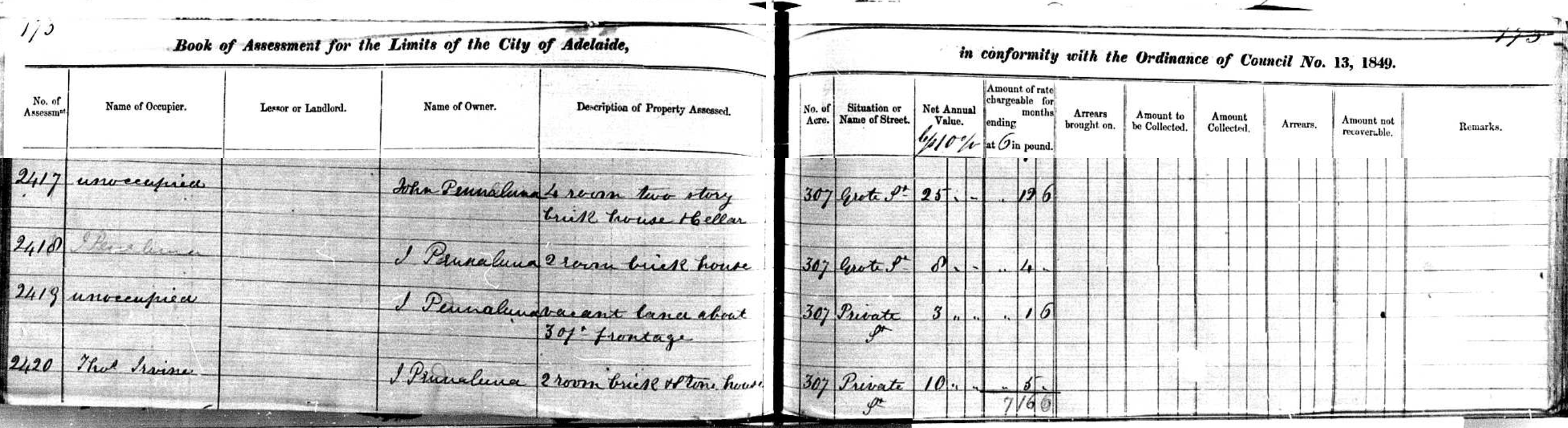 Detail from the Adelaide City Council Assessment Book, 1850, assessed on 20 January 1852; click to enlarge assess
At about the time Penaluna first applied for a publican's license in late 1858, the Assessment Book for 1859 described the two buildings with frontages on Grote Street as "2 houses now [combined] as one [of] 8 rooms". The assessment adopted in late 1859 described this single building simply as an "Inn", in later years named as the "Metropolitan Hotel". The earliest photographs of the back of the Metropolitan Hotel in about 1865 and 1870 (see below) also indicate that the original pub was an amalgamation of the two "houses" on Grote Street, one having a hip roof with galvanised iron, the other a simple gable with slate or shingle roofing. At about the time he was converting the two houses into one pub, John Penaluna applied for a Publicans' General Licence which, on 13 September 1858 the Bench of Magistrates refused because of "the house not being fitted up with a bar", that is the building was unfinished [South Australian Register, 14 September 1858, p.3]. At its next meeting, on 13 December, after Penaluma submitted a "numerously and respectably signed memorial", the Bench granted the license without opposition [South Australian Register, 14 December 1858, p.3]. The Metropolitan Hotel has remained continuously licensed since. Why Penaluna, without prior experience in the trade, became a publican when many, more experienced licensed victuallers were facing insolvency (in 1856-1857 14 of 68 insolvents were or had previously been publicans, by far the largest group [Register, 4 August 1857, p.3]), is a mystery. Nevertheless he held a license for the Metropolitan Hotel from December 1858 to March 1871. Over this 12-year tenure, as far as I have been able to determine, Petaluna was not prosecuted for even a single minor transgression of the increasingly complex and onerous licensing legislation. Under Penaluna's management the "Old" Metropolitan Hotel seems to have been a quiet, modest and respectable hotel that did not attract 'colourful' characters or the attention of the local constabulary. |
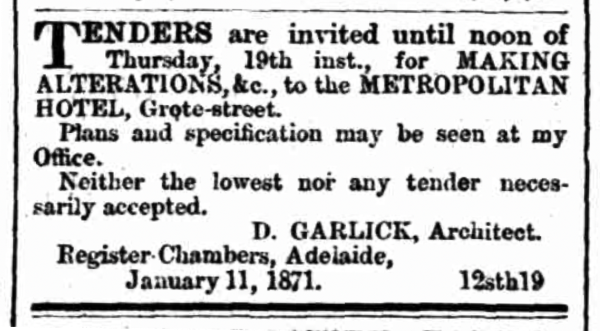 Tenders invited for alterations to the Mentropolitan Hotel, January 1871
[Evening Journal, 14 January 1871, p.4; click to enlarge]
Tenders invited for alterations to the Mentropolitan Hotel, January 1871
[Evening Journal, 14 January 1871, p.4; click to enlarge]These undefined modifications to the 'old' Metro coincided with Penaluna's 'retirement'. About this time the architect, Daniel Garlick, had just 'built' the Lion Brewery in North Adelaide. |
|
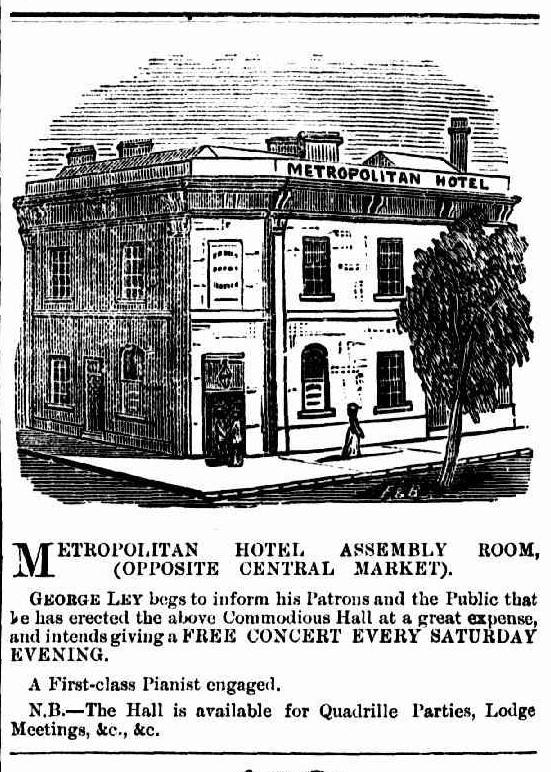 Advertisement for the Metropolitan Hotel Assembly Room, 1879 [Frearson's Weekly Illustrated [Adelaide], 1 February 1879, p.390; click to enlarge] | |
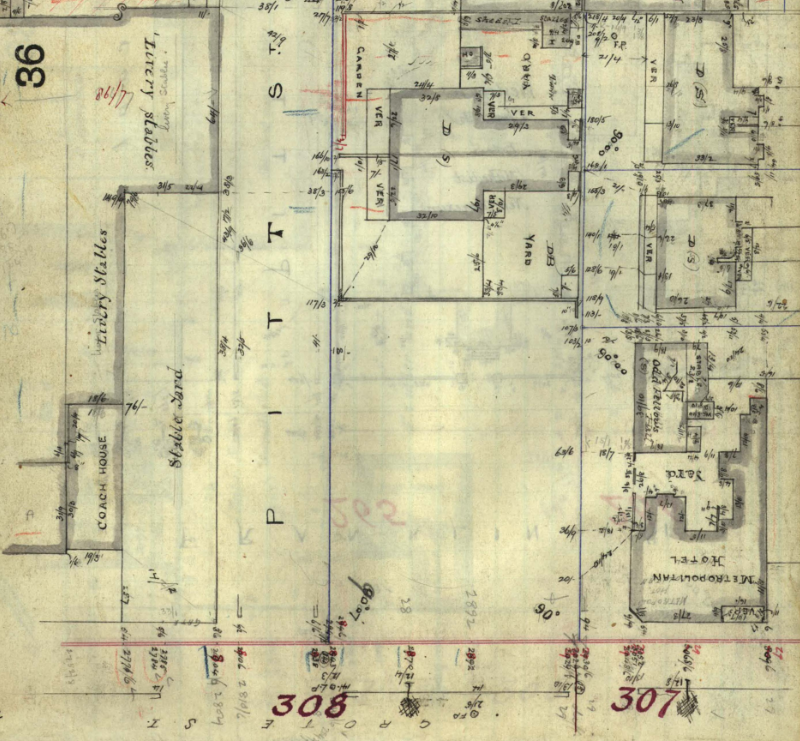
Location and plan of the Metropolitan Hotel, 1880 [Adelaide City Archives, Smith's Survey, above: Field Book 8, p.36; below: Smith's Survey, South Adelaide, Sheet 49] 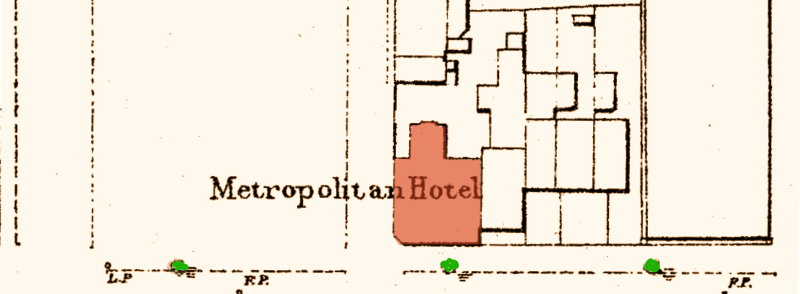
|
|
From John Penaluna's 'retirement' in March 1871 until his death on 14 December 1882 and the subsequent transfer of the property to the executors of his will effectively in January 1883, the original Metropolitan Hotel had 6 licensees (a list of owners and publicans of the Metropolitan Hotel, 1858-c1960, is here). Interestingly, on 24 July 1878 Penaluna leased the hotel to brewers William Beaglehole and James Johnston, the founders of the Lion Brewery, for six years from December 1878, that is until the end of 1882 [Memorial 185/310], coincidentally about the time of Penaluna's death.
|
An interesting bit of trivia?
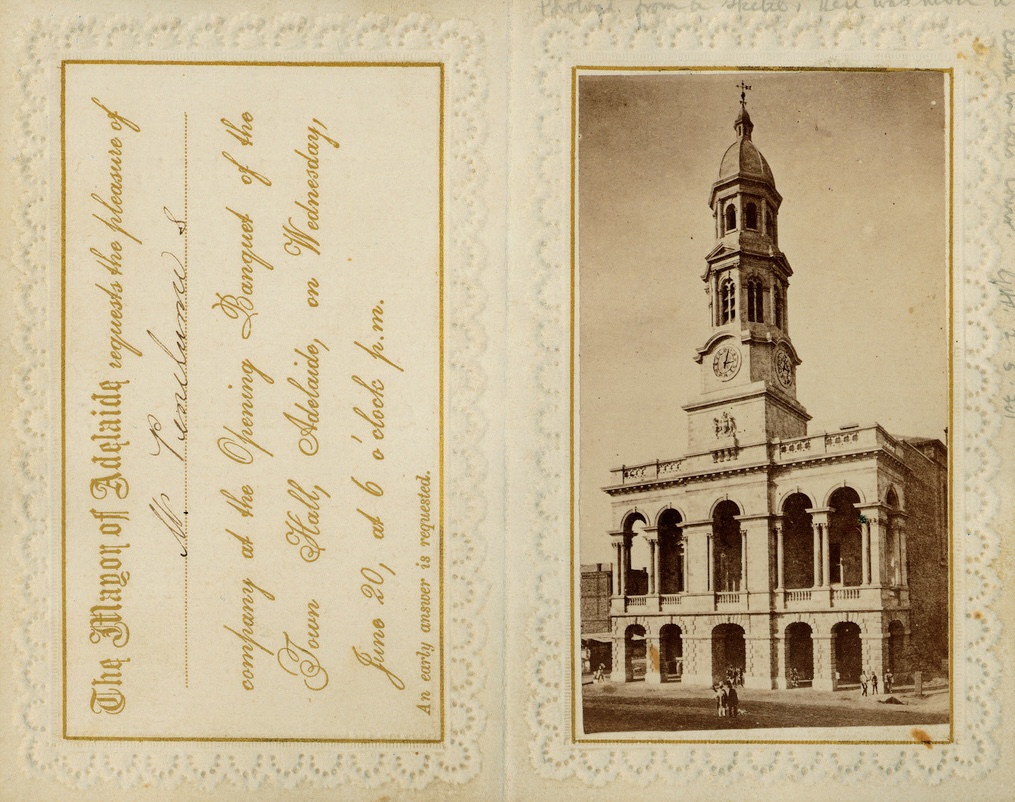 Mr Peneluna's[sic] invitation to the opening banquet of the Town Hall, Adelaide, 20 June 1866
[SLSA B 5549-1; click to enlarge] |
|
The executors of Penaluna's will - his son, Benjamin John Horatio Penaluna, an accountant and later insurance broker, and William Dunstan Thomas, grocer/baker in Grenfell Street - declined to re-lease the hotel and from the end of 1882 until March 1884 installed a number of what seems to have been short-term "caretaker" licensees, while they purchased vacant land on the adjoining Town Acre 308 and started building a new hotel. In early December 1883 the stock-in-trade and furniture of the Metropolitan Hotel was auctioned, effectively ending it as a functioning hotel and in March 1884 the license for the Metropolitan Hotel was transferred to the new hotel. The "premises at present occupied by the [old] Metropolitan Hotel...suitable as a store or boarding house" were leased, but not sold until May 1906, perhaps not coincidentally just after a local option poll in Adelaide prevented it from re-opening as a pub. In April 1909 the Metropolitan Hotel built and licensed by John Penaluna was demolished.
The Metropolitan Hotel of 1883-84 The current Metropolitan hotel was one of the last - arguably the second-to-last - pubs newly built and licensed in Adelaide for the next century and at a time when hotel owners and publicans were experiencing unprecedented financial, political, regulatory and competitive challenges. So - as can be asked also of the owners of the rebuilt Orient, Overway Bridge, Sturt Arcade, and Black Swan pubs and the new Selbourne Hotel - having closed the original pub, why did Penaluna's executors build and license a new hotel?
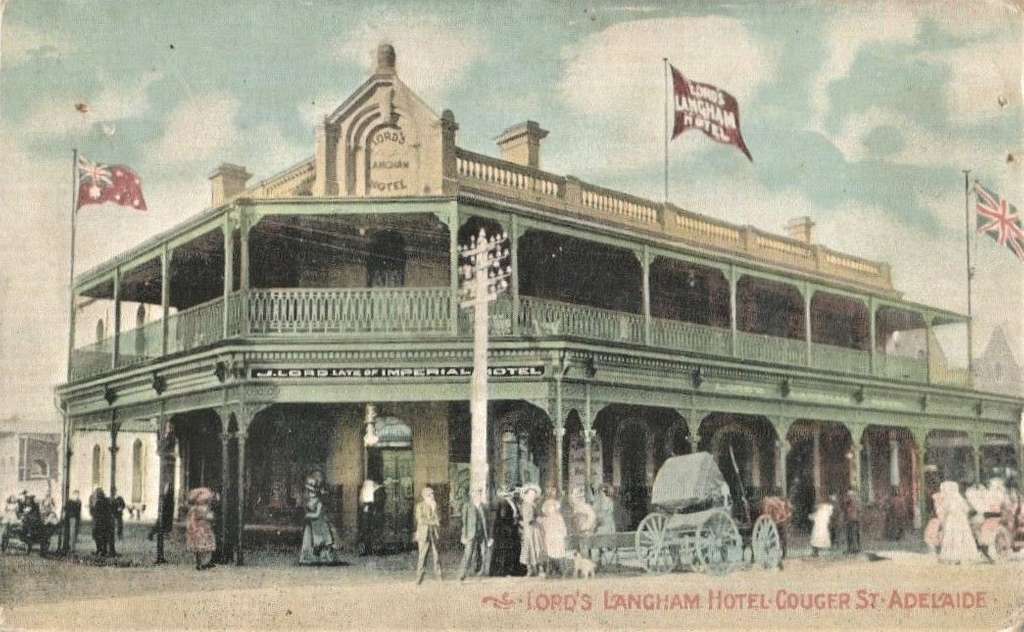
Just because the Penalunas owned the original Metropolitan Hotel, the development of the site as a new hotel was by no means inevitable. However, the opening in September 1880 and subsequent success of the City Market Hotel (later Langham) in nearby Gouger Street demonstrated the potential for a comparable, accommodation-focussed replacement for the aging Metropolitan Hotel; the City Hotel also set the standard in accommodation and facilities against which a new Metropolitan would have to conform. There was certainly some interest in building a hotel on the site from early 1883, well before Penaluna's executors purchased the property. On 15 March 1883, presumably with Santo's agreement, Richard George deposited "plans of an hotel proposed to be erected on Part Acre 308 Adelaide, corner of Pitt and Grote streets, to be called George's Family Hotel, and for which I intend in due course to apply for a Publican's [and billiard] Licence"; the proposed hotel was described as "a fairly-sized family hotel to contain about twenty-five rooms and to be erected at a cost of between £5,000 and £6,000" (see below).
Despite the failure of George's application and, by implication, any future proposal for a new pub, in mid-August 1883 the architect Frederick Danker invited tenders for "an [un-named] hotel of twenty-five rooms in Grote Street". According to the Adelaide City Council's Return...of Notices Received for Building Works..., 1885-1895. the successful contractor was Nicholas Wallis Trudgen, well-known builder, politician, Methodist and one of J J Pascoe's "representative men" of Adelaide. By 14 September 1883 the City Surveyor had approved plans to erect the named "Metropolitan Hotel" on the site, valued at £2500. A week later, on 22 September 1883 and therefore well before the hotel was built, the brewer William Knox Simms mortgaged and leased the property from Penaluna's executors; the lease was for 7 years and 11 weeks, from 19 December 1883. On 24 December 1883 Simms sub-leased the property to publican and 'founder' of several suburban pubs, John Philip Lee. Lee effectively became the manager - but not yet licensee - of the new Metropolitan Hotel. Perhaps illustrating the confusion surrounding some of its deliberations, on 11 March 1884 the Licensing Bench renewed Lee's license for the Lion Hotel in North Adelaide, owned by rival brewer Henry Beaglehole, despite having awarded James Albert Ellery a certificate (temporary license) for the same pub on 5 March.
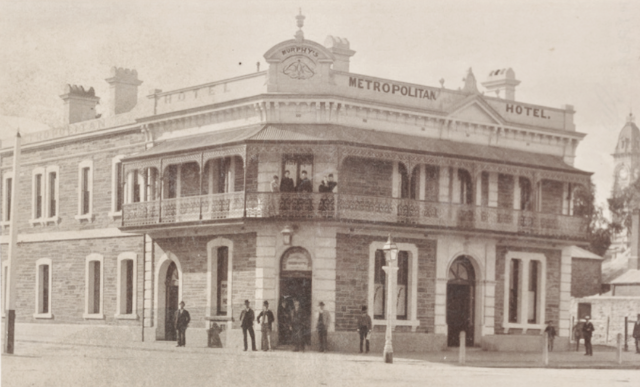
Murphy's Metropolitan Hotel, c.1891 The apparently vacant block to the right of the pub was used for stables and other outbuildings [State Library of South Australia BRG 400/1/76; click image to enlarge] The Metropolitan Hotel of 1909 |
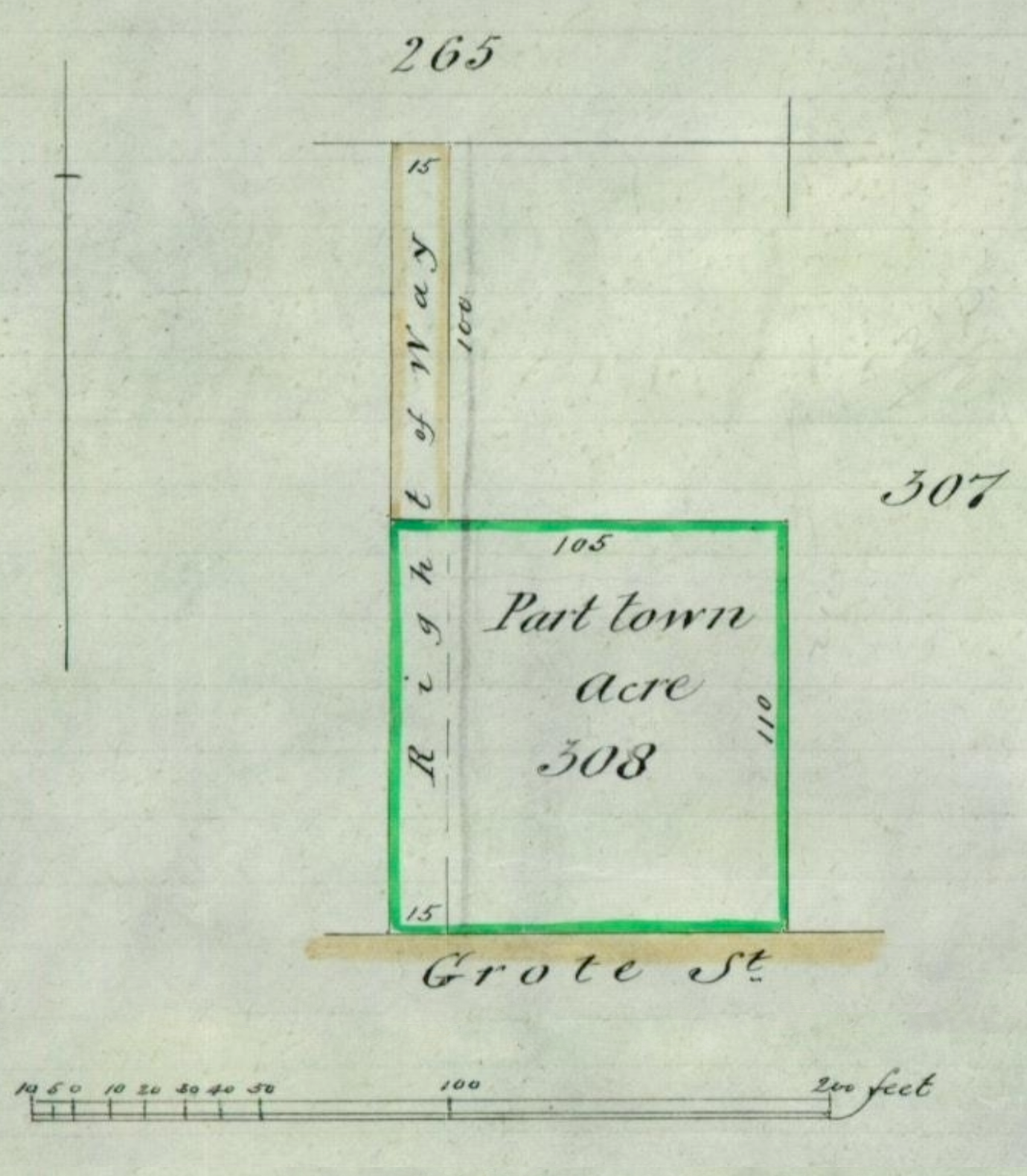 Location of 'Part Town Acre 308'
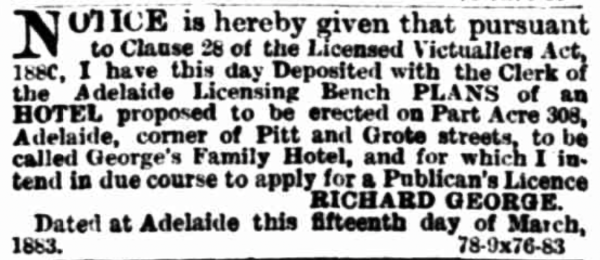 Deposit of plans for George's Family Hotel, 15 March 1883
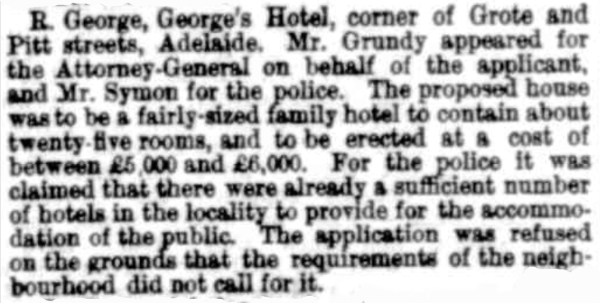 The Licensing Bench hearing on R George's application, 12 June 1883
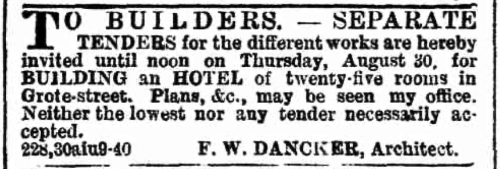 Tender for the erection of an un-named hotel in Grote Street, August 1883
[Express and Telegraph, 16 August 1883, p.1]
Tender for the erection of an un-named hotel in Grote Street, August 1883
[Express and Telegraph, 16 August 1883, p.1]
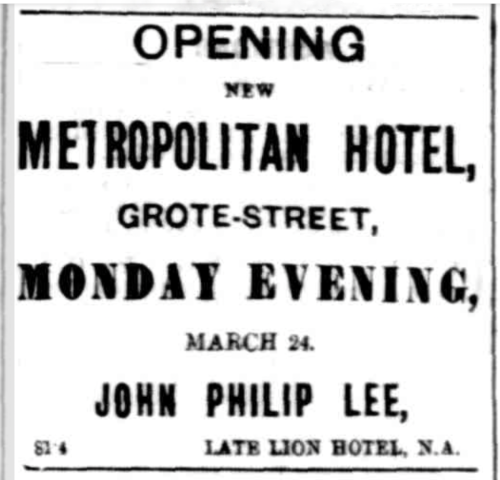 Advertisement for opening of the 'New: Metropolitan Hotel, 24 March 1884
[Register, 22 March 1884, p.7]
Advertisement for opening of the 'New: Metropolitan Hotel, 24 March 1884
[Register, 22 March 1884, p.7]
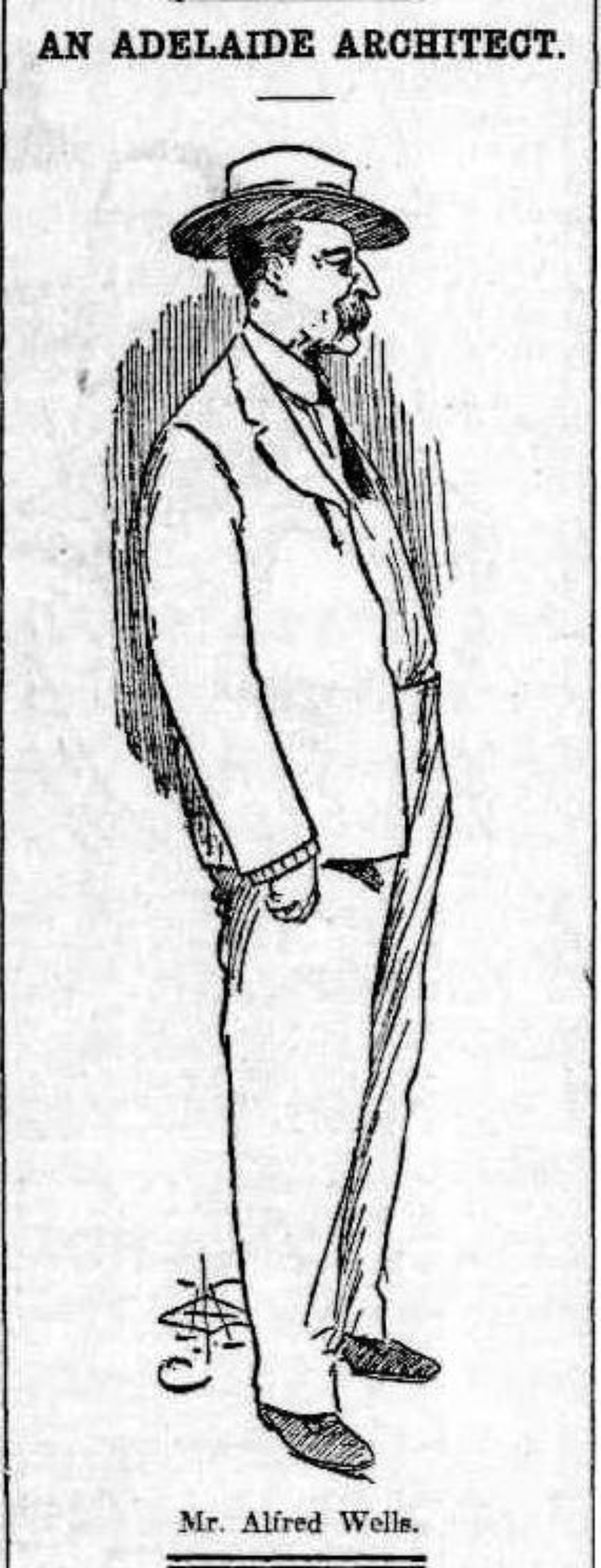 Alfred Wells, architect [Express and Telegraph, 14 January 1905, p.5; click for full image] |
|
In March 1908 Edwin Weidenbach took out a 15 year lease on the Metropolitan [LSG CT 781/165]. Probably with funding underwritten by the Penaluna estate, in the following October Weidenbach submitted architectural plans for major additions to the pub. According to the registers of plans submitted to the municipal building surveyors and the Council and local board of health in August-September 1908, the additions were for "shops and living accommodation" valued at £1850, increasing the number of bedrooms to 40 and almost doubling the Grote Street frontage of the pub. Subsequently, in October 1909, the architect Alfred Wells tendered for "additions to the Metropolitan Hotel".
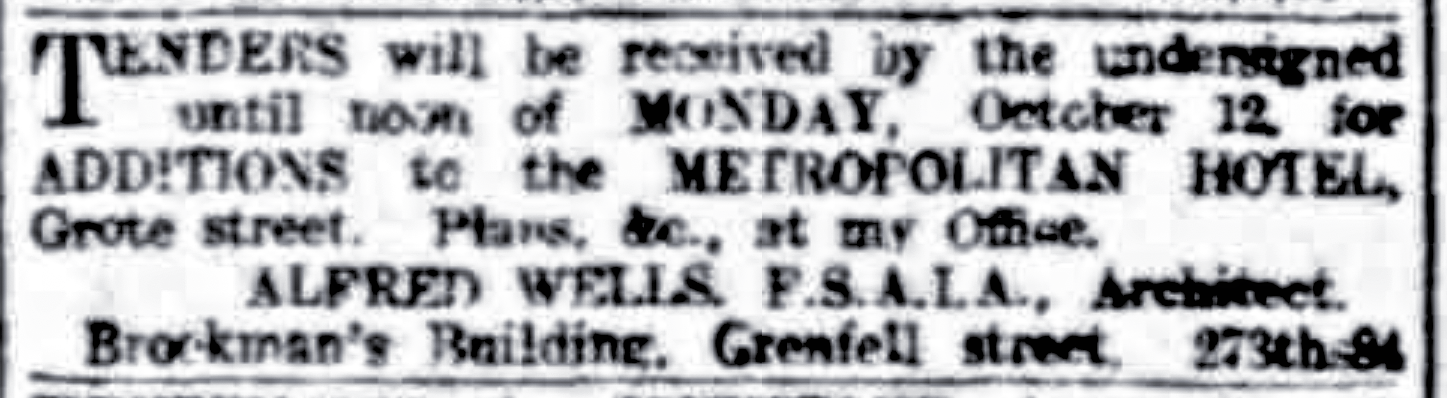 Tender for additions to the Metropolitan, October 1908
[Register, 6 October 1908, p.2]
Tender for additions to the Metropolitan, October 1908
[Register, 6 October 1908, p.2]
There is some admittedly circumstantial evidence that the additions of 1909 were part of Danker's original plan of 1883 and that Penaluna's executors and/or lessees postponed making further investments in the hotel during the uncertainties of brewery amalgamations and acquisition of many City hotels from the 1880s, the Temperance movement and Local Option campaigns from the 1890s and, above all, the tightening of credit during the depression of the 1890s. However, by 1909, as one contemporary reported, "at the time of its erection the [1883] hotel was considered ample for all needs, but this proved to be a mistake, for with the advancing years the demand for accommodation has increased to such an extent that it has been found necessary to add 15 extra bedrooms" [Register, 6 April 1909, p.4]. Significantly the main additions in 1909 were bedrooms and bathrooms on the first floor and two shops separate from the pub on the ground; significantly also, the plan did not include additional places for the sale and/or consumption of alcohol...yet. The successful contractor appears to have been Charles Henry Martin (an obituary for whom is here). The building was completed in or soon after April 1909 when, according to the correspondant from the Register, "numerous other improvements and alterations, including the construction of a verandah and balcony are being carried out and when all of these shall have been completed the lessee (Mr. E. Weidenbach) will have a house thoroughly in keeping with this progressive portion of the city" [Register, 6 April 1909, p.4]. The Assessment Book for the City of Adelaide approved on 22 November 1909 lists the properties, separately, as "Shop" And "Hotel" with rateable values of £100 and £500 respectively, almost double the value of the assessment of December 1908. In early June 1909 a sub-contractor, Thomas(?) Green, advertised for a "painter wanted for kalsomining" at the Metropolitan Hotel [Advertiser, 8 June 1909, p.12], suggesting the the building was finished probably by late June or early July, by which time one of the shops had been occupied.
On 13 April 1920 the Adelaide (Midlands) Licensing Court took evidence on the "redundancy of hotels...within the four squares of Adelaide" and to show cause why licenses should be renewed, including that of the Metropolitan Hotel. (The Licensing Court inquiries into the redundancy of hotels, 1918-1921 and, unrelated, Local Option polls are complex topics that I hope to address elsewhere.)
From 1909 to 1928 changes to the Metropolitan seem to have been minor, incremental and mostly internal. According to the Adelaide City Council building records the architect Alfred Wells applied for building approvals for extensions to the hotel's cellar (September 1910), bar fit-out (June 1912) and changes to the balcony and verandah, presumably the addition of the wide verandah on Grote Street (May 1913). Interestingly, except for Dick Moore's conversion of the shop into reputedly the longest bar in the City in about 1910 - well before the introduction of six o'clock closing in 1916 - there seems to have been no changes specifically to facilitate the "six o'clock swill". Given the popular myth that even the external walls of pubs were tiled to allow hosing off of the bodily excesses of drinkers, it is also interesting that on 14 November 1927 the Adelaide City Council approved plans for changes to "building lines", the partial tiling of the main external walls of the pub, for which the contractor was L H Martin [ACC Archives, Register of Plans, July 1924 - Dec 1935]. The tiles can be seen in enlarged photographs of the pub in 1928 and 1967 below; they have since been removed. 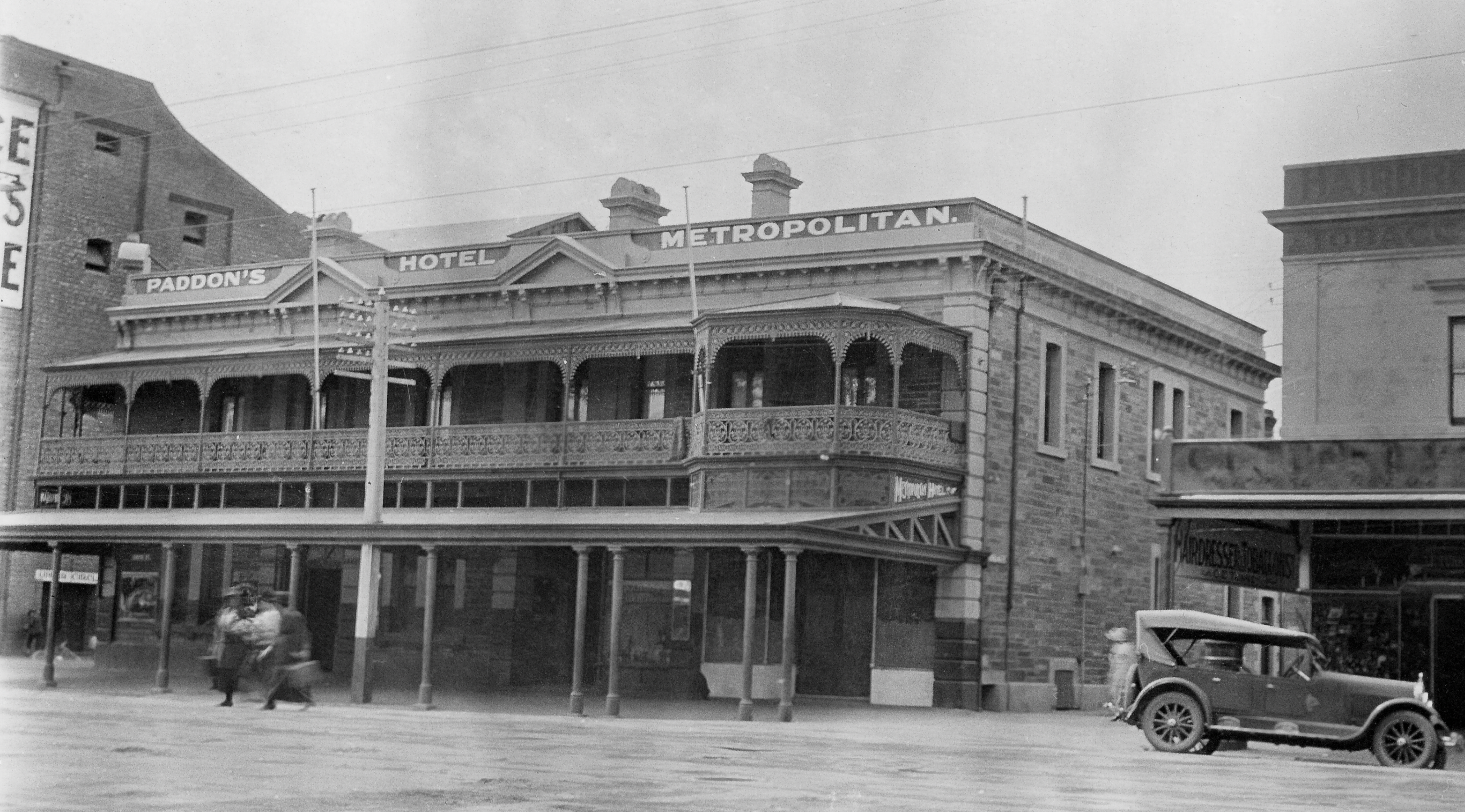
Paddon's Metropolitan Hotel, 1924 [State Library of South Australia B 2389; click image to enlarge]
In June 1928 the architectural firm of McMichael & Harris tendered for additions, mostly to bedrooms, bathrooms and the kitchen. The successful contractor was W T Collyer; the changes, approved in August 1928, were valued at £1282 [ACC Archives, Register of Plans, July 1924 - Dec 1935]. Apart from similar internal alterations approved in December 1950 and valued at £850 [ACC Archives, Register of Plans, 1 July 1936 - 31 Dec 1956] and according to the plan (below) of proposed additions to the Metropolitan Hotel approved by the Licensing Court, there were no further major changes to the hotel until at least 1962.
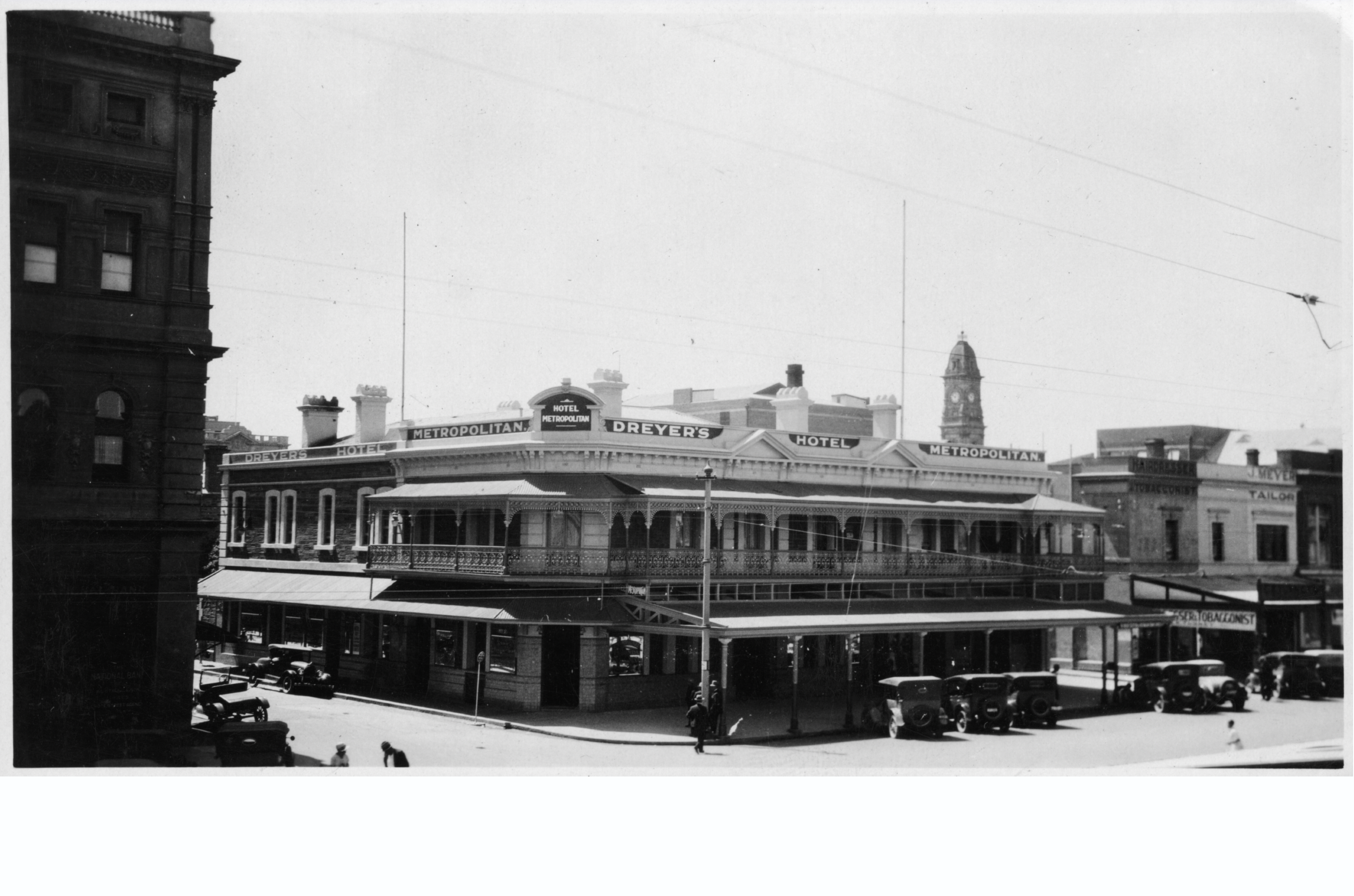
Dreyer's Metropolitan Hotel, c.1928 Note the glazed tiles at the front of the hotel. Those are not flag poles on the roof of the pub, but very probably a "wireless" radio antenna. The then-commercial radio station 5CL began broadcasting on 27 November 1924, followed by 5DN on 24 February 1925. Probably more important for the "punters" at the Metropolitan as well as other pubs, in 1924 5CL's Arnold 'Ike' Treloar broadcast a horse race for the first time in Australia and probably in the world; this had major implications for illegal gambling, much of which occurred in pubs on Saturday afternoons. The first radio broadcast of an Australian rules football match was in 1925. [State Library of South Australia B 9592; click image to enlarge] 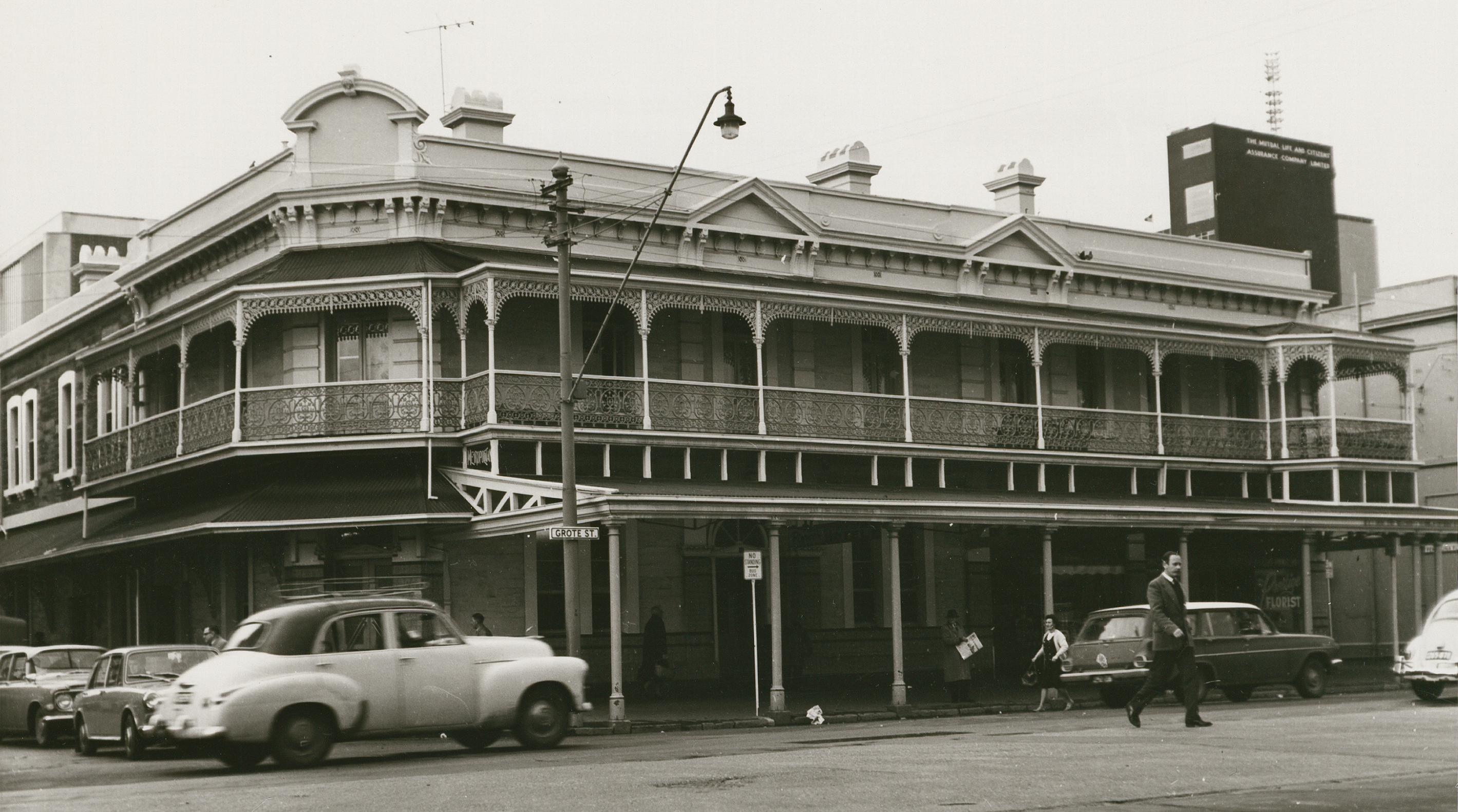
The Metropolitan Hotel, 1967 [State Library of South Australia B 17612; click image to enlarge] |
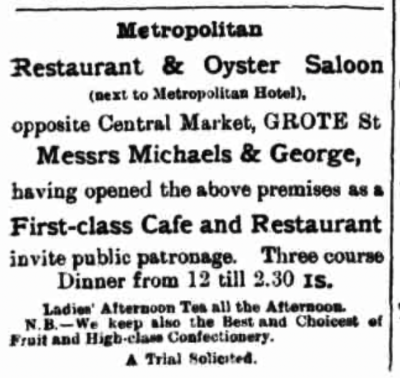 Advertisement for the Michaels & George restaurant and oyster bar, July 1909
[Quiz, 2 July 1909, p.7]
Advertisement for the Michaels & George restaurant and oyster bar, July 1909
[Quiz, 2 July 1909, p.7] Advertisement seeking "Young Lady for bottle department", July 1909
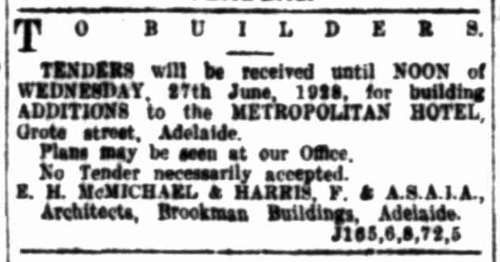 Tender for additions to the Metropolitan, June 1928
[Register, 13 June 1928, p.2]
Tender for additions to the Metropolitan, June 1928
[Register, 13 June 1928, p.2]
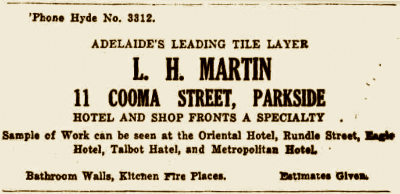 Advertisement for L H Martin, tiler of the Metropolitan Hotel, December 1928
[Sport, 13 December 1928, p.21]
Advertisement for L H Martin, tiler of the Metropolitan Hotel, December 1928
[Sport, 13 December 1928, p.21]
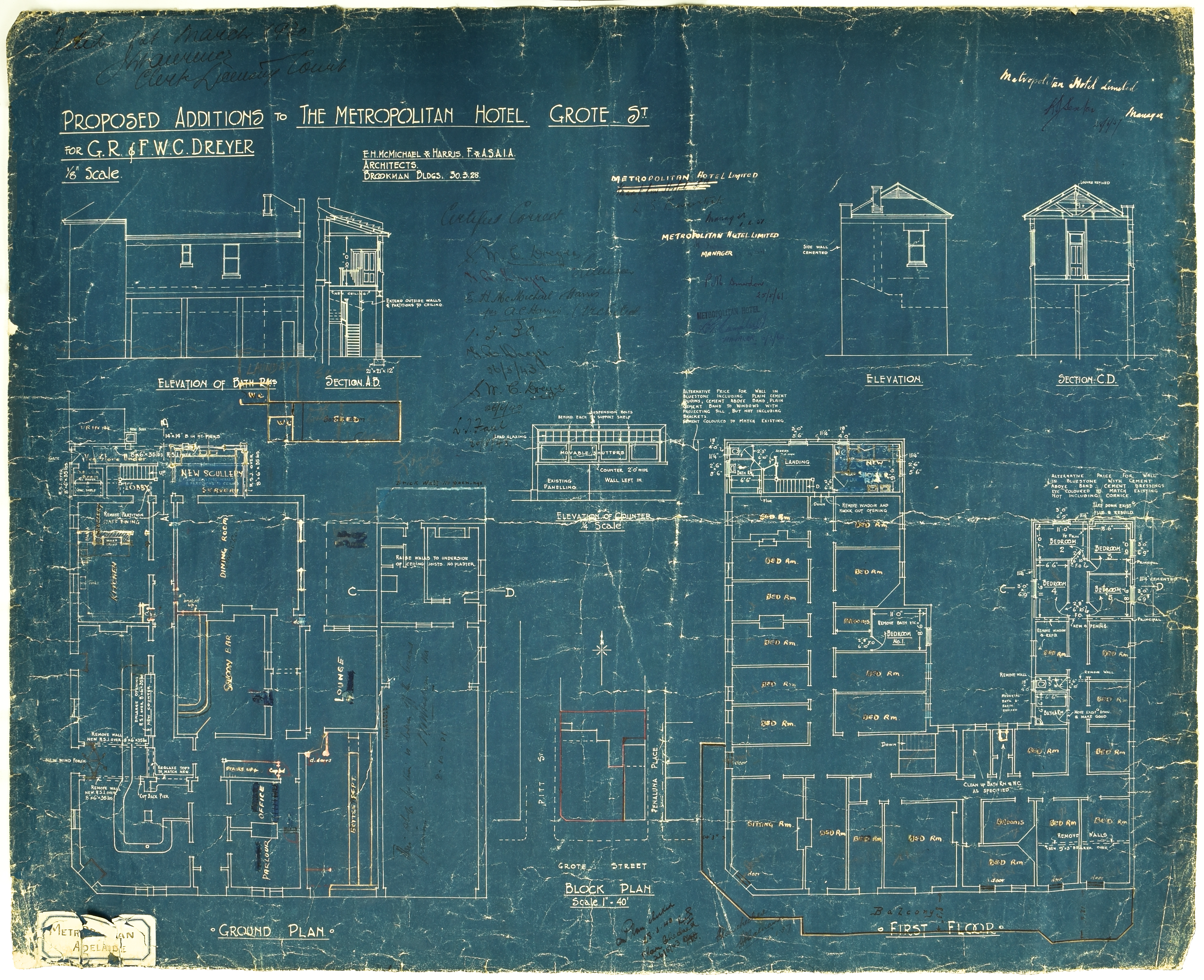 Plan of proposed additions to the Metropolitan Hotel, 1928
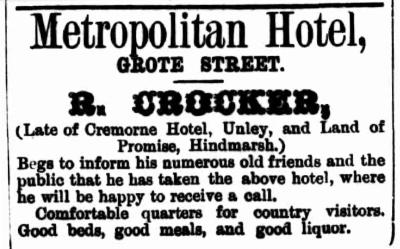
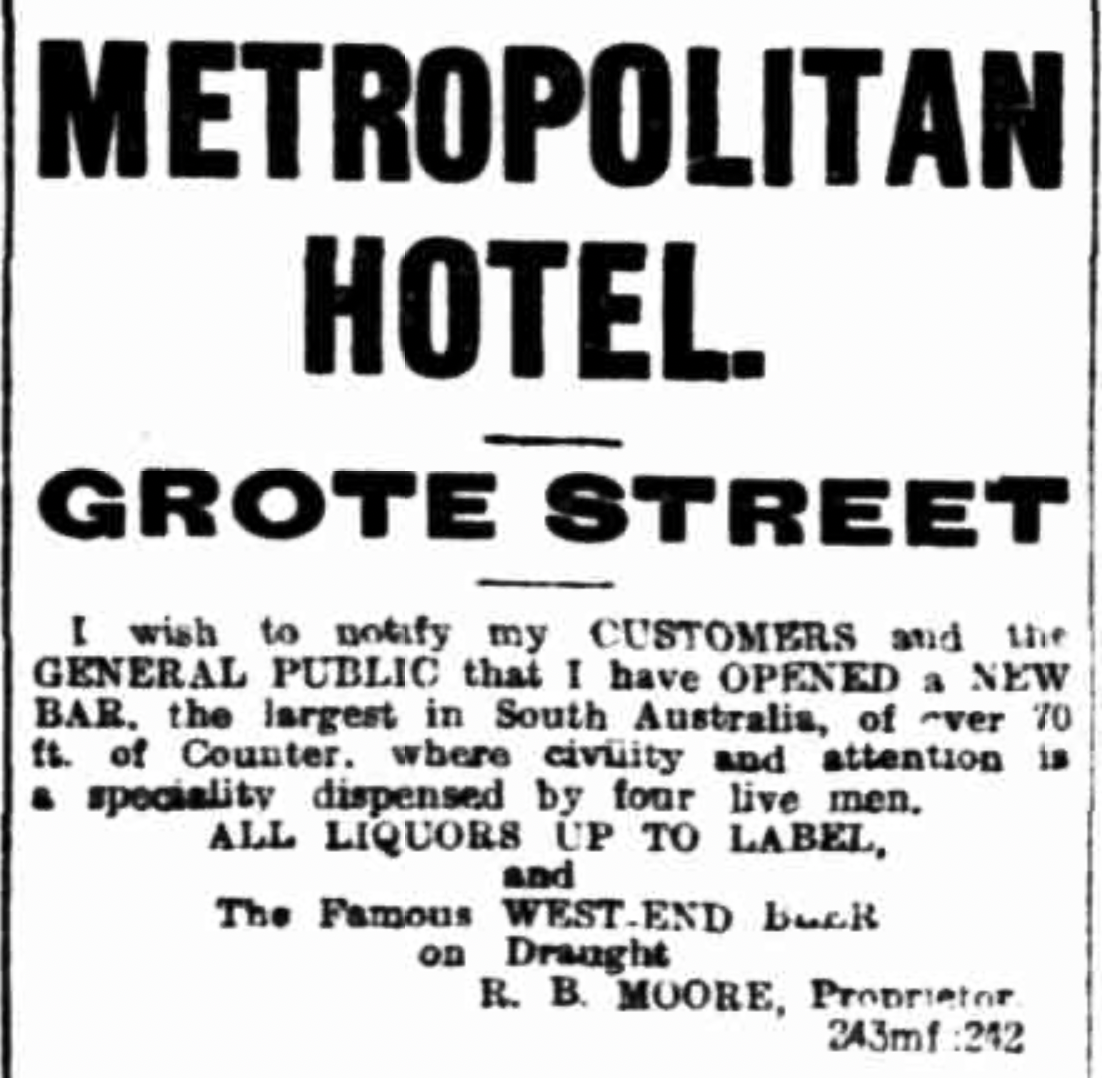 Advertisement for the Metropolitan Hotel, including "the largest bar in South Australia" attended by "four live men", 1912
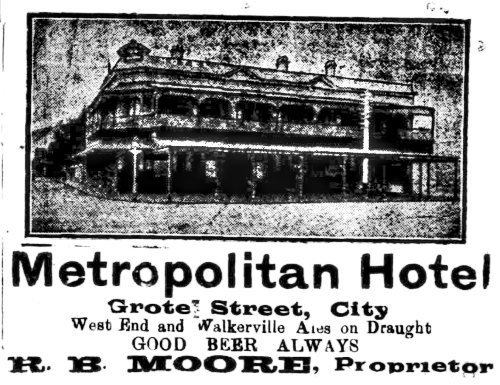 Advertisement for the Metropolitan Hotel, 1913-1915
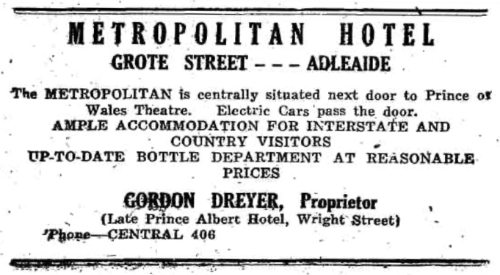 Advertisement for (Gordon) Dreyer's Metropolitan Hotel, October 1926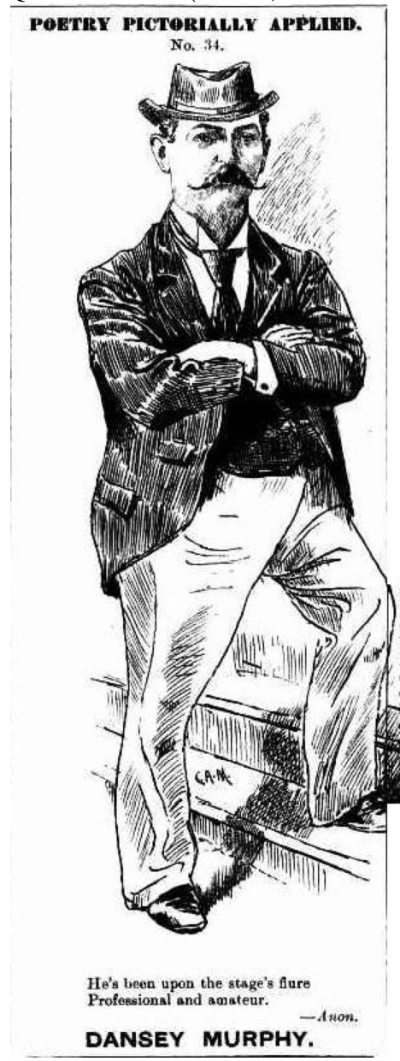
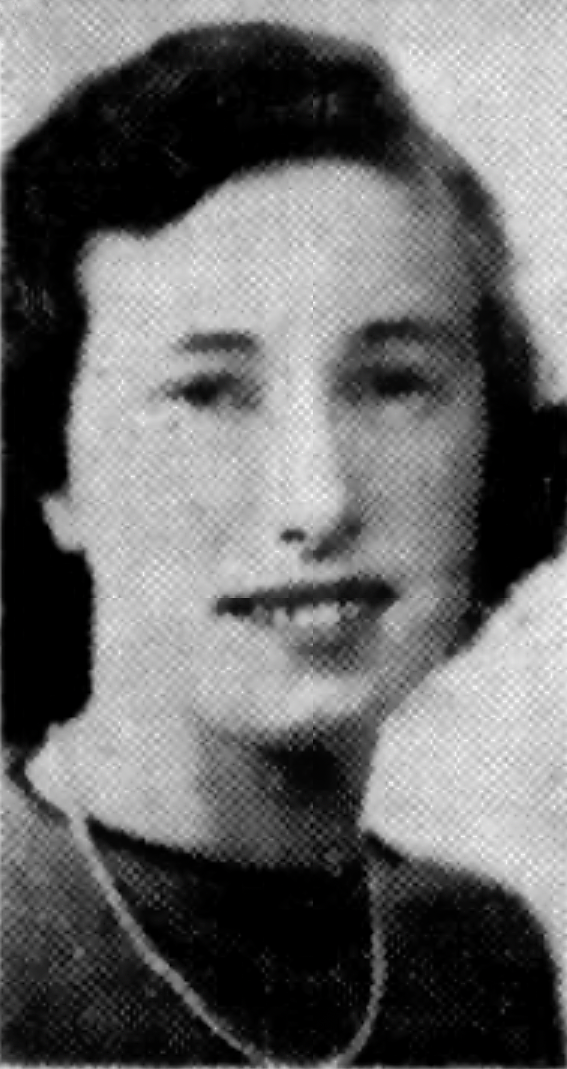 Phyllis Sexton/Smerdon
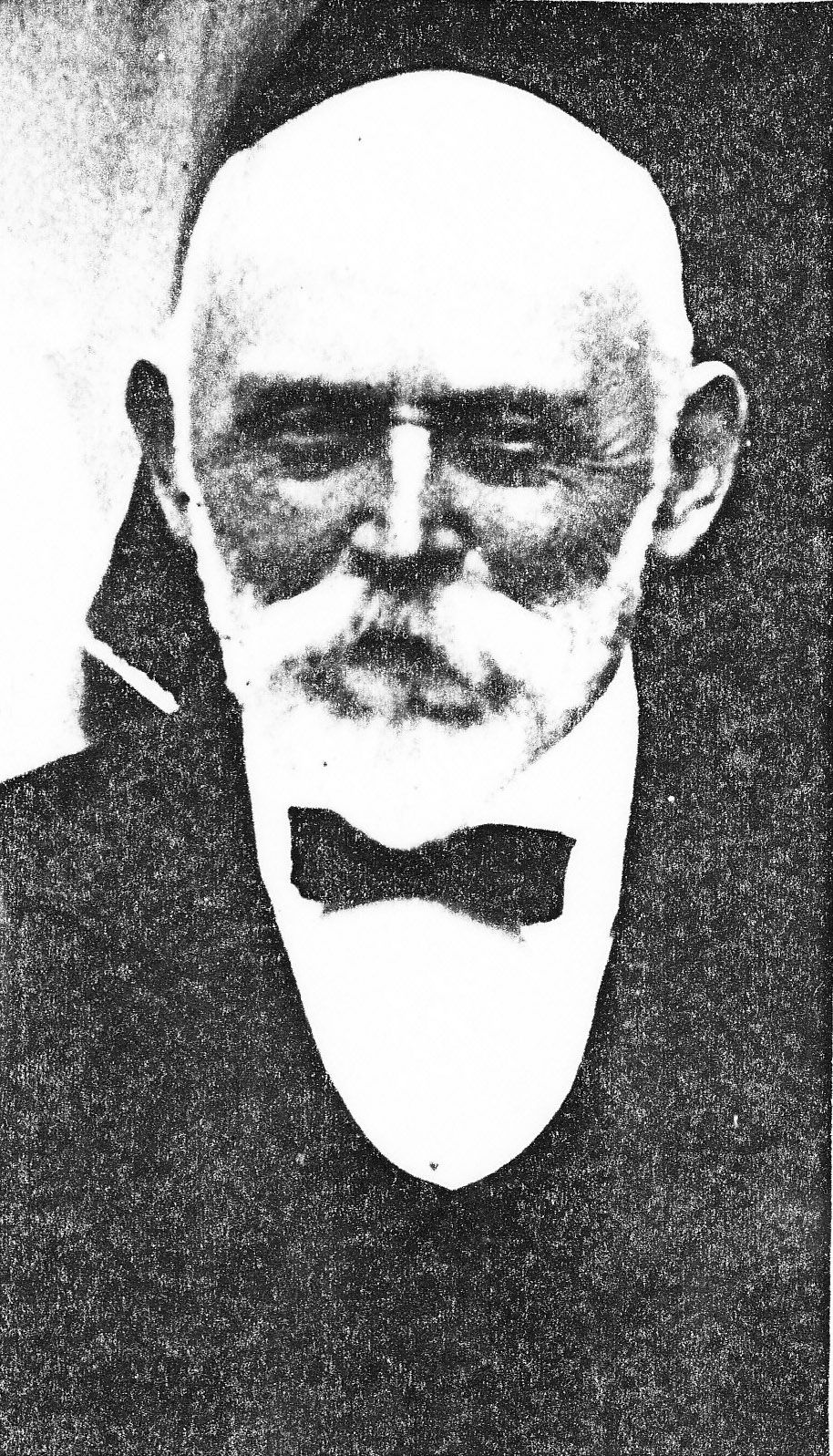 Edwin Weidenbach, nd
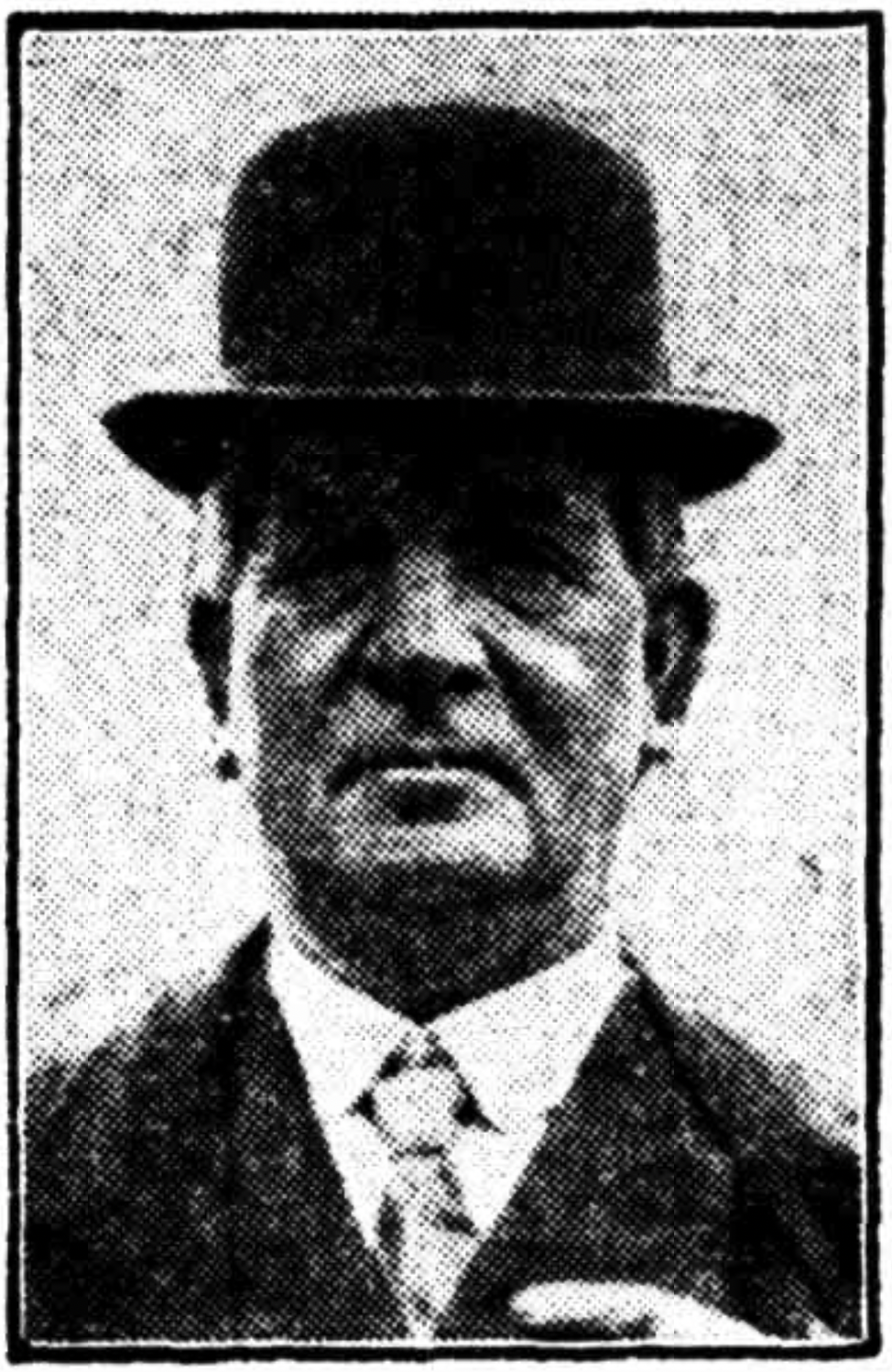 Hugh Paddon (1923-1925 )
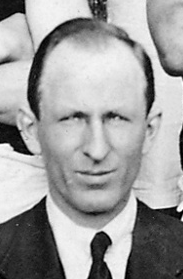 Gordon Riley Dreyer (1925-1928, 1929-1934, 1935-1944)
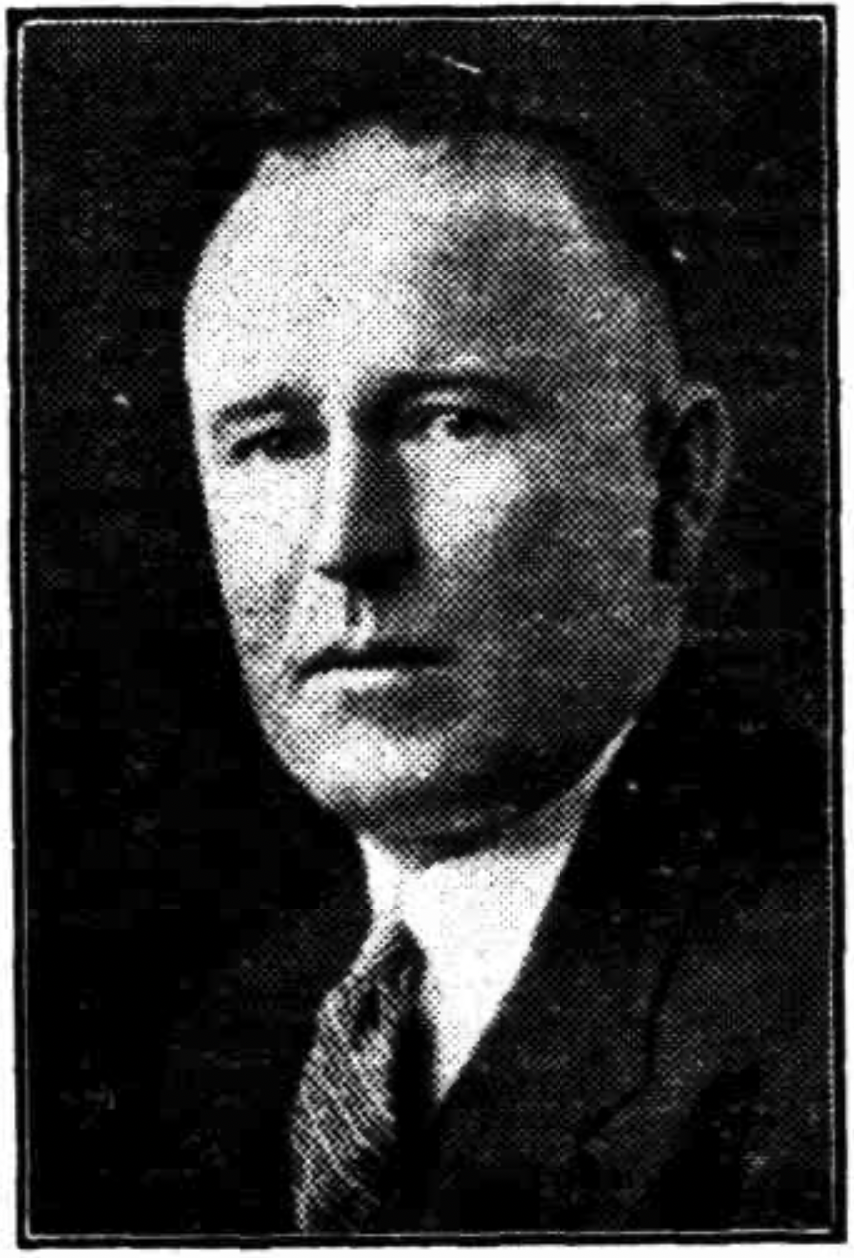 Stan Dreyer (with brother Gordon, 1928-1929, 1944-1947)
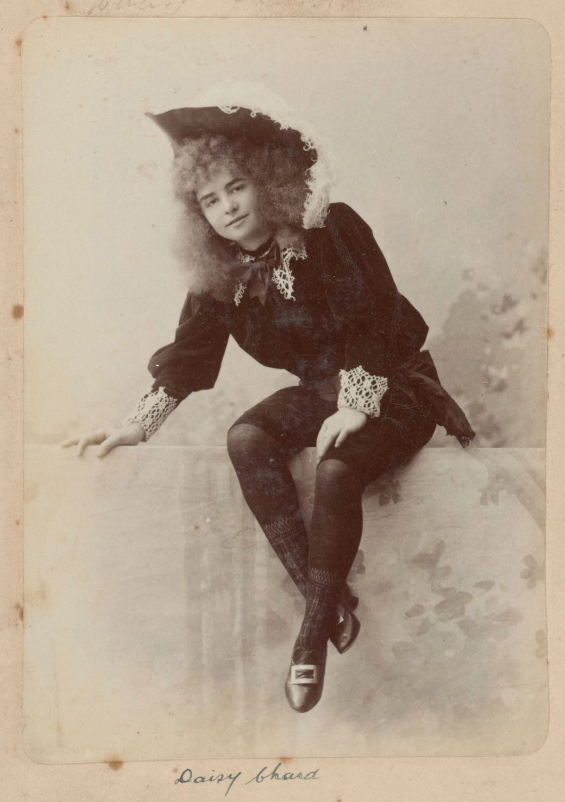 "Daisy Chard" (Rebecca Cohen) in about 1900
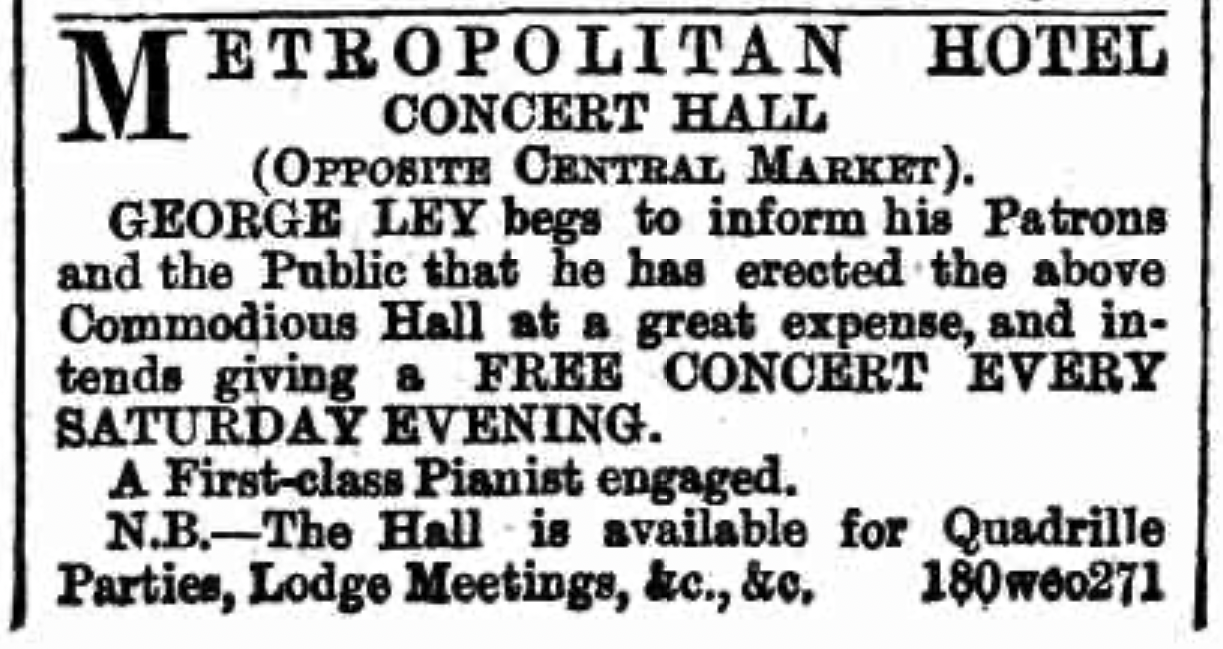 Advertisement for the Metropolitan Hotel Concert Hall, 1878
[Express and Telegraph, 24 August 1878, p.1]
Advertisement for the Metropolitan Hotel Concert Hall, 1878
[Express and Telegraph, 24 August 1878, p.1]
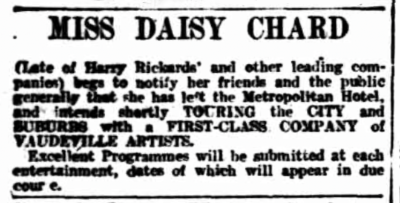 Daisy Chard (see "Barmaids" above) leaving the Metropolitan, 1911
[Advertiser, 20 March 1911, p.2]
Daisy Chard (see "Barmaids" above) leaving the Metropolitan, 1911
[Advertiser, 20 March 1911, p.2]
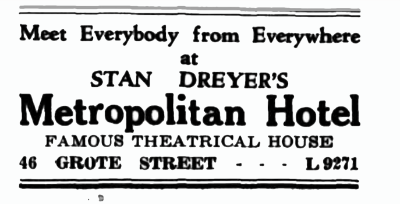 The "famous theatrical house", 1946
[Sport, 24 August 1946, p.13]
The "famous theatrical house", 1946
[Sport, 24 August 1946, p.13]
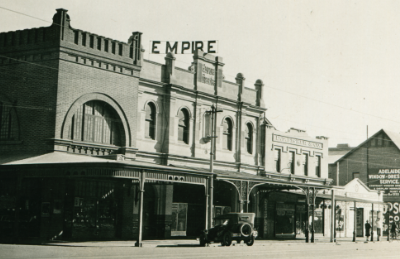 The Empire Theatre, Grote Street, c.1927
[SLSA B 9615]
The Empire Theatre, Grote Street, c.1927
[SLSA B 9615]
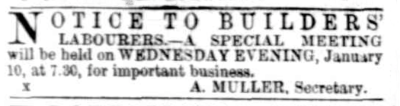 Notice of a meeting for builders' labourers, 6 January 1883
[Express and Telegraph, 24 August 1878, p.1]
Notice of a meeting for builders' labourers, 6 January 1883
[Express and Telegraph, 24 August 1878, p.1]
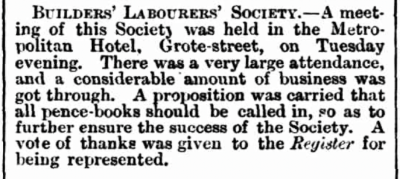 Founding[?] of the Builders' Labourers' Society, 9 January 1883
[Evening Journal, 11 January 1883, p.2]
Founding[?] of the Builders' Labourers' Society, 9 January 1883
[Evening Journal, 11 January 1883, p.2]
 Meeting to form a Rugby Union Football Club
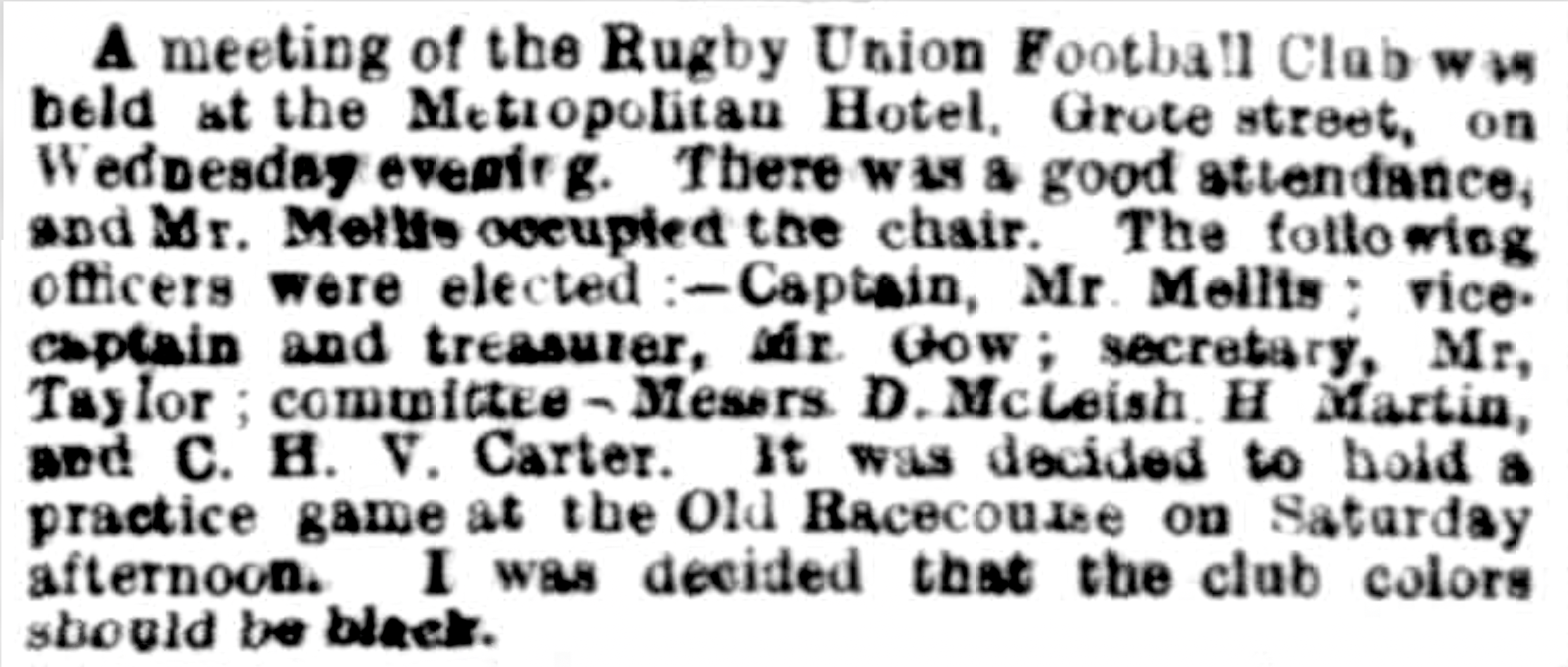 Report of the inaugural General Meeting of the Rugby Union Football Club
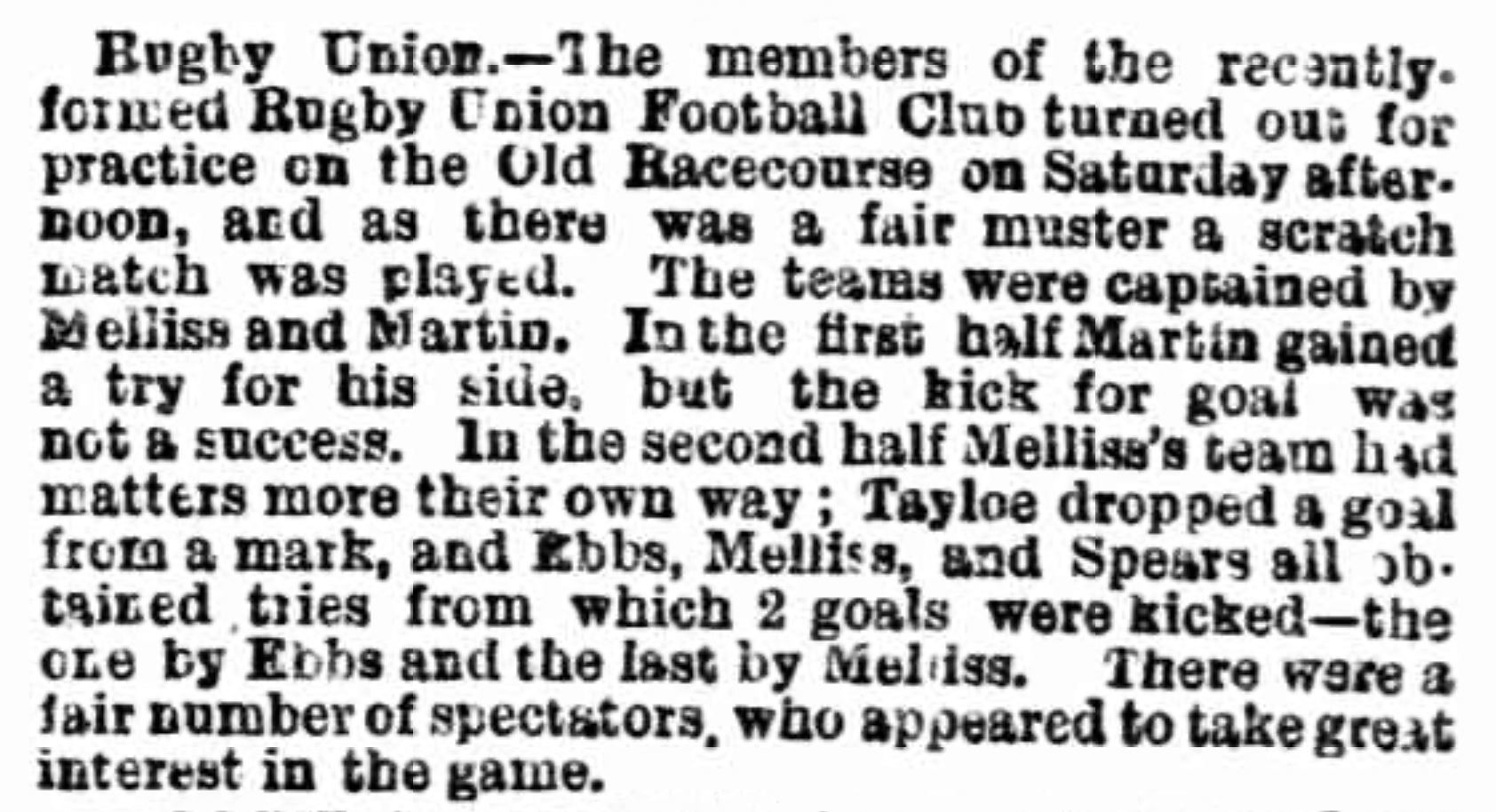 Meeting to form a Rugby Union Football Club