
12 January 2026:
Cycling tourism and pubs, 1897
12 January 2026:
Towards a 'history' of the Uraidla Hotel: Village inn, cyclists' hotel, summer resort and destination pub
10 October 2025:
Historic pubs of Unley, Parkside & Goodwood - 'Historic Pub-crawl", DRAFT, for comment only
2 October 2025:
Historic pubs and breweries of Greater Mitcham - 'Historic Pub-crawl", DRAFT, for comment only
29 July 2025:
Gawler pubs, including the Gawler Historic Pub-crawl
12 May 2025:
The history of the Kent Town Hotel
15 February 2025:
Hindmarsh pubs and breweries and the Hindmarsh Historic Pub-crawl
16 November 2024:
Amelia Allen: the first female licensee in South Australia?
14 and 27 May 2024:
Heritage listing of South Australian pubs
27 May 2024:
(Re-)development of The Union Inn/Crown and Anchor in the nineteenth century
15 May 2023:
Amelia Allen: the first female licensee in South Australia?
15 May 2023:
The Ship Inn (later Fountain Inn) at Encounter Bay
Possibly the earliest extant 'pub' in South Australia?
27 September 2022:
South Australian Working Men's Clubs
10 April 2022:
Clare Historic Pub-crawl
16 January 2022:
The East End Historic Pub-crawl; the winesaloons of the East End; and the York Hotel, Rundle Street East
30 November 2021:
Celebrating Saint Andrew's Day and early colonial South Australian pubs; and the Freemason's Tavern, Pirie Street
24 November 2021:
The Encounter Bay Historic Pub-crawl and a short note on the Middleton Hotel
17 May 2021:
Diwottiow pedrevanas: the Moonta Historic Pub-crawl and the Pier Hotel, Port Moonta
10 April & 1 May 2021:
Pubs of Port Adelaide and Knapman's Cannon Brewery, Port Adelaide
2 February 2021:
An historic pub crawl through Port Lincoln
4 January 2021:
The Kentish Arms Inn, Kent Town and Vintage Shades Tavern and the Buck's Head/Avenues Hotel
10 August &s 14 November 2020:
Finding the Fountain Inn (again)
10 August 2020:
One Fountain Inn or two?
20 June 2020:
Adding to the Colonist's story
1 May 2020:
The "Spanish 'Flu" and closing South Australian pubs, 1918-1920
25 September 2019:
Searching for C J Dennis' pubs in Adelaide
21 June 2019:
The Austral Hotel, 140 years old next year
29 March 2019:
Is the Edinburgh Castle South Australia's oldest licensed pub?
18 February 2019:
The Newmarket Hotel gravely ill and in need of a hospital?
10 August 2018
The Stag Inn - the beginning
2 August 2018:
To IPA or not to "I" the PA, or should that be an "A" question?
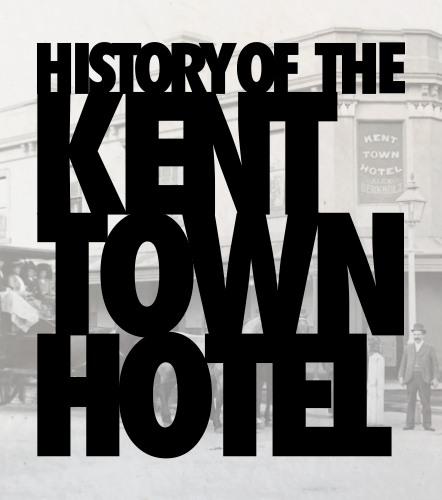 Click on the image to go to the web-page dedicated to the history of the Kent Town pub
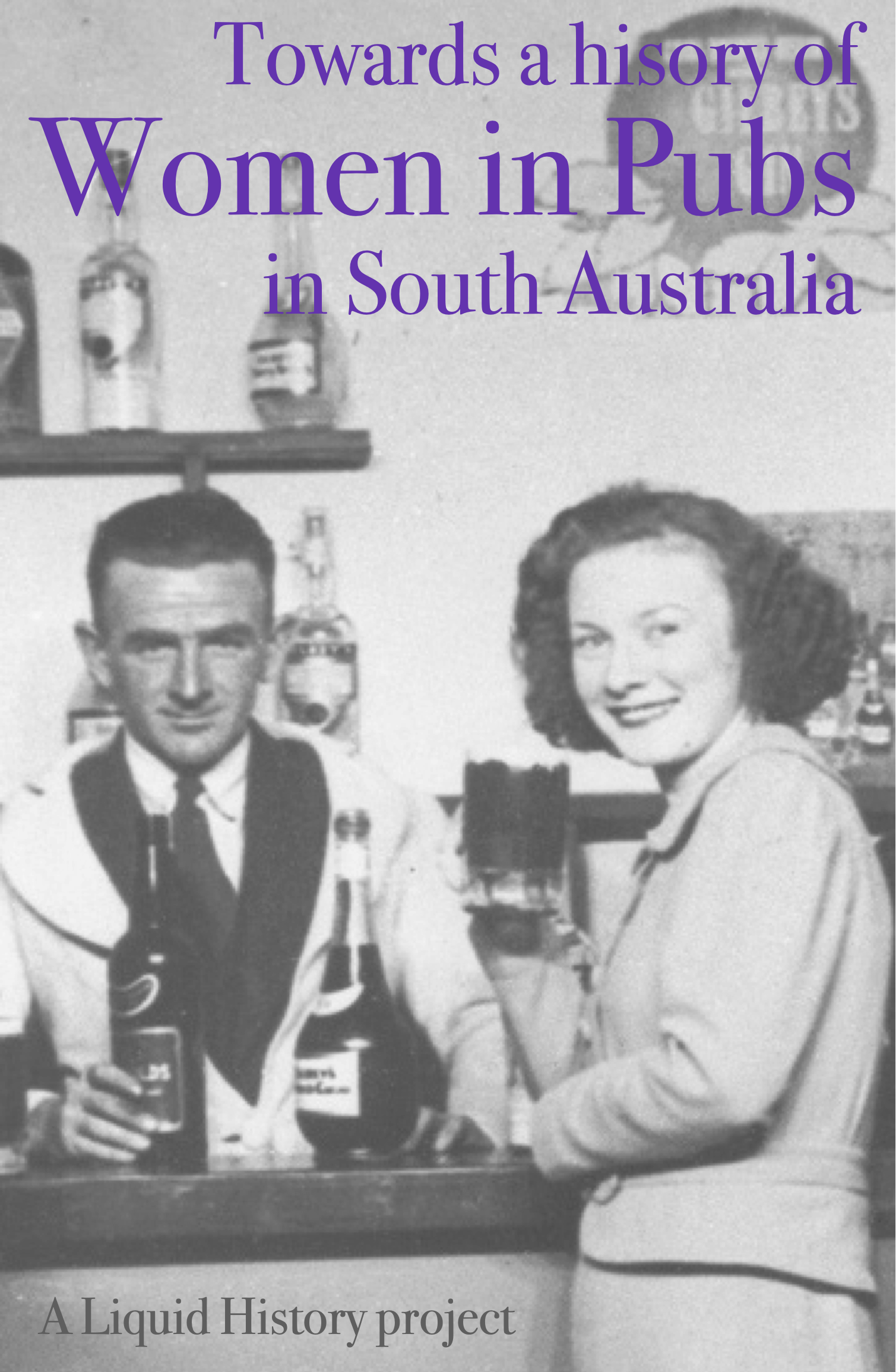 Click on the image to go to the Women in Pubs Project
A small collection of legacy research papers, presentations or other resources related to the history of the South Australian olive industry that some might find interesting or useful...despite their age.

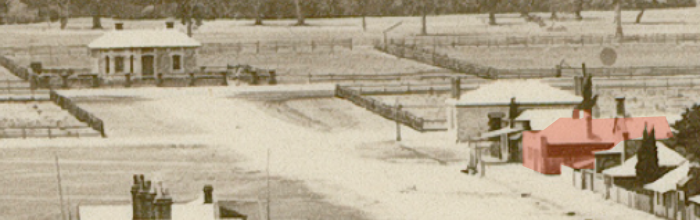
Below, highlighted, is possibly an early photograph of the original, single-storied Kentish Arms on the corner of Stanley and, then, Murray (now East Pallant) Streets, Lower North Adelaide, on Town Acre 1012. Shown is a detail from "North Adelaide, near the intersection of Stanley and Jerningham Streets", part of the State Library's "Sweet Collection"; however this is unlikely to be by Samuel Sweet and, judging by the olive trees planted in the Mann Terrace plantations, is possibly a few years earlier than 1860.
As far a I have been able to determine, this is the only location consistent with land ownership records (Memorials and Certificates of Title), City of Adelaide Assessment Books and Smith's Survey in 1880.
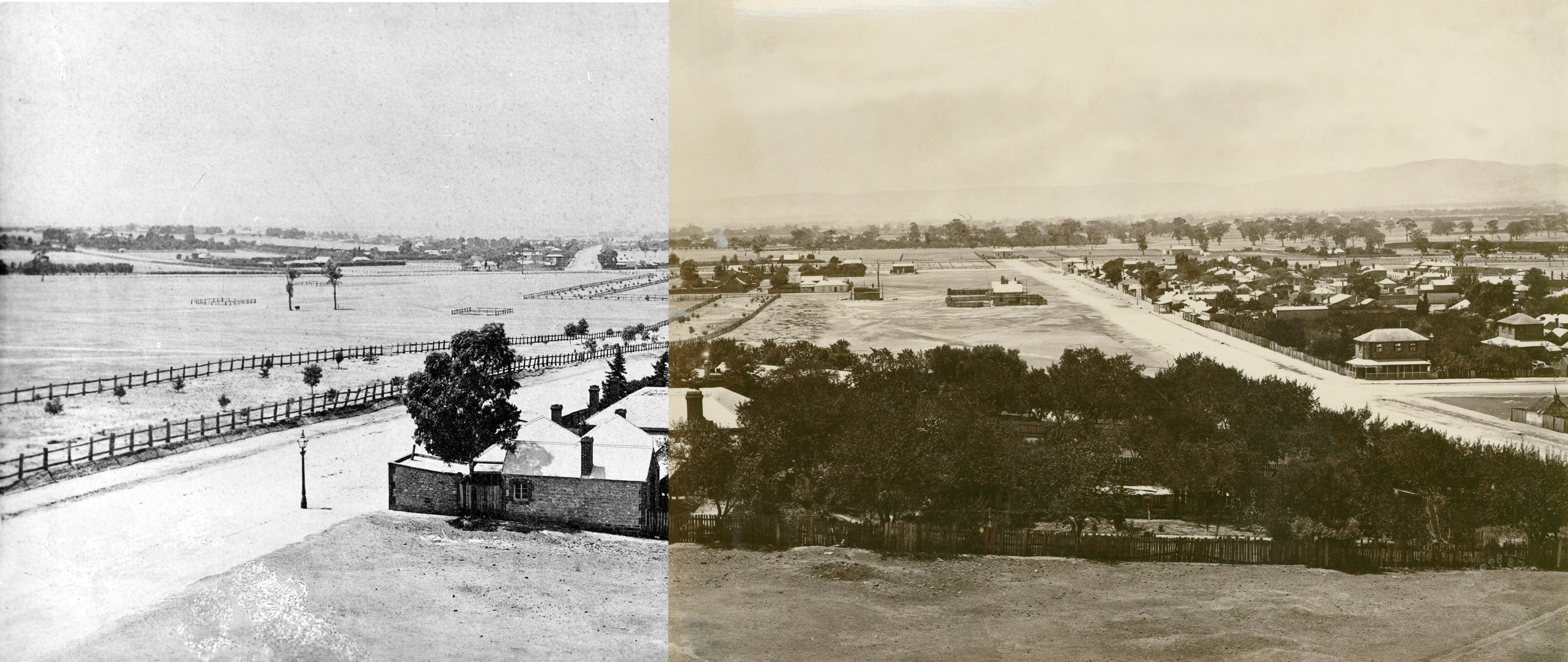 Rough composite panorama of Lower North Adelaide: Kingston Terrace (attributed to Gordon Walker, dated c.1865) and Stanley and Jerningham Streets (attributed to Samuel Sweet, dated c.1860); the detail above is taken from this photograph
[SLSA B-5606, grey; B-5206, sepia; click image to enlarge]
Rough composite panorama of Lower North Adelaide: Kingston Terrace (attributed to Gordon Walker, dated c.1865) and Stanley and Jerningham Streets (attributed to Samuel Sweet, dated c.1860); the detail above is taken from this photograph
[SLSA B-5606, grey; B-5206, sepia; click image to enlarge]
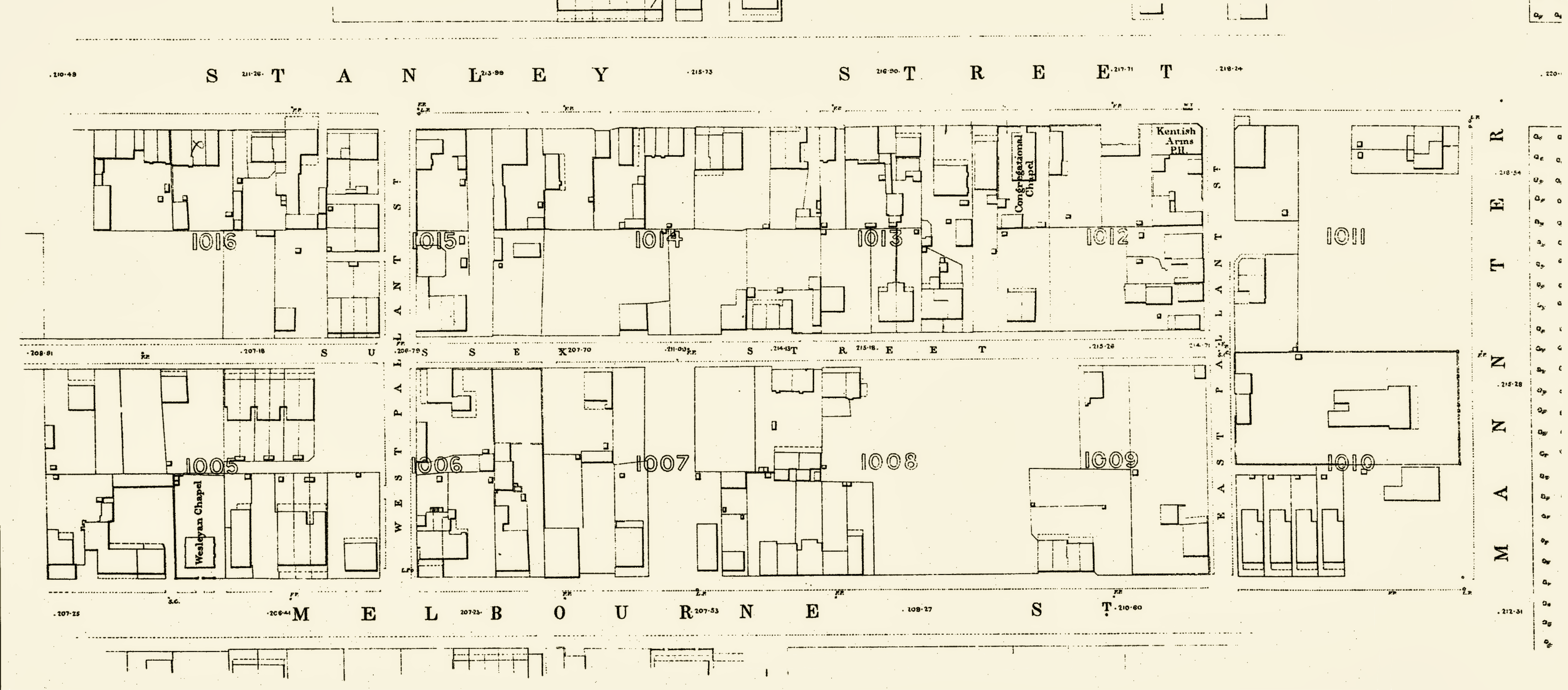
Composite part sheets from Smith's survey, showing buildings on Town Acres 1011 and 1012, including the Kentish Arms Hotel in c.1880 (before the pub was rebuilt?) [Click image to enlarge]
The pub was 'built' by John Collard Cocker in mid-1848. Cocker applied unsuccessfully for a general publican's license in June and also September 1848; in both cases the applications were opposed by the landlord of the nearby British Tavern and refused on the grounds that "the neighbourhood was not sufficiently populated to support two houses [pubs]" [South Australian Register,14 June 1848, p.4; and 13 September 1848, p.3]. However, in December the Licensing Bench agreed that the "it was not a bad house" and that "a licensed house is much wanted in that spot" and granted Cocker the license [Adelaide Observer, 16 December 1848, p.4]. The Adelaide City Assessor described Cocker's hotel in December 1849 as the 'Kentish Arms' constructed of stone and brick and in January 1851 as a public house having 7 rooms. Judging by the rateable value, the property does not appear to have changed substantially until 1881.
|
By 1869, Cocker had acquired adjacent allotments, allowing expansion of the pub, construction of stables and other outbuildings and, incidentally, an adjoining cricket ground. On 26 August 1879 he leased and on 1 December 1881 sold the properties to his son, John Selby Cocker [Land Services Group: Memorials 187/238 20 April 1869, 224/317 26 August 1869, CT 376/155, 1 December 1881]. About this time several competitive hotels had been (re-)built nearby, notably the brewery-owned Lion Hotel (1881). A more direct threat, however, came from the Adelaide Licensing Bench: on 28 February 1881 Licensing Inspector Bee recommended that several Adelaide hotels, including the Kentish Arms, "are very old, requite improvements, either by repairs, alterations, addition,or rebuilding, the accommodation being generally quite behind the times" and should be warned or lose their licenses [South Australian Advertiser, 9 March 1881, p.6].
In September and October 1881 architect William McMinn (see below) tendered for [the] building of [an] hotel (Kentish Arms) in Stanley Street, North Adelaide" (see opposite). (The architects were not Hamilton and Campbell as claimed by Patricia Sumerling in her recent The hotels of Adelaide: an illustrated history [2025] or the authors of the City of Adelaide's Heritage of the City of Adelaide [1996]; Hamilton and Campbell were the architects of the pub of the same name in Kent Town in about 1879.) The "present hotel" was almost certainly completed when Cocker Snr applied to the Supreme Court for the Kentish Arms Hotel to be "recovered to him", in December 1882 [Adelaide Observer,16 December 1882, p.26]. | |
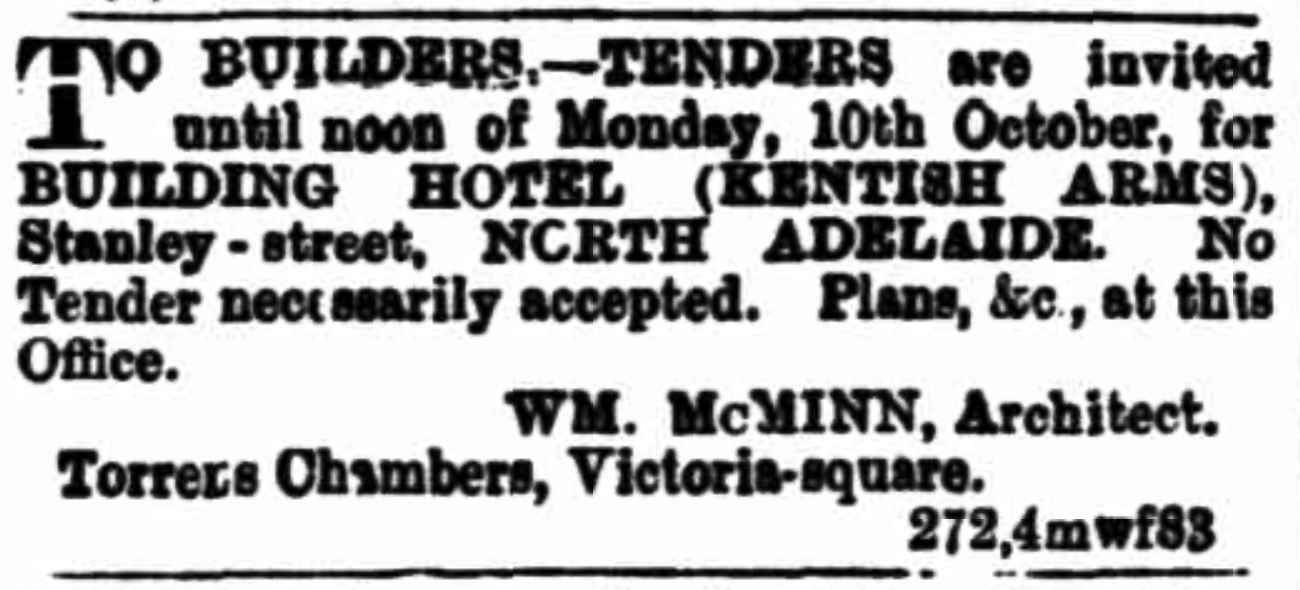 Notice inviting tenders for the building of the Kentish Arms, North Adelaide [Evening Journal, 29 September 1881, p.1] 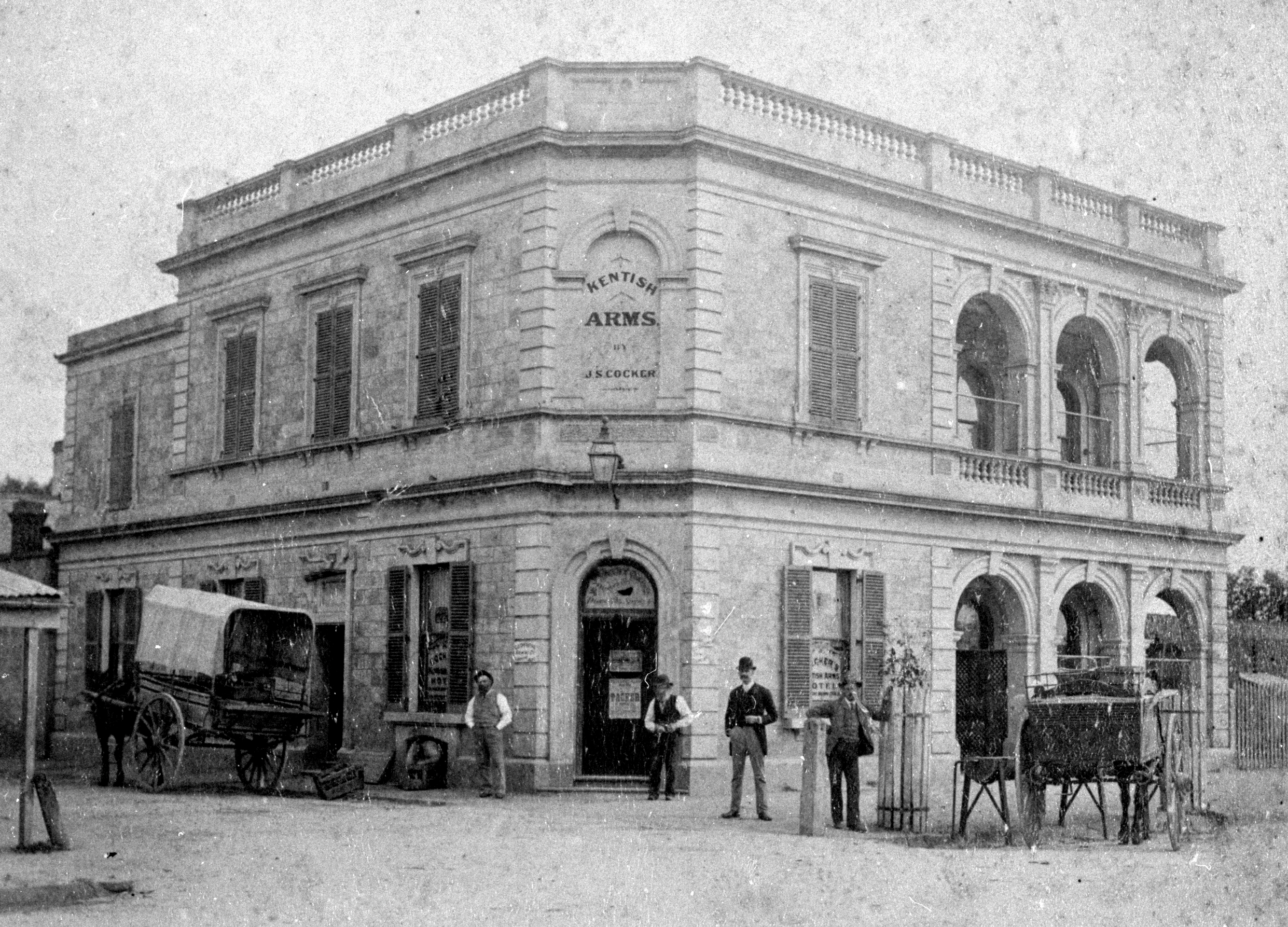 The Kentish Arms, North Adelaide in about 1897; digitally repaired and slightly modified [SLSA B-48071; click to enlarge (7MB)] 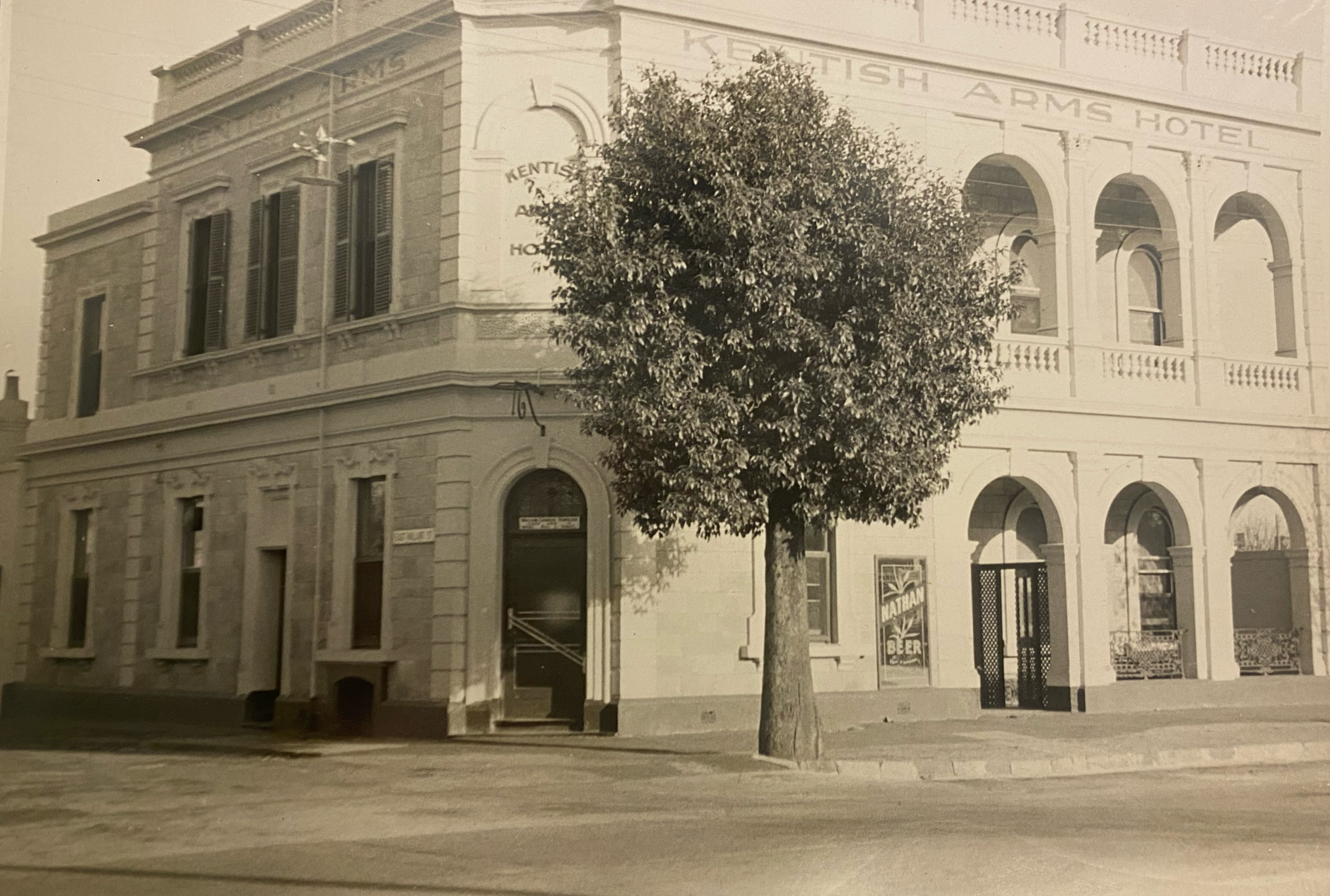 The Kentish Arms, 1939 [SLSA SABCo; click to enlarge (7MB)] |
William McMinn (1840-1884), architect of the Kentish Arms Hotel, North Adelaide
|
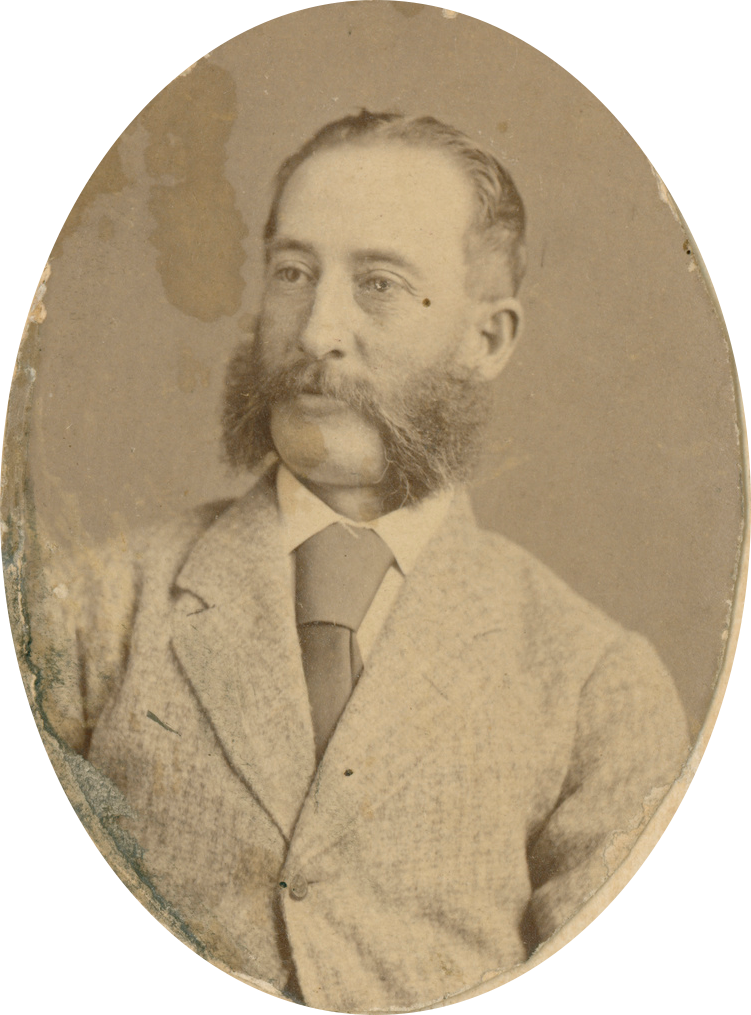
John Selby Cocker (1844-1901), baker, publican, cricketer and brewer
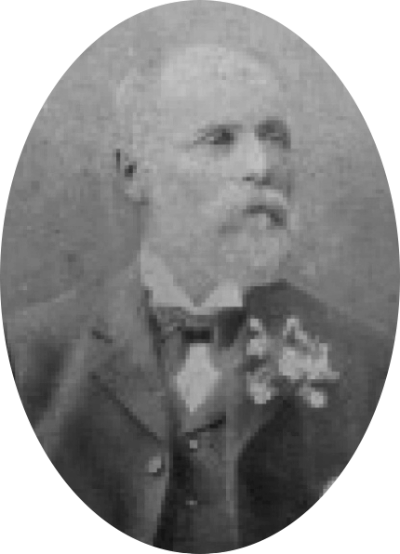
John Selby Cocker in 1889 [SABCo archives] | |
According to an obituary:
|
John and Jane Cocker and descendants retained ownership of the pub directly until April 1920 (LSG CT 960/187) and indirectly through their executors until 30 April 1968 when the then licensees, Robert and Florence Bouquey, purchased the property. A list of owners and licensees, 1848 to 1973 is here. Against the trend for city pubs especially in the 1870s and 1880s, at no time was the Kentish Arms owned or even leased by a brewery*.
On the contrary, John Selby Cocker and three other publicans founded the Walkerville Cooperative Brewing Company in 1889. According to Alison Painter [Beer Barons or Bankrupts?, p.160], "their aim was to develop a brewery as a true co-operative system allowing publicans, like themselves, to become members and to share in the profits generated by the business; they would pay the normal trade price for their beer and receive a six-monthly rebate on the amount sold. The four founders purchased Ball & Huntley's Black Horse Brewery at Fuller Street, Walkerville..."; through amalgamations. the Walkerville Cooperative Brewing Company eventually became part of the South Australian Brewing Company.
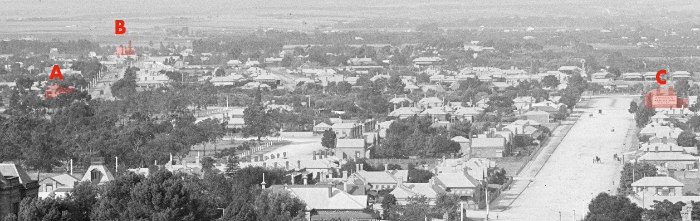
Detail from Francis Gabriel's photograph of Stanley Street looking east, 1904(?) [SLSA B 3552]
A: Buckingham Arms; B: Walkerville Brewery(?); C: "J Thomas's Kentish Arms Hotel"
(* However the lease/license of Amos "Moss" Vincent was funded by A.E.&J. Tolley Ltd, distillers and spirit merchants, January 1917 to February 1919, an example of how brewers, wineries and distillers could control pubs indirectly and without owning or leasing the properties.)
Posted 12 May 2026; original content © Craig Hill 2026
The Greater Norwood Historic Pub-crawl
The "Greater Norwood Historic Pub-crawl" (right) is a single- or double-sided, self-guided pub-crawl around the historic pubs of "Greater Norwood". It complements - unofficially - the display of photographs of the Lost & Local...Pubs of Norwood Payneham & St Peters for the 2026 South Australian History Festival this May. The guide can be downloaded freely for personal or non-commercial purposes.
|
Over the past 190 years, the "Greater Norwood" area has been served by 23 pubs of which 4 have been demolished, another 6 have been repurposed as private residences or restaurants and 13 survive. The first pub in the area was the Kensington Arms Inn (1840) on or close to the site of the Kensington Hotel; the last built was the Maylands Hotel (1885). The maximum number of pubs operating at one time in the area was 20, from 1885 to 1909, representing approximately 800 residents per pub, more than double the rate for the City of Adelaide (338) and well above the rate for the Province as a whole (511) at about the same time (1899). Of these twenty pubs, five were 'de-licensed' following a Local Option poll in 1909, a plebiscite to restrict the number of pubs in an electoral district; no pubs have been added since.
| |
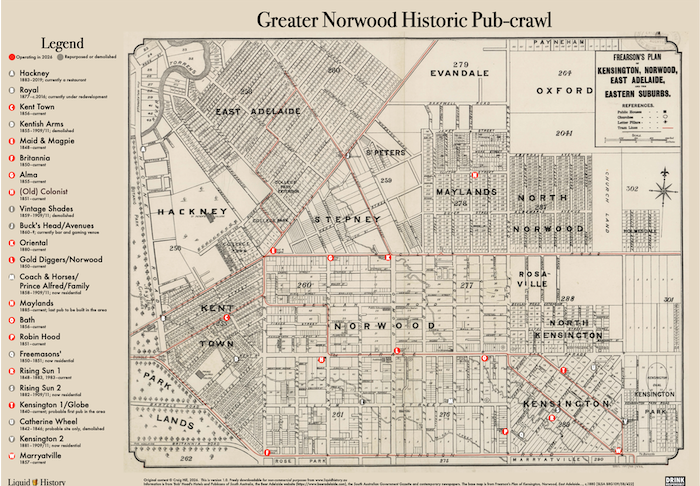
Click here or on the image above to view and download the double-sided guide (14MB). Click here for the map only (4MB). |
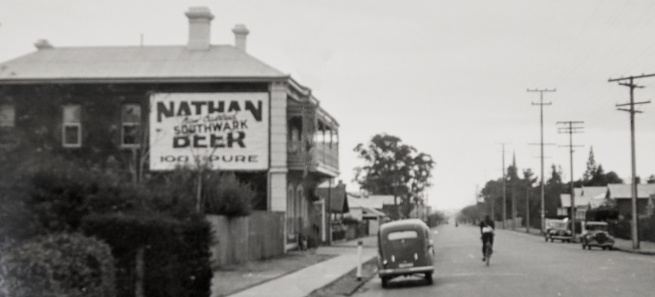 The Robin Hood Hotel and Portrush Road, c.1938 [SLSA BRG/398/22/37]
Pub-crawling around Greater Norwood
The Greater Norwood area is very walker-friendly with mostly good footpaths, gentle slopes and the distance between the main operating pubs less than a kilometre or thereabouts. Alternatively the area is serviced by relatively frequent buses on the following main routes (but maybe check with Adelaide Metro first):
|
Payneham Road: 174, 176, 178 Magill Road: 106, H30, H33, X30 Parade: 140, H21, H23, H20, H22, H24 | |
Kensington Road: 141, 142 Portrush Road: 140, H23 |
The "non-pubs" of Greater Norwood
In an historical ontology of pubs, their absence can be almost as instructive as the existence of the pubs themselves - why, in the case of Greater Norwood, there were no or so few pubs in the increasingly populous suburbs, on the Frearson map of 1880, of East Adelaide and what became Joslin or of Maylands, North Norwood and Rosaville. And, related to this, why the Adelaide Licensing Bench rejected applications for licensed houses in these areas as well as Greater Norwood as a whole, especially in the late 1870s to mid-1880s. This project aims to identify, locate and then analyse prospective pubs in Great Norwood which were simply not built or for which a general publican's license was not granted. A very preliminary and error-prone summary of these 'non-pubs' in and around Greater Norwood is here and their (approximate) locations are mapped here; comments, suggestions and contributions are welcomed.
Posted 1 May 2026; original content © Craig Hill 2026
The Exeter Hotel, Rundle Street, c.1935
As part of its D Darian Smith collection, the State Library of South Australia holds a collection of photographs of "Adelaide Buildings" in 1927-1933. This series includes seven unpublished(?) images of pubs: The Windsor Castle; The Exeter; The Duke of York; The Supreme Court; The Freemasons; The Victoria; and The Overway.
The photographs have been attributed to D(ouglas) Darian Smith, which might well be the case. However, the photograph of the Exeter Hotel (below) is suspiciously almost identical of that in the composite panorama of the streetscape of eastern Rundle Street in Gustave Herman Barin's Centenary Year of South Australia, Progressive Adelaide as it stands Today..., Adelaide, G.H. Baring, Publisher and Printer, 1936. Perhaps Barin was the publisher/printer and Darian Smith was the photographer? Whatever the case, the Darian Smith's images, presumably on large-formal glass plates, are superb. especially at high resolution, and should be dated c.1935-36.
Mike Treloar Antiquarian Booksellers' website includes several other streetscapes from Progressive Adelaide, including several pubs.
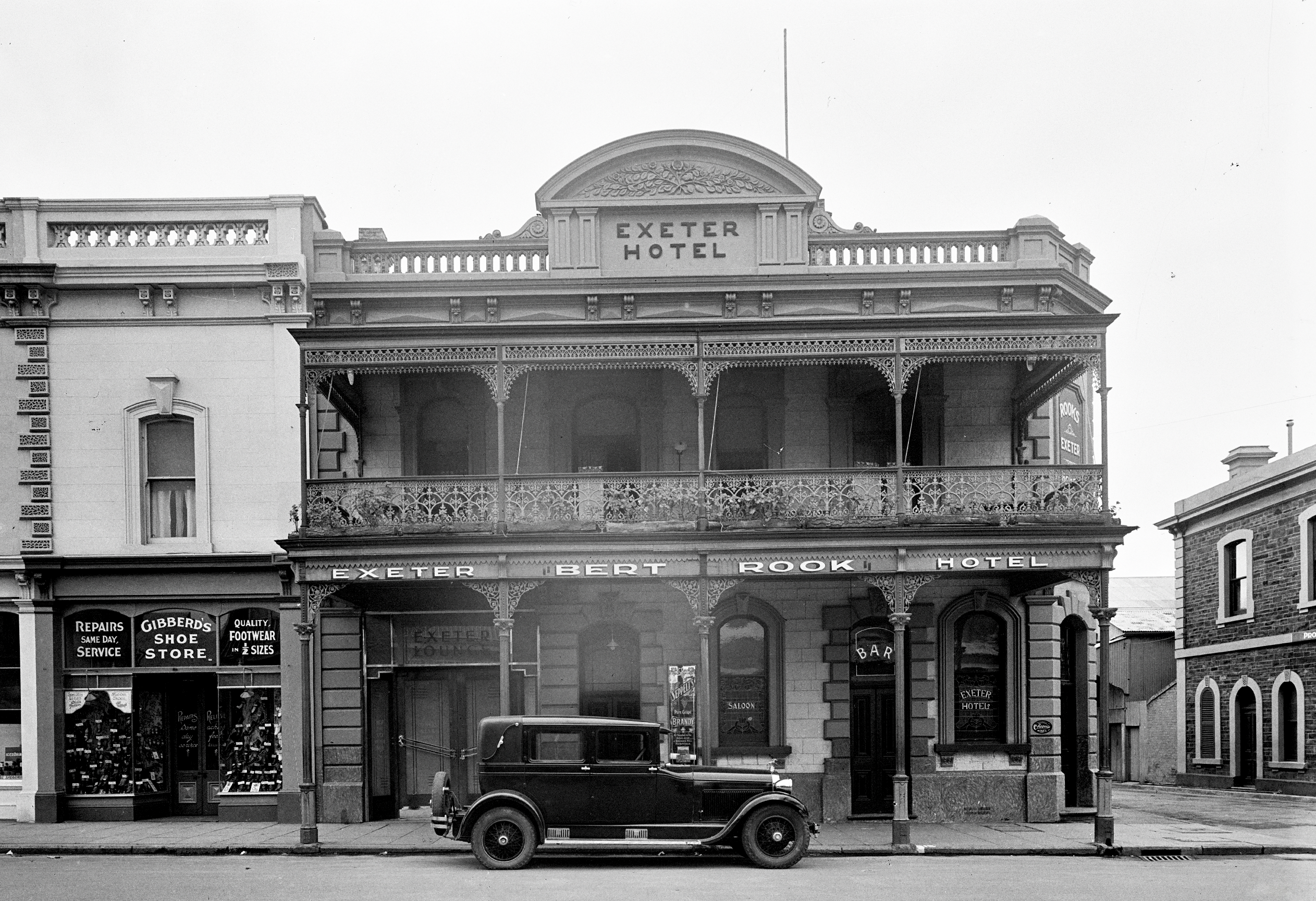
(Click on the image to enlarge)
Posted 1 May 2026; original content © Craig Hill 2026